Pakistani Fintech Haball Secures $52M to Expand Islamic Finance Solutions

Source: Halal Times
Osaka, Japan – A significant development in the Islamic fintech sector emerged yesterday as Karachi-based Haball announced securing $52 million in funding to accelerate its expansion across Pakistan and into the Middle East. The investment, structured as $5 million in equity and $47 million in strategic financing, was led by Zayn VC and Meezan Bank (AMZN.PSX), a leading player in Pakistan’s Islamic banking industry.
This substantial financial backing will support Haball’s mission to transform Islamic Supply Chain Finance and digital payment solutions while maintaining strict adherence to Shariah principles.
Addressing Critical Financing Gaps for SMEs
Haball has established itself as a crucial financial partner for Pakistan’s underserved small and medium enterprises (SMEs), providing Shariah-compliant financing solutions to businesses struggling to access traditional banking services. According to recent reports, less than 5% of Pakistani SMEs currently receive financing from commercial banks, despite this sector serving as the backbone of the national economy.
The company’s importance in the Pakistani financial ecosystem is already substantial, with CEO Omer bin Ahsan reporting that Haball currently serves nearly 8,000 SMEs and multinational corporations. To date, the platform has processed more than $3 billion in payments and facilitated over $110 million in financing.
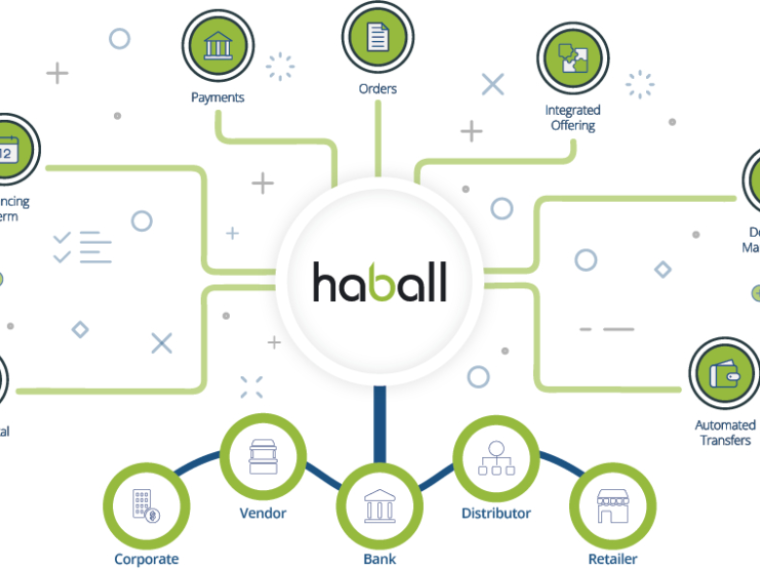
“Our digital solutions have been instrumental in optimizing supply chains throughout Pakistan,” Ahsan stated. “We provide comprehensive services including digital invoicing, payment collection, and tax compliance tools that streamline operations for businesses across the country.”
The Growing Islamic Finance Landscape in Pakistan
The investment comes at an opportune moment for both Haball and Pakistan’s broader Islamic finance sector. As the world’s second most populous Muslim country, Pakistan has witnessed remarkable growth in Islamic banking and finance services.
The latest data from the State Bank of Pakistan’s Quarterly Islamic Banking Bulletin (June 2024) shows that Islamic banking assets have reached 9,689 billion Pakistani rupees (approximately $34.54 billion), capturing 18.8% of total banking assets and 22.7% of deposits in the country. The central bank aims to increase this market share to 30% by the end of 2025, as outlined in its strategic plan for 2023-2028.
Supply chain finance in Pakistan presents a particularly promising opportunity, with the sector estimated to be worth over $9 billion despite still being in its early development stages.
Strategic Expansion into Saudi Arabia
Haball’s expansion into Saudi Arabia represents a strategic pivot into one of the world’s most established Islamic finance markets. The Middle East, with its strong adherence to Islamic financial principles and substantial market size, offers fertile ground for Haball to replicate and expand upon its success in Pakistan.
Saudi Arabia’s Vision 2030, which aims to diversify the kingdom’s economy and enhance financial inclusion, creates a favorable environment for innovative Islamic fintech platforms. The country’s well-developed Islamic banking sector, high mobile and internet penetration rates, and complex supply chains in sectors like oil and gas, retail, and logistics present significant opportunities for Haball’s shariah-compliant financing solutions.
Islamic Finance Principles in the Digital Age
At its core, Haball’s business model demonstrates how traditional Islamic finance principles can be effectively integrated with modern financial technology. Islamic finance prohibits interest (riba), excessive uncertainty (gharar), and gambling (maysir), while requiring investments to be directed exclusively toward permissible (halal) activities.
Haball’s platform utilizes various Islamic financial instruments to provide supply chain financing solutions, including:
- Murabaha: Cost-plus financing arrangements where goods are purchased and sold with an agreed-upon markup
- Wakalah: Agency-based models to facilitate transactions and payments
- Tawarruq: Commodity-based structures for liquidity management
By digitizing these traditional Islamic finance mechanisms, Haball makes them more accessible, efficient, and transparent for businesses of all sizes.
Challenges Ahead in Regional Expansion
Despite the significant opportunities, Haball faces several challenges in its Middle Eastern expansion. The company will need to navigate different regulatory landscapes, compete with established local Islamic banks and fintech players, and adapt its products to local cultural and business practices.
Building trust and credibility as a new entrant in the Saudi market will be crucial, as will attracting and retaining talent with expertise in both Islamic finance and financial technology. However, the substantial funding provides Haball with the necessary resources to address these challenges while investing in technological development and team expansion.
A Milestone for Pakistan’s Fintech Ecosystem
Haball’s successful funding round represents not only a company milestone but also highlights the growing investor confidence in Pakistan’s fintech ecosystem, particularly in the Islamic finance niche. The participation of an established player like Meezan Bank validates the potential of collaborations between traditional financial institutions and innovative fintech startups in expanding the reach and impact of Islamic finance.
As Haball leverages this investment to broaden its horizons beyond Pakistan, it exemplifies how homegrown financial innovation can address critical market gaps while adhering to religious and ethical principles. The company’s journey may well serve as a blueprint for other Islamic fintechs seeking to bridge traditional values with modern financial needs across the Muslim world.
Original Articles:
halaltimes.com. (n.d.). Pakistan’s Fintech, Haball Raises $52 Million to Expand Islamic Finance in Middle East. Retrieved April 10, 2025, from https://www.halaltimes.com/pakistans-fintech-haball-raises-52-million-to-expand-islamic-finance-in-middle-east/