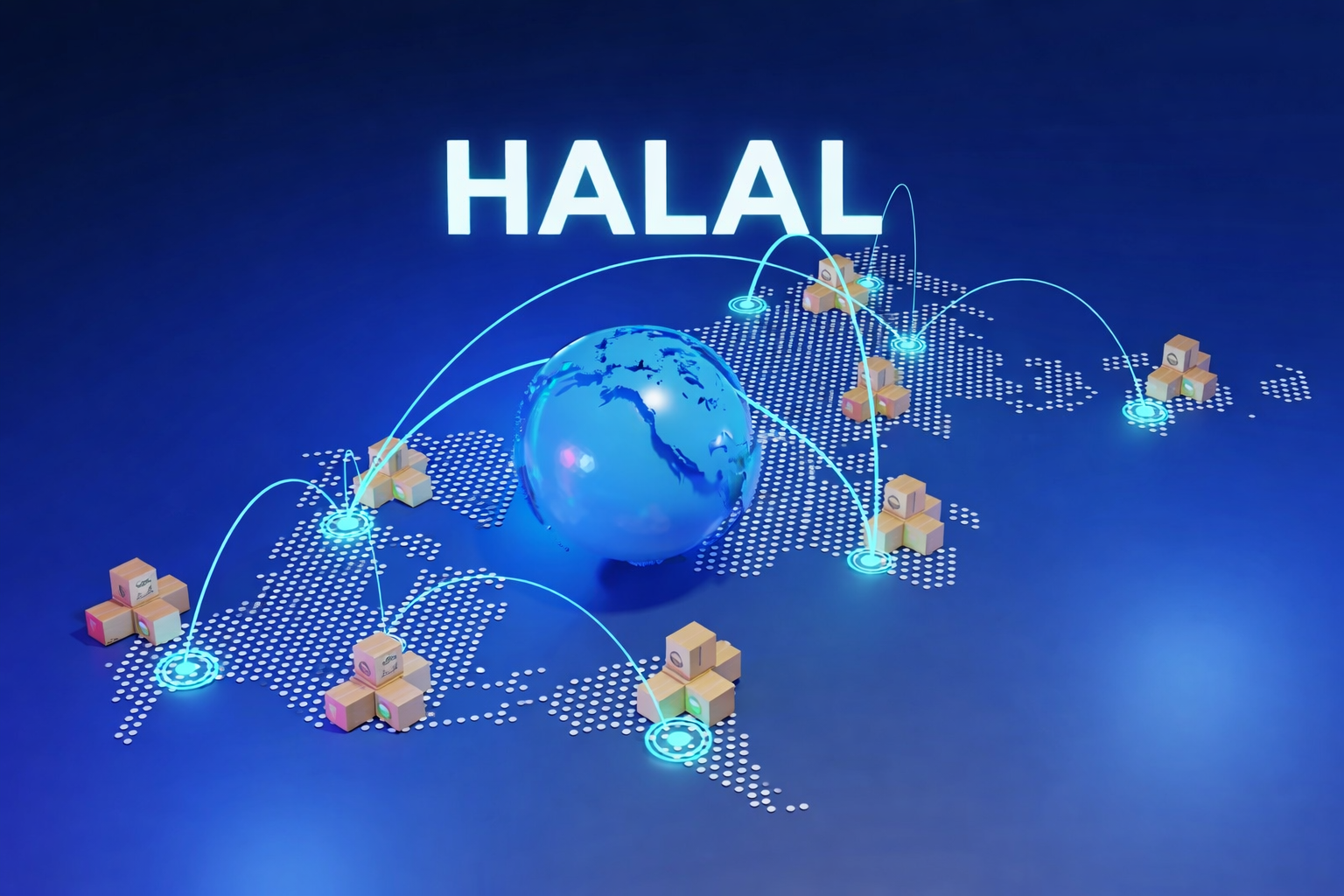
Indonesia’s Halal Industry: A Path to Economic Development

Source: Tempo English
JAKARTA – Indonesia’s Vice President Gibran Rakabuming Raka believes the country’s thriving halal industry could be instrumental in propelling the nation toward developed status. Speaking through a video message on his YouTube channel GibranTV, the Vice President emphasized Indonesia’s unique position as home to 245 million Muslims—representing one of the world’s largest Muslim populations.
“With 245 million Muslims, Indonesia possesses significant domestic market influence,” Gibran stated during his Saturday address. “This demographic advantage gives us considerable market strength within our own borders.”
Beyond Demographics: Building Economic Independence
The Vice President stressed that having a substantial Muslim population alone is insufficient for economic transformation. True progress requires developing comprehensive economic self-reliance across multiple sectors of the halal economy, including:
- Islamic banking and financial services
- Halal food and beverage production
- Islamic fashion industry
- Halal cosmetics manufacturing
- Muslim-friendly tourism initiatives
- Islamic entertainment content including music and films
Current Market Position and Growth
Indonesia’s performance in the global halal market has shown promising signs. The country secured third place in the 2024 Global Islamic Economy Index, demonstrating its growing influence in this sector. Halal product exports have maintained steady growth, with a seven percent increase recorded over the past six years.
Particularly noteworthy is Indonesia’s representation in global halal production, with 15 companies among the world’s top 30 halal manufacturers originating from the archipelago. This achievement underscores the nation’s substantial capabilities in halal industry development.
Challenges and Opportunities
Despite these achievements, Indonesia has yet to establish itself as a dominant force in the global halal supply chain. The country currently ranks eighth among world halal product exporters, trailing behind nations with significantly smaller Muslim populations that have managed to secure leading positions.
This disparity highlights an important market reality: the halal industry attracts interest from both Muslim and non-Muslim countries worldwide, making it one of the most competitive and attractive economic sectors globally.
Market Projections and Future Potential
The global halal market continues to expand rapidly. Muslim consumer spending reached $2.3 trillion in 2022, with projections indicating growth to $3.1 trillion by 2027. This represents enormous potential for countries positioned to capture market share.
Two sectors offer the greatest opportunities:
- Halal food and beverages: Commanding 43% of market potential
- Muslim fashion: Representing 23% of market opportunities
Strategic Imperatives
Vice President Gibran emphasized the urgency of capitalizing on these opportunities. “Many nations are targeting this market, requiring us to act swiftly to avoid being left behind,” he warned. “To maximize benefits for our nation, we must leverage our local capabilities to capture opportunities in the global Islamic market.”
The Vice President’s vision positions Indonesia’s halal industry development as both an economic necessity and a strategic opportunity, requiring coordinated efforts across multiple sectors to transform the country’s vast Muslim population into a competitive advantage on the global stage.
Original article:
en.tempo.co. (n.d.). VP Gibran Envisions Halal Industry as Catalyst for Indonesia’s Development. Retrieved July 1, 2025, from https://en.tempo.co/read/2015549/vp-gibran-envisions-halal-industry-as-catalyst-for-indonesias-development