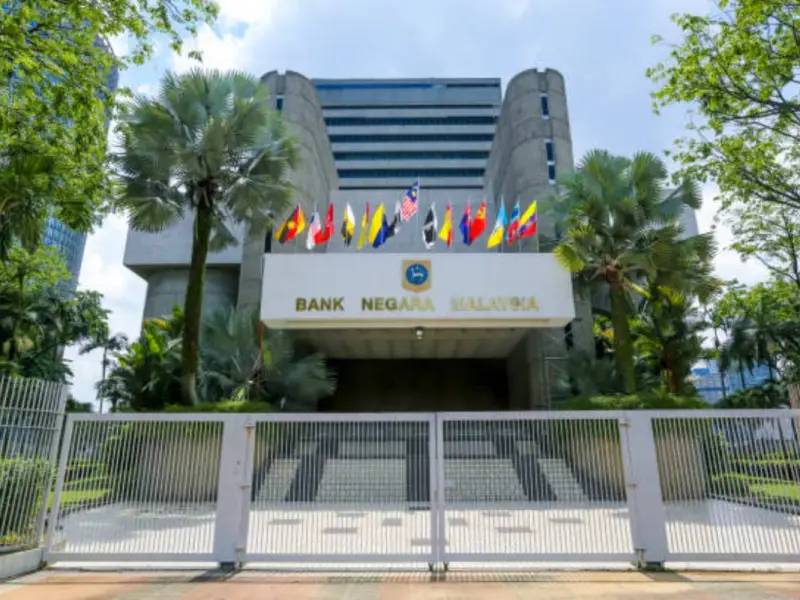
Malaysian Financial Institutions Reduce Borrowing Costs Following Central Bank Policy Shift

Source: Halal Times
JAKARTA – Following Bank Negara Malaysia’s (BNM) strategic reduction of the Overnight Policy Rate (OPR) by 25 basis points to 2.75% from the previous 3.00%, major Malaysian financial institutions have swiftly implemented corresponding adjustments to their lending and deposit structures. This coordinated monetary policy response aims to invigorate economic expansion, reduce financing burdens, and offer financial support to consumers and enterprises navigating elevated living costs and international economic volatility.
Bank Islam Malaysia Pioneers Rate Reductions
Bank Islam Malaysia Bhd emerged as an early adopter of the rate adjustments, implementing a 25-basis-point decrease across its Standardised Base Rate (SBR), Base Rate (BR), and Base Financing Rate (BFR), taking effect on July 10, 2025. The revised rates now stand at 2.75%, 3.52%, and 6.47% annually.
According to Datuk Mohd Muazzam Mohamed, Group Chief Executive Officer of Bank Islam, this rate modification demonstrates the institution’s dedication to fostering economic development and alleviating financial pressures for clients utilizing financing products tied to these benchmark rates. He highlighted that the reduced OPR creates opportunities for expanding the bank’s financing portfolio while preserving robust asset quality standards. Furthermore, he noted that this adjustment offers a pathway to strengthen financial stability, especially for individuals most impacted by inflationary pressures.
RHB Banking Group Implements Parallel Changes
RHB Banking Group enacted comparable modifications, setting its SBR, BR, and BFR at 2.75%, 3.50%, and 6.45% per annum respectively, also becoming effective July 10. The institution simultaneously announced a parallel 25-basis-point decrease in fixed deposit rates.
Datuk Mohd Rashid Mohamad, RHB’s Group Managing Director and Chief Executive, clarified that this initiative supports BNM’s objectives to boost domestic consumption through reduced borrowing expenses. He emphasized that the rate adjustment would provide particular advantages to small and medium enterprises (SMEs) and households, assisting them in expense management and promoting consumer spending during challenging global economic conditions.
Public Bank and Affin Bank Group Implement Rate Modifications
Public Bank Bhd adopted similar measures, decreasing its SBR to 2.75% (matching the OPR), BR to 3.27%, and BFR to 6.47%, effective July 11. The institution’s fixed deposit rates will undergo corresponding downward revisions. Tan Sri Tay Ah Lek, Public Bank’s Managing Director and Chief Executive, stressed that these modifications would enhance borrowing accessibility for customers.
Concurrently, the Affin Bank Group—encompassing Affin Bank Bhd, Affin Islamic Bank Bhd, and Affin Hwang Investment Bank—declared a 25-basis-point reduction in loan and financing reference rates, effective July 11. The group’s SBR, BR, and BFR will be modified to 2.75%, 3.70%, and 6.56% respectively. Fixed and term deposit rates will experience proportional decreases.
Alliance Bank Schedules Delayed Implementation
Alliance Bank Malaysia Bhd and Alliance Islamic Bank Bhd confirmed analogous adjustments, though their implementation will commence slightly later on July 15. The institutions’ SBR will decrease to 2.75%, while BR and BFR will be restructured to 3.57% and 6.42% respectively. Fixed deposit rates will undergo downward adjustments on the same effective date.
Economic Ramifications of Central Bank Policy
BNM’s decision to reduce the OPR by 25 basis points represents a component of a comprehensive strategy to bolster economic growth amid declining global demand. Reduced interest rates decrease borrowing expenses for businesses and consumers, stimulating expenditure and investment activities. This approach proves particularly vital for SMEs and individuals experiencing financial constraints due to escalating living costs.
The banking sector’s rapid response to the OPR adjustment illustrates its crucial function in facilitating monetary policy transmission mechanisms. Through lowering lending rates, financial institutions seek to stimulate credit demand, which can accelerate economic activity. Nevertheless, the reduction in deposit rates may influence savers, potentially encouraging them to explore alternative investment opportunities for enhanced returns.
Market Outlook and Future Implications
The recent wave of rate adjustments by prominent Malaysian banks represents a synchronized effort to align with BNM’s accommodative monetary policy direction. As borrowing becomes more accessible, businesses and consumers may experience improved financial management capabilities, potentially accelerating economic momentum in subsequent months.
However, the comprehensive impact of these modifications will depend on broader economic factors, including inflationary trends and global market stability. The success of this monetary policy approach will be measured by its ability to stimulate domestic demand while maintaining financial system stability.
The coordinated response from Malaysia’s banking sector demonstrates the effectiveness of monetary policy transmission and the financial system’s adaptability to changing economic conditions. As these rate reductions take effect across different institutions, the cumulative impact on economic growth and financial accessibility will become clearer in the coming quarters.
Original article:
halaltimes.com.com. (n.d.). Malaysian Banks Lower Lending and Interest Rates. Retrieved July 15, 2025, from https://www.halaltimes.com/malaysian-banks-lower-lending-and-interest-rates/