Understanding Halal Certification in Indonesia: Costs, Timeline, and Industry Challenges
Source: LPPOM MUI
JAKARTA – The halal certification landscape in Indonesia has become increasingly complex, with business owners frequently raising concerns about expensive fees and lengthy processing times. To address these widespread misconceptions and provide clarity, industry leaders recently gathered to explain the realities behind halal certification requirements.
Addressing Common Industry Concerns
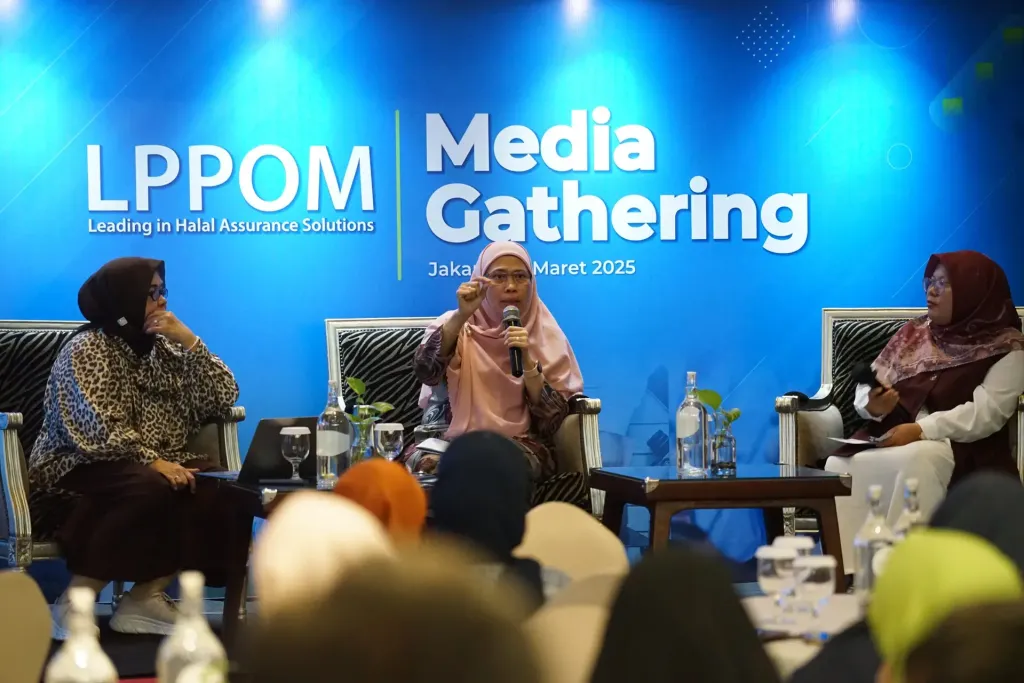
At a recent industry briefing held at Jakarta’s Grandhika Iskandarsyah Hotel, key figures from Indonesia’s halal certification sector addressed persistent questions about the certification process. The discussion featured insights from Muti Arintawati, President Director of LPH LPPOM, and Elvina A. Rahayu, who leads the Indonesian Halal Inspection Institute Association (ALPHI).
The event aimed to tackle two primary complaints from business operators: the perceived high cost of certification and the allegedly prolonged inspection procedures. Industry experts also highlighted concerns about intermediaries who pose as legitimate consultants but actually complicate and inflate the certification process.
Breaking Down Certification Expenses
Business operators, particularly those running smaller enterprises, often express frustration with certification costs. However, Arintawati emphasized that current pricing structures comply with established regulatory frameworks rather than arbitrary fee setting.
“The majority of inspection fees support institutional operations, public education initiatives, business training programs, and Corporate Social Responsibility activities that promote halal awareness throughout Indonesia,” Arintawati explained.
The fee structure varies significantly based on business scale, product categories, and the number of facilities requiring inspection. A small food vendor with a single location faces vastly different requirements compared to a franchise operation with numerous branches across multiple cities.
Timeline Expectations vs. Reality
According to Government Regulation Number 42 of 2024, Article 82, halal certification follows specific Service Level Agreement standards designed to streamline the process.
The standard certification pathway begins with registration through the BPJPH Halal Information System (SiHALAL), requiring up to two days. Document verification by BPJPH takes one additional day before forwarding to the appropriate Halal Inspection Body (LPH).
Once at the LPH level, businesses receive cost information within two days, followed by a five-day window for payment processing and Document Receipt Letter issuance by BPJPH.
The inspection phase, encompassing document review, on-site audits, and laboratory testing when necessary, spans up to 10 days for domestic companies and 15 days for international businesses, with possible extensions of up to 10 working days. The MUI Fatwa Commission then has three days to make final halal status determinations.
Under optimal circumstances, the entire process can conclude within a month. However, real-world delays frequently occur when companies fail to adequately prepare documentation or properly implement Halal Product Assurance Systems (SJPH).
Common Certification Obstacles
Arintawati identified several factors that typically extend certification timelines: inadequate documentation regarding raw material halal status, continued use of non-halal ingredients, insufficient halal documentation for raw materials, and shared facility usage with products containing haram or najis substances.
“Extended certification periods usually result from companies not meeting established criteria rather than systemic delays in the inspection process,” she noted.
Fee Structure Transparency
Rahayu explained that certification costs depend on multiple variables including business size, product types, and facility count. The pricing framework operates under official BPJPH regulations, specifically the Head of BPJPH Decree 141 of 2021, subsequently revised through Decree 83 of 2022, with the most recent updates in Decree 22 of 2024.
This regulatory foundation ensures that LPH fees reflect legitimate inspection requirements rather than arbitrary pricing. Complex operations with multiple locations naturally require more extensive auditing procedures, additional inspectors, and longer evaluation periods, justifying higher associated costs.
“The Indonesian Council of Ulama views LPH as clerical witnesses. Our responsibilities are substantial, requiring professional execution. While halal principles are freely available, halal inspection services require proper compensation. Certification costs remain proportional to service complexity,” Rahayu emphasized.
Warning Against Fraudulent Consultants
Both speakers stressed the importance of identifying legitimate certification assistance versus fraudulent brokers masquerading as consultants. These intermediaries often charge excessive fees while providing minimal actual support throughout the certification process.
“Business operators must carefully examine cost breakdowns when engaging consultant services. Be especially cautious of brokers disguised as consultants who prioritize profit over genuine assistance,” Arintawati warned.
Sample Cost Breakdown
Based on the latest BPJPH regulations, a Jakarta restaurant with one outlet and 20 products would face the following approximate costs:
Micro Business: Rp. 3,700,000 total
- BPJPH BLU fee: Rp. 300,000
- Examination fee: Rp. 1,400,000
- Operational costs: Rp. 480,000
- Transportation: Rp. 680,000
- Daily inspection fee: Rp. 840,000
Medium Business: Rp. 22,610,000 total Large Business: Rp. 30,590,000 total
Moving Forward
Despite persistent perceptions about expensive and time-consuming processes, halal certification rates and timelines follow established standards designed to maintain transparency and efficiency. Proper preparation, including thorough understanding and implementation of SJPH requirements, can significantly accelerate and simplify the certification journey.
As halal awareness continues expanding throughout Indonesia, stakeholders hope the certification process will become increasingly accessible to businesses of all sizes.
The certification ecosystem involves multiple parties: BPJPH as the regulatory authority, the Indonesian Council of Ulama (MUI) providing fatwa determinations, and LP
Original article:
halalmui.org. (n.d.). Considered Expensive and too Long, Lets Thoroughly Examine the Rates and Halal Inspection Times. Retrieved August 3, 2025, from https://halalmui.org/en/considered-expensive-and-too-long-lets-thoroughly-examine-the-rates-and-halal-inspection-times/