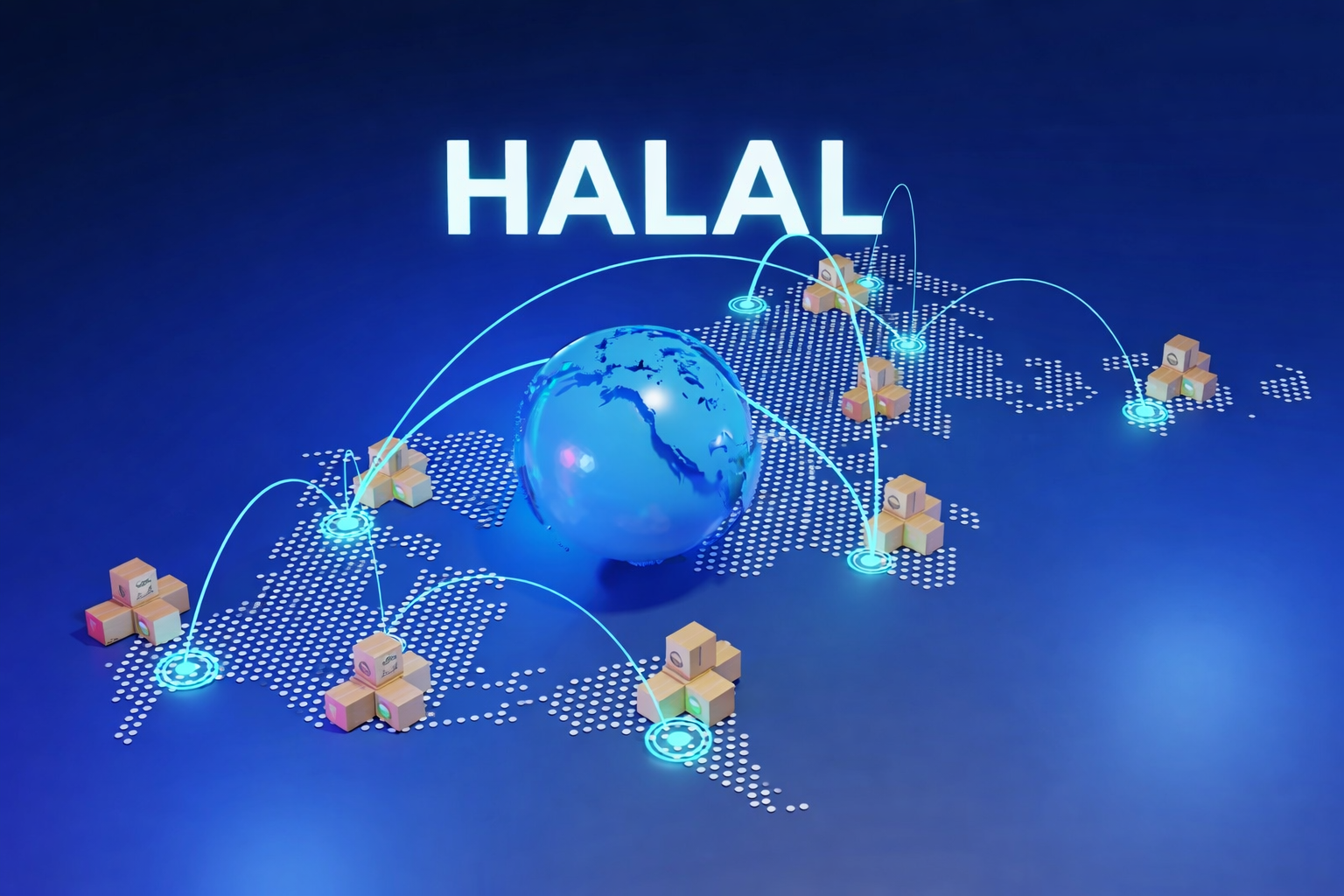
The Rise of Ethical Finance: Islamic Banking’s Journey to Global Prominence

Source: Halal Times
JAKARTA – The global financial landscape is witnessing a transformative shift as Islamic finance emerges as a formidable force, challenging traditional banking paradigms with its ethical foundation. Recent market analysis reveals that this sector is poised for extraordinary expansion, with projections indicating growth from $2.5 trillion in 2023 to an impressive $7.7 trillion by 2033, representing a compelling 12% compound annual growth rate.
The Ethical Foundation Driving Growth
At its core, Islamic finance represents more than just an alternative banking system—it embodies a philosophy that prioritizes moral responsibility and social justice. This financial framework, governed by Sharia principles, fundamentally rejects interest-based transactions (riba), speculative activities (gharar), and investments in industries considered harmful to society, including alcohol, gambling, and other prohibited sectors.
Instead, the system champions collaborative financial models emphasizing risk-sharing arrangements, profit-sharing mechanisms, and asset-backed investments. This approach ensures that financial activities directly contribute to tangible economic development, creating a more transparent and equitable system that appeals to both Muslim and non-Muslim consumers seeking ethical financial solutions.
Market Momentum and Regional Leadership
The industry’s current valuation of approximately $4 trillion in 2024, with expectations to reach $5 trillion by 2025, reflects unprecedented momentum across multiple regions. This growth trajectory is particularly pronounced in key markets where supportive regulatory environments and demographic trends converge.
Pakistan stands as a notable success story, with Islamic banking assets reaching $6.3 trillion in 2024—a remarkable 17.4% annual increase. This surge is attributed to progressive legislation enacted in 2024, which aims to transition the country toward a completely interest-free banking system by 2028. Similarly, Malaysia continues to serve as a global benchmark, with institutions like Maybank Islamic and Bank Islam Malaysia demonstrating the viability and sophistication of Sharia-compliant financial services.
Regulatory Evolution and Institutional Support
Government backing has proven instrumental in the sector’s rapid development. Nations including Malaysia, the United Arab Emirates, and Saudi Arabia have implemented comprehensive legal frameworks that align with Islamic principles while ensuring regulatory compliance and consumer protection. These jurisdictions have created favorable environments for financial institutions to innovate and expand their Islamic product offerings.
International regulatory bodies, particularly the Accounting and Auditing Organization for Islamic Financial Institutions (AAOIFI) and the Islamic Financial Services Board (IFSB), play crucial roles in maintaining industry standards. Their oversight ensures transparency, effective governance, and robust risk management practices, which are essential for maintaining stakeholder confidence and industry credibility.
The UAE’s ambitious target of growing Islamic banking assets to AED 2.56 trillion by 2031 exemplifies the level of governmental commitment driving this sector forward.
Technology Integration and Digital Innovation
The convergence of traditional Islamic finance principles with cutting-edge technology is creating new opportunities for market expansion. Digital transformation initiatives have introduced sophisticated payment systems, artificial intelligence-powered fraud detection mechanisms, and blockchain technologies that enhance both transparency and accessibility.
Islamic fintech platforms, including innovators like Wahed and Bank Syariah Indonesia, are successfully attracting younger demographics who value both technological convenience and ethical banking practices. Indonesia’s Bank Syariah Indonesia reported a substantial 33% increase in net profit during 2024, largely driven by growing middle-class adoption of digital Islamic banking services.
The implementation of blockchain technology in sukuk (Islamic bond) issuance is particularly noteworthy, as it reduces operational costs while broadening investor access to these Sharia-compliant investment instruments.
Global Expansion Beyond Traditional Markets
Perhaps most significantly, Islamic finance is experiencing remarkable growth in non-Muslim majority countries, indicating its appeal transcends religious boundaries. This expansion reflects a broader global trend toward environmental, social, and governance (ESG) investing, where Islamic finance’s inherent ethical framework aligns perfectly with contemporary sustainable investment principles.
The United Kingdom has emerged as a significant hub, with the Nest Sharia fund attracting over £180 million by 2024. Luxembourg’s stock exchange has listed more than €100 billion worth of sukuk by 2023, demonstrating European appetite for Islamic financial instruments. Australia is also positioning itself as a regional center for Sharia-compliant finance, recognizing the growing demand for ethical financial alternatives.
Product Diversification and Market Segmentation
The Islamic finance ecosystem encompasses diverse product categories, with Islamic banking maintaining dominance at over 70% of global Islamic finance assets in 2024. This segment includes innovative products such as murabaha (cost-plus financing), mudarabah (profit-sharing arrangements), and musharaka (joint venture partnerships).
The sukuk market, valued at $971 billion in 2024, is projected to reach $1.5 trillion by 2028, driven primarily by infrastructure financing requirements across developing economies. Takaful (Islamic insurance) and other specialized products, including microfinance solutions and wealth management services, are experiencing accelerated adoption.
From a customer perspective, individual consumers currently dominate market demand, particularly for Sharia-compliant personal banking products such as savings accounts and home financing solutions. However, the business segment shows the highest growth potential, as companies increasingly seek Islamic financial products for trade finance, business expansion loans, and sukuk-based funding mechanisms.
Regional Market Dynamics
Geographically, the Middle East and Africa maintain market leadership with a 53% share of global Islamic finance assets, with Saudi Arabia, Iran, and Malaysia serving as primary drivers. However, the Asia-Pacific region demonstrates the strongest growth trajectory, with projected compound annual growth rates of 13.28% from 2025 to 2030, largely attributed to expansion in Indonesia and Malaysia.
Leading market participants include established institutions such as Al Rajhi Bank, Dubai Islamic Bank, Kuwait Finance House, Qatar Islamic Bank, and Maybank Islamic. These organizations continue expanding their service portfolios, introducing innovative Sharia-compliant products while targeting new customer segments to drive sustained growth.
Addressing Industry Challenges
Despite impressive growth metrics, the Islamic finance sector faces several structural challenges requiring strategic attention. Product diversity limitations compared to conventional finance remain a significant concern, as Islamic banks often provide fewer options for complex financial requirements, particularly in areas such as long-term financing and sophisticated investment banking services.
Regulatory inconsistencies pose another challenge, with countries like Pakistan experiencing difficulties related to varying Sharia interpretations and guidelines. Achieving global standardization of Islamic finance principles remains complex, as religious scholars sometimes hold differing views on permissible practices and their implementation.
Public awareness represents an additional barrier, as many consumers in Muslim-majority countries lack comprehensive understanding of Islamic finance concepts and products. Educational initiatives are essential for bridging this knowledge gap and facilitating broader market adoption.
The industry also faces talent shortages, particularly in emerging markets where demand for Islamic finance expertise exceeds current supply, potentially limiting expansion capabilities.
Future Opportunities and Innovation
The sector’s growth potential extends far beyond current achievements, with numerous opportunities for expansion and innovation. Geographic diversification into African and North American markets presents significant possibilities, as evidenced by Nigeria, South Africa, and Egypt issuing $3.045 billion in sukuk during 2024.
Green sukuk, representing 10% of the global sukuk market in 2024, exemplify how Islamic finance principles can align with sustainable development objectives. These instruments fund renewable energy projects, affordable housing initiatives, and other environmentally beneficial ventures, creating synergies between Islamic ethics and contemporary sustainability goals.
Microfinance applications of Islamic principles, including Qard Hasan (interest-free lending) and Waqf (endowment-based funding), are empowering small businesses and supporting financial inclusion in developing economies. These initiatives demonstrate how traditional Islamic concepts can address modern economic challenges while maintaining ethical integrity.
The Path Forward
The projected growth to $7.7 trillion by 2033 represents more than numerical expansion—it signifies the maturation of an alternative financial system that prioritizes ethical considerations alongside commercial objectives. This trajectory reflects increasing global recognition that financial systems must balance profitability with social responsibility and environmental sustainability.
Success in achieving these ambitious targets will require continued innovation in product development, enhanced regulatory harmonization across jurisdictions, and comprehensive educational initiatives to increase public understanding. By addressing current limitations while capitalizing on emerging opportunities, Islamic finance is positioned to become a significant force in global financial markets.
As consumers and institutions increasingly prioritize transparency, fairness, and ethical considerations in financial decisions, Islamic finance offers a proven framework that aligns profit motives with moral principles. Whether through interest-free banking products, collaborative investment structures, or sustainable financing mechanisms, this sector continues demonstrating that ethical finance is not merely possible—it’s profitable and scalable for the global economy.
Original article:
halaltimes.com. (n.d.). Islamic Finance Market Set to Reach $7.7 Trillion by 2033. Retrieved August 5, 2025, from https://www.halaltimes.com/islamic-finance-market-set-to-reach-7-7-trillion-by-2033/