Review of BSI Interest Rates: Evaluating the Implementation of Islamic Economic Principles
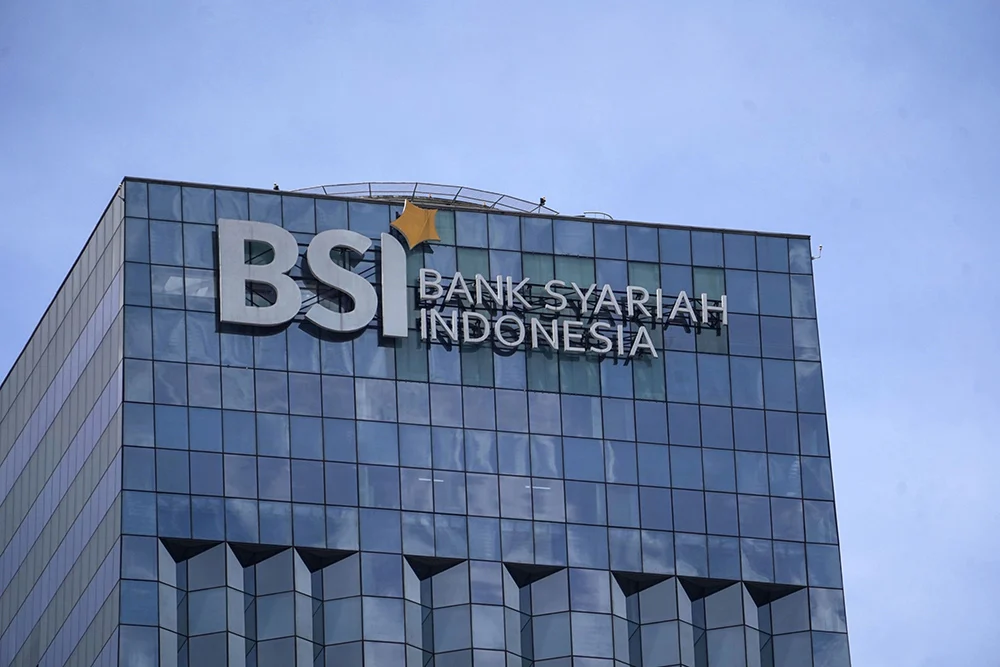
JAKARTA – Bank Syariah Indonesia (BSI), as Indonesia’s largest Islamic bank, has drawn attention from the House of Representatives Commission VI regarding financing interest rates deemed higher than conventional banks. This has sparked discussions about the implementation of Islamic economic principles in banking practices.
Profile of Bank Syariah Indonesia
PT Bank Syariah Indonesia Tbk (BSI) is the result of merging three state-owned Islamic banks: Bank BRI Syariah, Bank Mandiri Syariah, and Bank BNI Syariah, operating since February 1, 2021. As Indonesia’s largest Islamic bank by assets, BSI plays an important role in developing the national Islamic banking industry.
Criticism from House Commission VI
On Thursday (August 21, 2025), a member of House Commission VI, Mufti Aimah Nurul Anam, expressed concerns about BSI’s financing interest rates. According to Gus Mufti, BSI’s financing interest rates turned out to be higher than several conventional banks and Islamic banks in other countries.
To verify this information, Gus Mufti conducted research comparing BSI’s financing interest rates with Islamic banks in Malaysia and conventional banks in Indonesia. The research results showed that BSI’s financing interest reached 11%, while Islamic banks in Malaysia only charged around 4%. This figure is also higher than several major conventional banks such as BCA and BNI.
Understanding Islamic Economics
Islamic economics is an economic system based on Islamic teachings, aiming to create fair economic activities and provide welfare for society. This system regulates production, distribution, and consumption activities of goods and services to achieve social welfare and reduce economic inequality.
Principles of Islamic Economics
Islamic economics is built on several fundamental principles:
- Justice (Al-‘Adl) This principle emphasizes the need for balance and fairness in every economic transaction, where no party is unfairly disadvantaged.
- Transparency (Al-Shaffafiyyah) Openness of information in every transaction is mandatory, so all parties have the same understanding regarding contracts or agreements.
- Public Interest (Maslahat) Every economic activity must provide benefits and not harm public interests.
- Responsibility Economic actors have responsibility for the social and environmental impacts of their economic activities.
Prohibitions in Islamic Economics
There are three main prohibitions in Islamic economics:
Riba (Usury) Riba is taking additional profit from the principal loan without equivalent compensation. As a simple example: if you borrow 10 million rupiah and must return 11 million rupiah without any joint venture or profit sharing, then the additional 1 million rupiah is considered riba. In banking context, riba refers to the fixed interest system considered unfair because the fixed burden must be paid regardless of the borrower’s economic condition.
Gharar (Excessive Uncertainty) Gharar is excessive uncertainty or ambiguity in a transaction. Examples include selling fish still in the sea (not yet caught) or selling fruit still in flower form on trees. In banking, gharar can occur when contracts are unclear or contain uncertainty that disadvantages one party.
Maisir (Gambling) Maisir is economic activity that depends entirely on speculation or luck elements, such as gambling. A simple example is investment whose results depend purely on luck, not on mature business analysis.
Islamic System Alternatives: Mudharabah and Musyarakah
As alternatives to the interest system, Islamic economics offers several fairer schemes:
Mudharabah (Profit Sharing) Mudharabah is cooperation between capital owner (bank) and manager (customer). Simple analogy: the bank provides 100% capital for your business, and profits are divided according to agreement, for example 60% for you and 40% for the bank. If there’s a loss, the bank as capital owner bears the loss, while you lose the time and energy already invested.
Musyarakah (Partnership) Musyarakah is a partnership where all parties contribute capital. Example: You want to buy a house worth 500 million rupiah. You have 200 million rupiah capital, the bank contributes 300 million rupiah. Profits and losses are shared according to each party’s capital proportion. This is like you and the bank becoming “business partners” in asset ownership.
Murabahah (Sale and Purchase) The bank buys goods you need, then sells them to you with an agreed profit margin from the start. For example, the bank buys a car for 200 million rupiah, then sells it to you for 220 million rupiah with installments. The difference from interest is that the 220 million rupiah price is fixed from the beginning and will not change.
BSI Management Response
BSI’s President Director, Anggoro Eko Cahyo, provided explanations regarding the criticism. According to him, BSI’s financing interest rates are influenced by intense competition in the Islamic banking sector. With Islamic bank financing growth reaching 16%-17%, inter-bank competition has become very intensive, including in tariff setting.
Evaluation of Islamic Principles Implementation
This situation raises questions about the consistency of implementing Islamic economic principles in banking practices. One of the main objectives of Islamic economics is to provide a fairer alternative compared to conventional systems, especially in terms of cost burden on customers.
Fundamental Question: Why Can BSI Be More Expensive?
In Islamic principles, banks should operate with profit-sharing or sale-purchase schemes, not with fixed interest systems. However, in practice, many Islamic bank products use murabahah contracts (sale-purchase) with margins calculated similarly to conventional bank interest.
As a simple example: when you apply for home financing at a conventional bank, the bank will provide a loan with interest, say 8% per year. At an Islamic bank, the bank should first buy the house, then sell it to you with a profit margin. However, if that margin is calculated to reach 11% (as in BSI’s case), then customers actually pay more compared to conventional banks.
This raises the question: is the difference only in terminology (“margin” vs “interest”), or is there a substantial difference in practice?
Data showing that BSI’s interest rates are higher than conventional banks creates a need to evaluate whether this practice is still aligned with the spirit of Islamic economics that prioritizes justice and mutual benefit.
Islamic Banking Challenges
Commercial Pressure
Islamic banks face challenges in balancing business target achievement with consistent application of Islamic principles.
Public Understanding
The level of public understanding about fundamental differences between Islamic and conventional banks still needs improvement.
Supervision and Regulation
The supervision system for consistent application of Islamic principles in bank operations requires strengthening.
Future Recommendations
For BSI and Islamic Banks
- Pricing Structure Evaluation: Reviewing profit margin setting structures to be more aligned with Islamic justice principles. Islamic banks need to consider whether set margins are still within reasonable limits compared to risks borne.
- Return to Original Islamic Schemes: Better optimizing mudharabah and musyarakah products that truly implement profit-sharing principles, not just changing the term “interest” to “margin” without changing substance.
- Transparency: Increasing transparency in explaining components that influence margin rate setting. Customers have the right to know why they must pay more compared to conventional banks.
- Product Innovation: Developing products that better reflect profit-sharing principles and reduce dependence on interest-like systems.
Examples of More Islamic Implementation
For example, instead of providing home financing with a fixed 11% margin, BSI could:
- Offer musyarakah schemes where banks and customers jointly own houses according to capital proportions
- Use mudharabah for business financing, where profits are shared according to agreement
- Create murabahah products with competitive and fair margins
For Regulators
- Supervision Strengthening: Strengthening supervision systems for consistent application of Islamic principles.
- Standardization: Developing clearer standards regarding margin setting in Islamic financing products.
For Society
- Literacy Improvement: Increasing understanding of basic Islamic economic principles and how to differentiate them from conventional systems. Society needs to understand that Islamic banks are not just banks that “use different terminology,” but have different operational principles.
- Smart Product Selection: Customers need to be more careful in choosing banking products. Don’t just focus on the “Islamic” label, but also understand the schemes and costs. If Islamic banks are actually more expensive without providing clear added value, customers have the right to question this.
Conclusion
Criticism of BSI’s interest rates provides momentum for deeper evaluation of Islamic economic principles implementation in Indonesia’s banking industry. As the largest Islamic bank, BSI has an important role in demonstrating best practices consistent with Islamic values.
This discussion is not intended to undermine Islamic banking credibility, but as constructive input for improvement. With objective evaluation and continuous improvement, it is hoped that Indonesia’s Islamic banking can be increasingly consistent in applying principles that form its foundation, while remaining competitive in providing the best services to society.
Going forward, collaboration between Islamic banks, regulators, and society will be key in ensuring that Indonesia’s Islamic banking industry can develop according to its original purpose: creating a more just and sustainable economic system.
References:
Agustin, H. (2021). Teori bank syariah. JPS (Jurnal Perbankan Syariah), 2(1), 67-83.
Basuki, R. M., Muharrom, N. W., Latifaturrohmah, A., Hafawati, A. S., Nandani, D. M., Lestari, D., & Kusuma, N. A. (2025). Analisis Konsep Ekonomi Syariah: Studi Kasus Kritik Yusuf Mansur Terhadap Praktik Perbankan Syariah. Al-Zayn: Jurnal Ilmu Sosial & Hukum, 3(2), 530-551.
investor.id. (n.d.). BSI Kena Kritik DPR karena Bunga Lebih Tinggi dari Bank Konvensional. Retrieved August 22, 2025, from https://investor.id/finance/407130/bsi-kena-kritik-dpr-karena-bunga-lebih-tinggi-dari-bank-konvensional#goog_rewarded