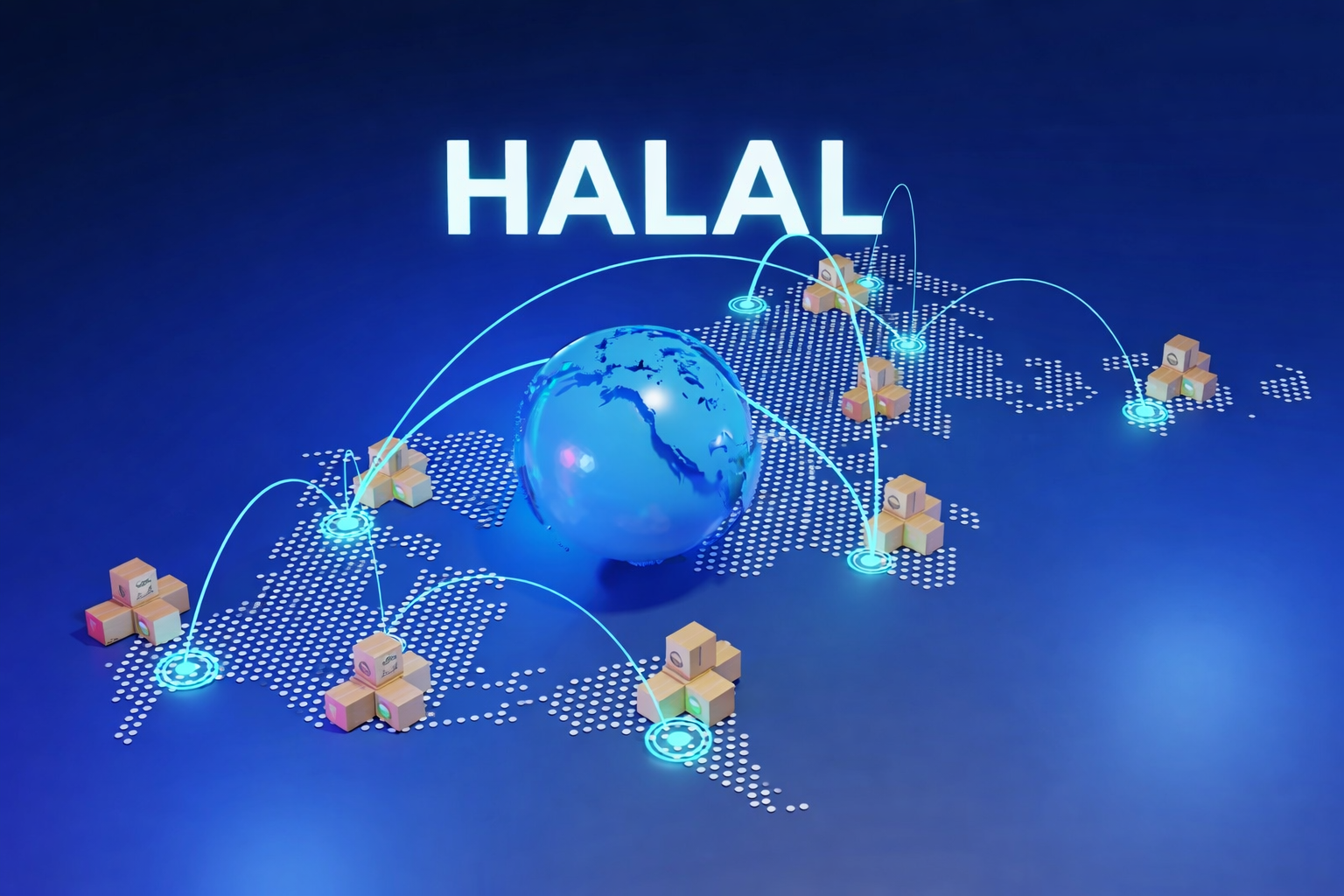
Middle Eastern Nations Transform Global Halal Food Production Landscape
JAKARTA – The Middle East has emerged as a dominant force in international halal food manufacturing, leveraging strategic investments, technological innovation, and favorable demographics to challenge established production centers and reshape a rapidly expanding global market worth trillions of dollars.
Market Dynamics and Regional Positioning
The worldwide halal food sector demonstrates remarkable growth trajectories, with market valuations projected to increase from $2.71 trillion in 2024 to approximately $5.96 trillion by 2033, representing a robust compound annual growth rate of 9.33%. Within this expanding landscape, the Middle East has established itself as a critical production hub, capitalizing on its predominantly Muslim population exceeding 500 million consumers and strategic geographic advantages.
Regional market assessments indicate the Middle East halal food sector reached $838.18 billion in 2024, with projections suggesting growth to $1,877.77 billion by 2033 through a 9.38% compound annual growth rate. This expansion reflects not only domestic consumption patterns but also the region’s increasing role as a major exporter to global markets.
The transformation stems from multiple converging factors including rising disposable incomes among Muslim middle-class populations, growing international recognition of halal food’s quality and ethical standards, and innovative technological solutions addressing regional agricultural constraints such as water scarcity and challenging climatic conditions.
Government-Led Strategic Initiatives
National governments across the Middle East have prioritized halal food production as a cornerstone of economic diversification strategies and food security enhancement. Saudi Arabia’s Vision 2030 framework exemplifies this approach, emphasizing domestic food production capabilities to reduce import dependency and establish the kingdom as a global halal manufacturing center.
The Saudi government’s Halal Products Manufacturing Accelerator Programme, developed through collaboration between the Halal Product Development Company and Saudi Export Development Authority, focuses on expanding local production capacity while boosting export capabilities. This initiative has attracted significant international investment, including Brazilian company JBS’s $50 million facility development and Nestlé’s first manufacturing plant establishment within the kingdom.
The United Arab Emirates has implemented complementary strategies through substantial investments in food technology innovation and sustainable production methods. Al Ghurair Foods’ advanced poultry processing facilities and venture capital funding for agricultural technology startups demonstrate the country’s commitment to technological leadership in halal food manufacturing.
Qatar and Bahrain have pursued parallel approaches by streamlining certification procedures and providing financial incentives for small and medium-sized enterprises entering the halal food market. These regulatory reforms aim to reduce barriers to entry while maintaining stringent quality and compliance standards.
Technological Innovation and Production Modernization
Middle Eastern halal food manufacturers are implementing cutting-edge technologies to enhance production efficiency, ensure compliance integrity, and improve supply chain transparency. Blockchain technology and Internet of Things monitoring systems enable comprehensive traceability throughout production and distribution processes, addressing critical concerns about halal authenticity and quality assurance.
Recent industry analysis by the Gulf Research Center revealed that 22% of halal meat processors experienced export rejections due to inadequate traceability documentation, prompting widespread adoption of advanced tracking technologies. These systems provide real-time monitoring of production conditions, ingredient sourcing, and handling procedures to ensure continuous compliance with halal requirements.
The region’s manufacturers are also embracing sustainable production methods to address environmental challenges while meeting growing consumer demand for ethically produced foods. Vertical farming systems, hydroponic agriculture, and water-efficient production technologies enable year-round production despite challenging climatic conditions.
Plant-based halal product development represents another significant innovation area, with manufacturers creating meat substitutes, dairy-free alternatives, and specialized nutritional products catering to health-conscious consumers while maintaining halal certification standards.
Market Diversification and Consumer Trends
The Middle Eastern halal food industry has expanded beyond traditional religious compliance to embrace broader consumer preferences and lifestyle trends. Premium and organic halal products represent growing market segments, with manufacturers developing allergen-free formulations, ready-to-eat meals, and specialized dietary supplements.
Cultural products like Dubai’s viral chocolate creations demonstrate the region’s ability to blend traditional authenticity with contemporary consumer preferences, generating significant international attention through social media marketing and export expansion.
Halal food tourism has emerged as a complementary growth driver, with luxury hospitality providers in Dubai, Doha, and other regional centers incorporating comprehensive halal-certified menus. Airlines including Emirates and Qatar Airways have standardized halal meal offerings, creating additional demand for locally produced halal ingredients and finished products.
Consumer activism and ethical purchasing decisions, particularly in response to geopolitical developments, have increased demand for regionally produced halal products. Middle Eastern consumers increasingly favor brands demonstrating alignment with local values and ethical production practices, encouraging multinational companies to establish regional manufacturing operations.
Industry Challenges and Regulatory Considerations
Despite rapid growth, the Middle Eastern halal food industry faces several structural challenges that could limit expansion potential. The absence of globally harmonized halal certification standards creates complexity for manufacturers and consumers, with different countries maintaining varying requirements for slaughter methods, processing standards, and ingredient specifications.
International trade complications arise from these regulatory divergences, though initiatives like the Indonesia-UAE-Turkey-Malaysia halal mutual recognition agreements attempt to reduce duplicate auditing requirements and associated costs. However, broader standardization efforts remain necessary for seamless global market integration.
Certification costs present significant barriers, particularly for smaller enterprises lacking resources for comprehensive auditing, ingredient traceability systems, and dedicated equipment segregation. While governments provide subsidies and streamlined procedures, broader support mechanisms may be required to ensure inclusive industry participation.
Supply chain management complexities, including cross-contamination risks and end-to-end compliance verification, require sophisticated monitoring systems and specialized handling procedures. These requirements increase operational costs while demanding continuous oversight throughout production and distribution networks.
Investment Opportunities and Market Access
The Middle East’s strategic location facilitates efficient export access to Asian, African, and European markets, while regional trade agreements enhance market penetration capabilities. E-commerce platform development and mobile application integration are improving halal product accessibility, with online retail segments expected to demonstrate significant growth through 2030.
Investment opportunities span multiple sectors including food technology startups, sustainable agriculture solutions, and premium product development. Venture capital funding for regional startups has increased substantially, supporting innovations addressing food security challenges and climate adaptation requirements.
The growing demand for premium and organic halal products creates opportunities for specialized manufacturers focusing on high-value market segments. Allergen-free products, plant-based alternatives, and functional foods represent particularly promising areas for expansion and differentiation.
Competitive Landscape and Global Impact
Saudi Arabia and the United Arab Emirates lead regional halal manufacturing development, with Saudi Arabia focusing on premium and organic product categories while the UAE emphasizes technological innovation and startup ecosystem development. Other Gulf Cooperation Council members contribute through regulatory modernization and sustainable farming investments.
Globally, the Middle East is challenging Southeast Asia’s traditional dominance in halal food production. While Indonesia maintains its position as the largest Muslim consumer market, Middle Eastern technological advancement and strategic investment are reducing competitive gaps significantly.
Major international halal exporters including Brazil and Australia are establishing local production facilities within the Middle East to capitalize on regional demand growth and export opportunities, further validating the region’s emerging market position.
Future Outlook and Strategic Considerations
Projected growth to $380 billion in Middle East and North Africa halal food markets by 2030 indicates substantial opportunities for stakeholders across the industry ecosystem. Success will require continued technological innovation, regulatory harmonization efforts, and sustainable production method adoption.
Businesses must adapt to evolving consumer preferences through e-commerce integration, ethical branding strategies, and sustainable practice implementation. The expansion of halal food tourism, premium product development, and international export capabilities will drive continued regional growth.
For consumers, increased production capacity means greater access to diverse, high-quality halal products meeting both religious requirements and contemporary lifestyle preferences. The integration of non-Muslim consumer segments attracted to halal products’ perceived safety, hygiene, and ethical standards further expands market potential.
The Middle East’s transformation into a global halal manufacturing powerhouse reflects strategic vision, substantial investment, and technological innovation. Continued success will depend on addressing regulatory challenges, maintaining quality standards, and adapting to evolving consumer preferences in an increasingly competitive international marketplace.
Original Article:
Halal Times. (2025, August 29). Middle East Surges Ahead in Global Halal Food Manufacturing. Retrieved from https://www.halaltimes.com/middle-east-surges-ahead-in-global-halal-food-manufacturing/