Breaking Culinary Barriers: How Hong Kong is Reimagining Cantonese Cuisine for Muslim Diners
From Window Shopping to First Taste
For years, Zahoor walked past countless char siu shops throughout Hong Kong, observing the distinctive glazed, roasted pork hanging prominently in restaurant windows—an iconic sight impossible to ignore in the city. However, as a practicing Muslim Pakistani resident, actually experiencing this quintessential Cantonese delicacy remained perpetually beyond reach due to religious dietary restrictions.
This limitation changed dramatically during a recent dining experience when Zahoor finally tasted something remarkably similar to traditional char siu, but prepared according to halal standards. The experience opened his eyes to possibilities he had never imagined, expressing enthusiasm for beef-based char siu alternatives and other halal Cantonese options that could make Hong Kong’s renowned culinary landscape accessible to Muslim residents and visitors.
The Challenge: Tradition Meets Religious Requirements
Hong Kong’s culinary identity presents a unique challenge for Muslim diners, as pork forms a foundational element of traditional Cantonese cuisine. This creates a frustrating paradox where the city’s most celebrated dishes remain off-limits to those following halal dietary laws, effectively excluding Muslim residents and tourists from experiencing Hong Kong’s complete gastronomic heritage.
Pioneering Innovation in Central: Chinesology’s Halal Revolution
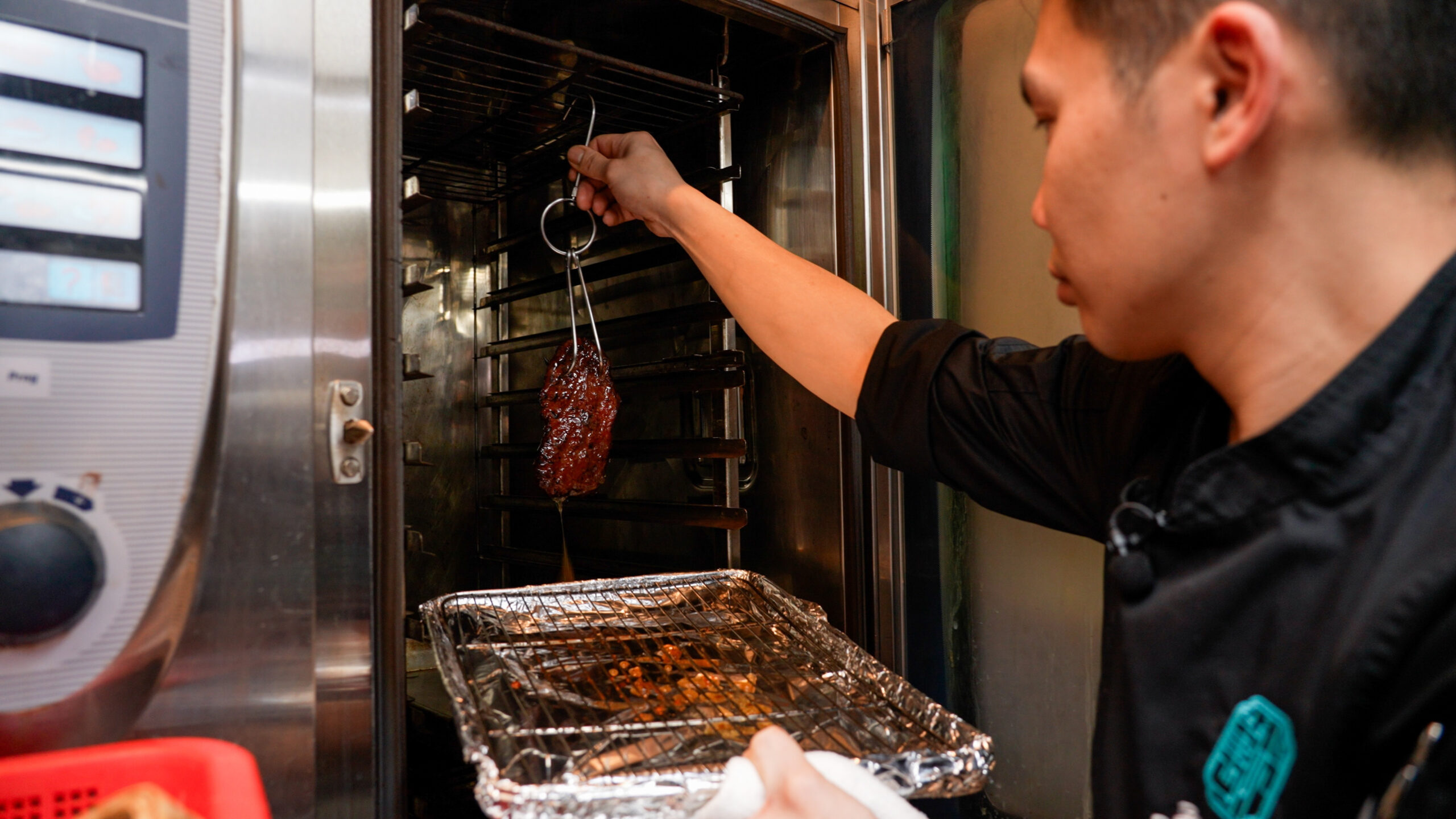
Leading the charge in culinary inclusivity, Chinesology, an upscale Chinese restaurant in Central, has emerged as a trailblazer in combining traditional Cantonese cooking with halal certification. Their signature achievement is a sophisticated halal char siu variant crafted from tender beef and coated with the characteristic sweet, smoky glaze that defines the original dish—completely free from pork products while maintaining authentic flavors.
The transformation required substantial investment and commitment. The restaurant invested over HK$100,000 and dedicated six months to converting kitchen facilities, sourcing halal-certified ingredients, and establishing separate utensils and cooking processes to meet stringent halal certification requirements.
General Manager Don acknowledged the complexity of the undertaking, describing multiple experimental failures before achieving the desired results. However, the motivation extended beyond mere customer acquisition—the team viewed char siu as an integral cultural element they wanted to share inclusively with Muslim guests.
Understanding Halal Certification Standards
The term “halal,” meaning “permissible” in Arabic, encompasses far more than simply avoiding pork and alcohol. Comprehensive halal food preparation requires that every ingredient, particularly meat, must carry halal certification, and food preparation must occur under specific controlled conditions with dedicated equipment and utensils to prevent cross-contamination.
Hong Kong’s halal certification operates under the oversight of the Incorporated Trustees of the Islamic Community Fund, which has developed a flexible three-tiered certification system. The most stringent level requires complete halal operations from cooking through serving. The intermediate tier permits alcohol service to guests while prohibiting its use in food preparation. The most accommodating tier allows restaurants to serve both halal and non-halal dishes provided they maintain strict separation protocols in preparation and hygiene practices.
Market Growth: From Niche to Mainstream Opportunity
Historically, Hong Kong’s halal dining options remained severely limited despite the city’s reputation as a world-class culinary destination. Until early 2024, approximately 100 halal-certified restaurants operated among tens of thousands of establishments citywide—predominantly hotel buffets, Indian restaurants, and Middle Eastern venues that provided familiar options for Muslim diners while largely excluding local flavors.
This landscape is rapidly evolving, with current halal-certified restaurants reaching approximately 300, targeting 500 by year-end. Chief Executive John Lee specifically addressed halal dining improvements in his policy address, aiming to attract increased Muslim tourism from Southeast Asia and the Middle East.
Longtime Community Servants
While new establishments gain attention, some venues have quietly served the Muslim community for decades. The Wan Chai Islamic Centre houses a modest canteen that has provided halal dim sum for over twenty years, featuring beloved items like halal siu mai dumplings traditionally made with pork.
Chef Yeung Cheuk-hung, a longtime kitchen veteran, explained the creative adaptation process required for halal dim sum preparation. When traditional ingredients became unavailable, the kitchen developed substitutions, using chicken enhanced with fish meat to achieve optimal texture in place of pork-based fillings.
Seeking Authentic Local Experiences
International Muslim visitors express appreciation for authentic local flavors prepared according to halal standards. Singapore tourist Irah recognized the Wan Chai location as Hong Kong’s singular halal dim sum destination, while noting the general scarcity of halal options throughout the city.
Malaysian visitors echoed this sentiment, expressing hope for expanded halal versions of local specialties including roast duck and seafood dishes, emphasizing that halal compliance represents a lifestyle choice rather than merely a dietary restriction.
Economic Potential
Consultancy expert Sharifa Leung advocates for recognizing halal food as one of Hong Kong’s most significant unexploited business opportunities. The Global Muslim Travel Index projects Muslim travelers will reach 245 million globally by 2030, generating over US$230 billion in annual spending. Despite this massive market, Muslim tourists currently comprise less than 3% of Hong Kong’s visitors.
However, Hong Kong’s global ranking is improving, recently achieving third place among most Muslim-friendly destinations in non-Muslim-majority economies. Leung positions halal food as a worldwide trend representing one of the largest global markets.
Implementation Strategy: Gradual Market Entry
While halal certification increases operational costs by 10-20%, businesses often experience positive returns on investment. Leung cites Toast Box in Jordan, which achieved increased sales following halal certification in August.
Rather than complete operational overhauls, Leung recommends gradual market entry through limited halal-friendly menu options, allowing restaurants to gauge customer response before expanding commitments. She reports increasing industry interest, with more restaurants and hotels seeking halal consultation services.
The transformation from 2017, when halal dining generated minimal interest, to current flourishing conditions demonstrates market evolution. Leung emphasizes that halal certification benefits all consumers by ensuring safety, wholesomeness, and ingredient traceability.
Cultural Integration
From sophisticated char siu interpretations to traditional dim sum adaptations, Hong Kong’s evolving food scene increasingly reflects the city’s cultural and religious diversity. For Muslim residents and tourists, these developments represent more than expanded dining options—they signify genuine inclusion and welcome within Hong Kong’s celebrated culinary community.
Original Article:
RTHK. (2025, September 15). Invest Hong Kong launches global campaign to promote city’s financial advantages. RTHK. Retrieved from https://news.rthk.hk/rthk/en/component/k2/1821961-20250915.htm?spTabChangeable=0