US Announces Comprehensive Sanctions Relief for Syria Following Political Transition
Source: Aljazeera English
JAKARTA – The United States has initiated a major shift in its Syria policy by implementing sweeping sanctions relief following the country’s political transformation. President Trump signed a comprehensive executive order on Monday, marking a significant departure from years of economic isolation that began well before Syria’s civil conflict erupted in 2011.
Historic Policy Reversal
The Treasury Department announced the removal of 518 Syrian individuals and organizations from its sanctions registry, representing one of the most substantial sanctions relief packages in recent Middle Eastern policy. This action follows more than six months since the fall of the Assad government in December 2024.
The executive order specifically targets restrictions that had been hampering Syria’s reconstruction efforts and economic development. According to Treasury officials, the relief focuses on “organizations essential to Syria’s advancement, governmental operations, and the restoration of the nation’s social infrastructure.”
Economic Impact and Reconstruction Prospects
Syria’s economy had been severely constrained by the multilayered sanctions regime, which contributed to near-economic collapse under the previous administration. The lifting of these restrictions is expected to:
- Enable international investment flows into Syrian markets
- Facilitate reconstruction of critical infrastructure
- Allow for normalized banking and financial services
- Open pathways for international trade relationships
Syrian Foreign Minister Asaad Hassan al-Shaibani expressed enthusiasm about the decision, stating it would “unlock the doors to long-anticipated reconstruction and development initiatives.” He emphasized that the move would “remove barriers to economic revival and integrate the country back into the global community.”
Diplomatic Context and Regional Implications
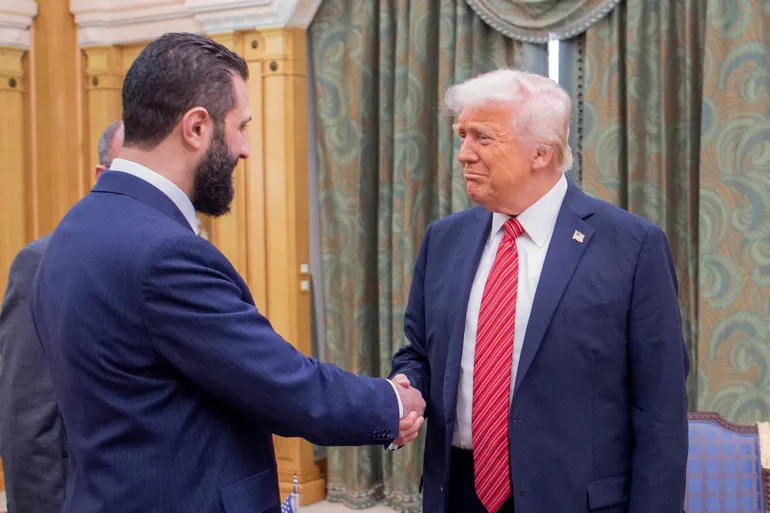
The sanctions relief comes following President Trump’s diplomatic engagement in the Middle East during his May visit to the region. During that trip, Trump met with Syria’s interim leader Ahmed al-Sharaa in Riyadh, signaling a potential warming of US-Syrian relations.
Trump’s statement accompanying the executive order emphasized America’s commitment to “supporting a Syria that maintains stability, unity, and peaceful relations with itself and neighboring countries.” The administration stressed that a unified Syria that refuses to harbor terrorist organizations while protecting religious and ethnic minorities would contribute to broader regional security.
Selective Approach to Sanctions Relief
While the relief is extensive, the Trump administration has maintained targeted sanctions on specific entities and individuals:
Sanctions Remaining in Place:
- Penalties against Assad and his associates
- Restrictions related to ISIS/ISIL
- Sanctions on Iran and its regional allies
Under Review:
- Caesar Act provisions, which imposed severe economic penalties for alleged war crimes
- Terrorist designations for interim President al-Sharaa
- Foreign terrorist organization status for Hayat Tahrir al-Sham (HTS)
Leadership Transition and International Recognition
Ahmed al-Sharaa, also known by his nom de guerre Abu Mohammed al-Julani, led the coalition that successfully overthrew the Assad regime. His background includes previous leadership of the al-Nusra Front, al-Qaeda’s former Syrian affiliate, though he severed those connections in 2016.
The group later evolved through several iterations, ultimately becoming Hayat Tahrir al-Sham, which controlled territory in northwestern Syria’s Idlib province before launching the successful offensive against Damascus.
Ongoing Challenges and Concerns
Despite the positive diplomatic developments, several challenges remain:
Security Concerns:
- Reports of violence against Alawite communities by former opposition fighters
- Concerns about maintaining inclusive governance
- Questions about protecting minority rights
Regional Stability:
- Israel’s continued military operations in Syrian territory
- Ongoing tensions with neighboring countries
- Need to prevent Syria from becoming a safe haven for extremist groups
Congressional Response and Legislative Efforts
The sanctions relief has found bipartisan support in Congress, with Representatives Ilhan Omar (Democrat) and Anna Paulina Luna (Republican) introducing legislation earlier this week to provide longer-term statutory relief for Syria. This bipartisan effort indicates broader political support for engagement with the new Syrian government.
Future Policy Directions
Secretary of State Marco Rubio has been tasked with conducting comprehensive reviews of:
- Al-Sharaa’s terrorist designation status
- HTS’s classification as a foreign terrorist organization
- Overall US policy toward the new Syrian government
These reviews will likely influence the long-term trajectory of US-Syrian relations and determine whether additional sanctions relief or policy adjustments may be forthcoming.
International Community Response
The US move is expected to encourage other international partners to reconsider their own sanctions regimes against Syria. European Union officials have indicated they are monitoring the situation closely and may consider their own policy adjustments based on developments in Syrian governance and human rights practices.
Economic Recovery Prospects
Financial analysts suggest that the sanctions relief could unlock significant investment opportunities in Syria’s reconstruction. Key sectors expected to benefit include:
- Infrastructure development and utilities
- Telecommunications and technology
- Agriculture and food processing
- Manufacturing and industrial production
The World Bank has estimated that Syria’s reconstruction needs exceed $400 billion, making international investment and aid crucial for the country’s recovery.
Looking Ahead
The sanctions relief represents a calculated gamble by the Trump administration that engagement rather than isolation will better serve American interests in Syria and the broader Middle East. Success will likely depend on the new Syrian government’s ability to maintain stability, protect minority rights, and demonstrate its commitment to preventing terrorist activities within its borders.
As Syria begins this new chapter, the international community will be closely watching whether the country can transition from years of conflict and isolation to become a stable, productive member of the regional community. The lifting of US sanctions provides an important foundation for that transition, but ultimate success will depend on the actions and policies of Syria’s new leadership.
Original article:
aljazeera.com. (n.d.).Trump formally orders lifting of Syria sanctions. Retrieved July 2, 2025, from https://www.aljazeera.com/news/2025/6/30/trump-formally-orders-lifting-of-syria-sanctions