East Java Embraces Digital Innovation to Transform Halal Industry
Source: Radio Republik Indonesia
JAKARTA – East Java has launched an ambitious initiative to establish itself as a global leader in halal product manufacturing through a groundbreaking partnership with Malaysian technology firm Serunai Commerce. The collaboration, formalized on July 30, 2025, centers on creating a comprehensive digital infrastructure for halal certification and compliance, positioning the province at the forefront of Indonesia’s halal economy development.
Bridging Traditional Industries with Modern Technology
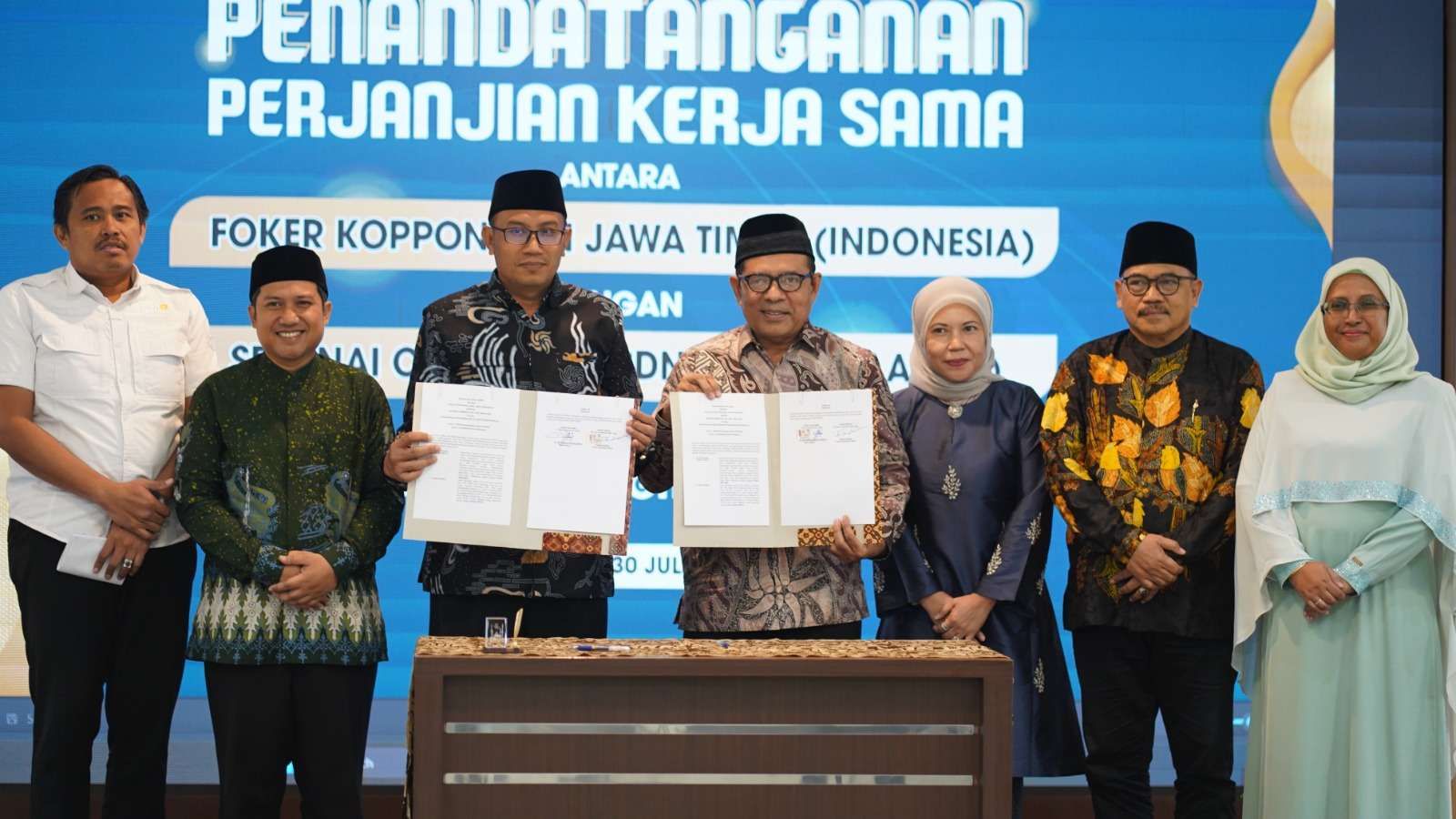
The partnership agreement was signed between East Java’s Islamic Boarding School Cooperatives Cooperation Forum (Foker Koppontren) and Serunai Commerce at the East Java Cooperatives and SMEs Agency headquarters in Sidoarjo. This strategic alliance represents a significant step toward modernizing Indonesia’s traditional halal production ecosystem through cutting-edge digital solutions.
Endy Alim Abdi Nusa, who heads the East Java Cooperatives and SMEs Agency, emphasized the transformative potential of this collaboration. The initiative directly supports Governor Khofifah Indar Parawansa’s vision to position East Java not merely as a domestic halal producer but as a prominent global exporter of certified halal products.
“This partnership transcends traditional cooperation models by integrating digital innovation with our existing strengths in halal production,” Endy stated during the signing ceremony. “We are committed to ensuring this collaboration delivers measurable outcomes for our local entrepreneurs and Islamic boarding school enterprises.”
Building on International Development Bank Foundations
The current partnership builds upon earlier diplomatic and economic engagements with international Islamic institutions. Mohammad Ghofirin, Secretary of East Java’s One Pesantren One Product (OPOP) program, revealed that the collaboration originated from discussions with the Islamic Development Bank (IsDB) in late 2023.
Governor Khofifah’s subsequent visit to IsDB headquarters in Jeddah, Saudi Arabia, in January 2024, laid the groundwork for this technological cooperation. The IsDB’s Reverse Linkage program facilitated the knowledge transfer and technology sharing that underpins the current Malaysian partnership.
“This initiative creates a comprehensive framework for training, knowledge exchange, and technology transfer specifically designed to enhance halal product quality from East Java’s small and medium enterprises,” Ghofirin explained. “Our ultimate goal is expanding market access to all 57 member countries of the Organization of Islamic Cooperation.”
Comprehensive Digital Ecosystem Implementation
Serunai Commerce brings sophisticated digital tools to East Java’s halal industry, promising to streamline certification processes and enhance regulatory compliance. The company’s digital suite includes several specialized platforms designed to address various aspects of halal production and verification.
Firdaus Dahlan, Serunai Commerce’s Chief Operating Officer, outlined the company’s commitment to supporting East Java’s halal industry transformation. “Our digital ecosystem will be implemented across Islamic boarding school cooperatives and their affiliated small businesses throughout the province,” he said. “We aim to simplify halal certification access through user-friendly digital services.”
The technological implementation encompasses multiple specialized systems including SJPH Digital, Halal Audit Digital Integrated System (HADIS), Halal Centre Master System (HCMS), Halal Digital Chain (HADIC), Verify Halal, and Halal Audit System Indonesia. These platforms collectively address certification, auditing, verification, and supply chain management requirements.
Empowering Islamic Boarding School Enterprises
The partnership specifically targets Islamic boarding school-based enterprises, recognizing their significant role in East Java’s economic landscape. These institutions, known locally as pesantren, operate numerous small businesses and cooperatives that contribute substantially to the province’s halal product output.
The digital transformation initiative aims to bridge the technology gap that has historically limited these enterprises’ access to formal halal certification. By providing accessible digital tools, the partnership enables pesantren-based businesses to meet international halal standards and compete in global markets.
Key religious and community leaders attended the signing ceremony, including Foker Koppontren East Java Chairman Subhan Anshori and Malang An-Nur 2 Islamic Boarding School caretaker Hairuddin, demonstrating broad community support for the digitization initiative.
Technology-Driven Compliance and Transparency
The digital halal ecosystem addresses critical challenges in traditional certification processes, including lengthy approval times, complex documentation requirements, and limited transparency in verification procedures. The integrated digital platform promises to streamline these processes while maintaining rigorous halal standards.
Participants at the launch event showed considerable interest in the digital applications presented by Serunai Commerce representatives. The technology demonstration highlighted how these tools can simplify compliance procedures for small and medium enterprises while providing greater transparency in halal verification processes.
“Enhanced availability of halal-certified products and improved transparency in halal verification will benefit the entire community,” Firdaus emphasized. “Our commitment extends beyond technology provision to delivering comprehensive support for pesantren-based enterprises.”
Strategic Economic Implications
This digitization initiative positions East Java to capitalize on the rapidly growing global halal market, estimated to reach $4.96 trillion by 2030. The province’s combination of traditional halal production expertise and modern digital infrastructure creates a competitive advantage in international markets.
The partnership also supports Indonesia’s broader economic objectives of increasing non-oil exports and diversifying its economic base. Halal products represent a significant opportunity for export growth, particularly to OIC member countries where demand continues expanding.
By focusing on digital transformation, East Java addresses a critical bottleneck in halal industry development—the certification process—while maintaining the quality and authenticity that international markets demand.
Regional Leadership in Halal Innovation
East Java’s proactive approach to halal industry digitization establishes the province as a regional leader in Islamic economy innovation. The collaboration with Malaysian expertise reflects Indonesia’s commitment to leveraging international partnerships for domestic economic development.
The initiative also demonstrates how traditional industries can embrace technological innovation without compromising core values and standards. This balance between tradition and modernity serves as a model for other Indonesian provinces and Southeast Asian regions seeking similar development paths.
Future Expansion and Development
The successful implementation of this digital halal ecosystem could serve as a template for expansion to other Indonesian provinces with significant Muslim populations and halal production capabilities. The scalable nature of digital platforms makes replication across different regions economically viable.
Furthermore, the partnership creates opportunities for continuous innovation and improvement in halal certification processes. As technology evolves, the digital infrastructure can incorporate new features and capabilities, ensuring East Java’s halal industry remains at the cutting edge of global standards.
Conclusion: Digital Transformation Meets Traditional Values
East Java’s partnership with Serunai Commerce represents a sophisticated approach to economic development that honors traditional Islamic values while embracing modern technological capabilities. By digitizing the halal ecosystem, the province positions itself to capture greater market share in the expanding global halal economy.
The collaboration’s success will depend on effective implementation across the diverse network of Islamic boarding schools and their associated enterprises throughout East Java. However, the strong government support, community engagement, and comprehensive digital infrastructure suggest promising prospects for transforming the province into a global halal industry hub.
This initiative exemplifies how regional governments can leverage international partnerships and technological innovation to create competitive advantages in emerging global markets while supporting local communities and traditional institutions.
Original article:
rri.co.id. (n.d.). East Java Partners with Malaysia to Digitize Halal Ecosystem. Retrieved August 1, 2025, from https://rri.co.id/en/international/1736746/east-java-partners-with-malaysia-to-digitize-halal-ecosystem