MIHREC 2025: Strategic Insights for Halal Industry Growth
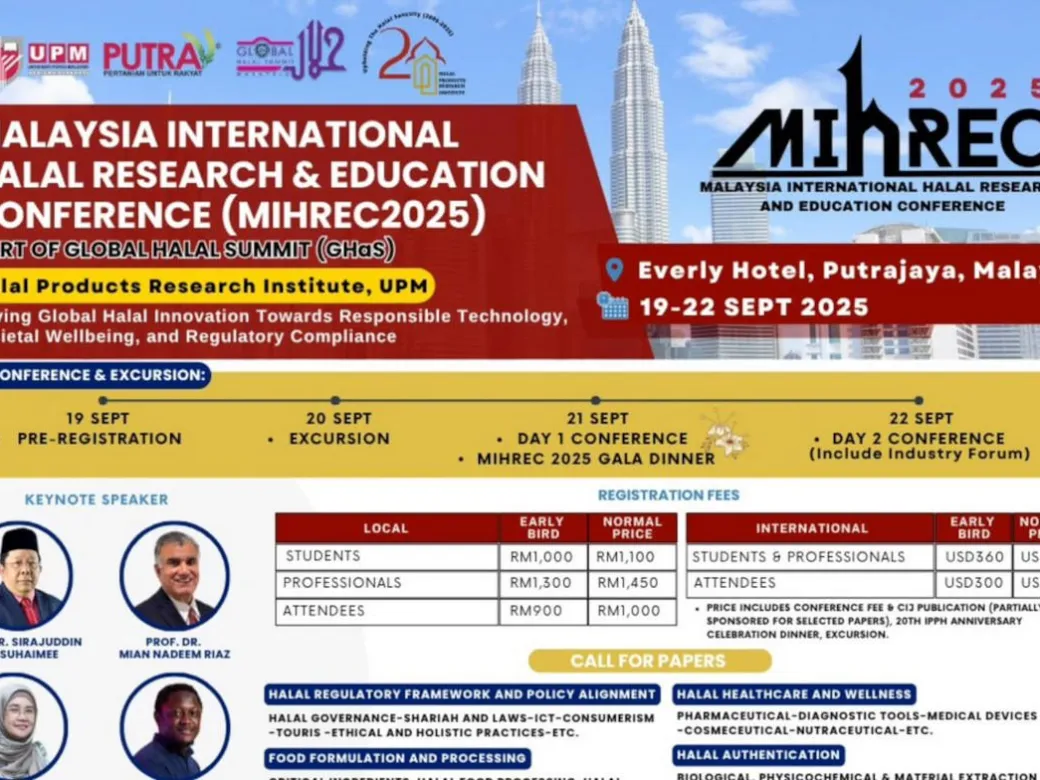
JAKARTA – The Malaysia International Halal Research & Education Conference (MIHREC) 2025 concluded at The Everly Hotel in Putrajaya, bringing together industry leaders, researchers, and entrepreneurs to explore the future of the $3 trillion halal economy. Organized by Universiti Putra Malaysia’s Halal Products Research Institute and the National Institutes of Biotechnology Malaysia, the conference centered on the theme “Driving Global Halal Innovation Towards Responsible Technology, Societal Wellbeing, and Regulatory Compliance.”
The three-day event revealed critical strategies for businesses operating in the halal sector, from small-scale operations to multinational enterprises. Here are the key takeaways that emerged from the conference discussions and presentations.
Technology-Driven Transparency and Verification
Digital transformation emerged as a cornerstone of modern halal business operations. Speakers from JAKIM demonstrated how blockchain technology and artificial intelligence are revolutionizing product verification and consumer trust. Advanced AI systems can now identify non-halal ingredients within seconds, dramatically reducing certification timeframes from weeks to days.
These technological solutions address growing consumer demands for transparency and traceability. Modern halal consumers increasingly expect to verify product authenticity through digital means, with QR codes providing instant access to supply chain information from farm to shelf.
Implementation strategies include:
- Piloting blockchain technology on specific product lines using platforms designed for small and medium enterprises
- Participating in JAKIM’s digital certification training programs launching in October
- Integrating QR code tracking systems into product packaging for enhanced customer engagement
Sector Diversification Beyond Traditional Food Markets
Conference presentations highlighted significant expansion opportunities beyond conventional food products. The halal market now encompasses biotechnology, pharmaceuticals, tourism, and financial services, creating a comprehensive lifestyle ecosystem.
Professor Dr. Mian Nadeem Riaz from Texas A&M University presented developments in halal-compliant vaccines and pharmaceuticals, addressing both medical necessity and religious compliance. Tourism sector discussions focused on the growing Muslim travel market, projected to reach substantial growth as post-pandemic travel resumes.
Islamic finance integration provides additional opportunities, with Shariah-compliant investment structures supporting halal business development across multiple sectors.
Expansion opportunities include:
- Cross-sector partnerships between food companies and biotechnology firms
- Tourism industry integration of halal-certified amenities and services
- Accessing Islamic banking solutions for business financing and expansion
Sustainability Integration as Competitive Advantage
Environmental responsibility aligned with Islamic principles emerged as a significant market differentiator. Dr. Awal Fuseini from the United Kingdom presented research linking halal production methods with environmental stewardship, demonstrating how religious compliance and ecological responsibility can create mutual benefits.
With 60% of Muslim consumers identifying as environmentally conscious, sustainable halal products offer both ethical fulfillment and market advantages. Case studies showed Malaysian farms achieving 30% waste reduction through biotech innovations while maintaining halal compliance.
Sustainability initiatives include:
- Conducting comprehensive carbon footprint assessments using available tools
- Integrating environmental, social, and governance metrics into halal certification processes
- Developing marketing strategies that highlight sustainable practices
Standardization and International Trade Facilitation
Regulatory harmonization represents a critical challenge limiting halal trade potential. Mr. İhsan Övüt from the Standards and Metrology Institute for Islamic Countries (SMIIC) identified fragmented standards as barriers blocking approximately $500 billion in potential halal exports.
Conference discussions emphasized the need for unified international standards, digital product passports, and mutual recognition agreements between certifying bodies. Policy presentations by Malaysian government officials outlined approaches to creating more favorable trade environments.
Strategic approaches include:
- Obtaining multiple international certifications to access diverse markets
- Engaging with standards organizations to influence regulatory development
- Advocating for government support of export-friendly trade agreements
Small and Medium Enterprise Development
Conference organizers emphasized inclusive growth strategies that support smaller businesses in accessing advanced technologies and international markets. Presentations showcased affordable AI solutions and subsidized training programs designed to level the playing field for SMEs.
Success stories included small-scale exporters using cost-effective AI tools to verify supply chains and secure international contracts, demonstrating that technological advancement need not be limited to large corporations.
SME support mechanisms include:
- Accessing government grants and subsidies for technology adoption
- Participating in mentorship programs connecting established companies with startups
- Utilizing open-source tools for process verification and improvement
Research Collaboration and Innovation Leadership
The conference featured over 150 research presentations covering topics from AI-driven auditing systems to biotechnology applications in halal production. International collaboration emerged as a key theme, with researchers from Japan, the United States, and other countries sharing insights and forming partnerships.
Malaysia’s positioning as a center for halal innovation was reinforced through these collaborative relationships and research initiatives, creating opportunities for businesses to participate in cutting-edge developments.
Research engagement strategies include:
- Contributing to academic conferences and publications for industry visibility
- Developing professional networks through industry events and online platforms
- Staying informed about technological developments through specialized publications
Industry Outlook and Implementation
MIHREC 2025 highlighted the halal industry’s evolution from compliance-focused operations to innovation-driven global leadership. The conference emphasized that halal certification represents more than regulatory requirement—it embodies a commitment to comprehensive quality and ethical standards.
As Dato’ Dr. Sirajuddin Suhaimee noted during closing remarks, halal standards represent promises of better living through principled business practices. This philosophy extends beyond individual companies to encompass industry-wide transformation toward more responsible and sustainable operations.
The insights from MIHREC 2025 provide actionable frameworks for businesses across the halal ecosystem. Whether implementing technological solutions, expanding into new sectors, or developing sustainable practices, the conference offered practical guidance for companies seeking to capitalize on the growing global halal market.
Future developments will likely continue emphasizing technological integration, international standardization, and sustainable practices as key drivers of industry growth and consumer trust.
Original Article:
Halal Times. (2025, September 23). Six Key Lessons from MIHREC 2025 to Skyrocket Your Halal Business. Retrieved from https://www.halaltimes.com/six-key-lessons-from-mihrec-2025-to-skyrocket-your-halal-business/