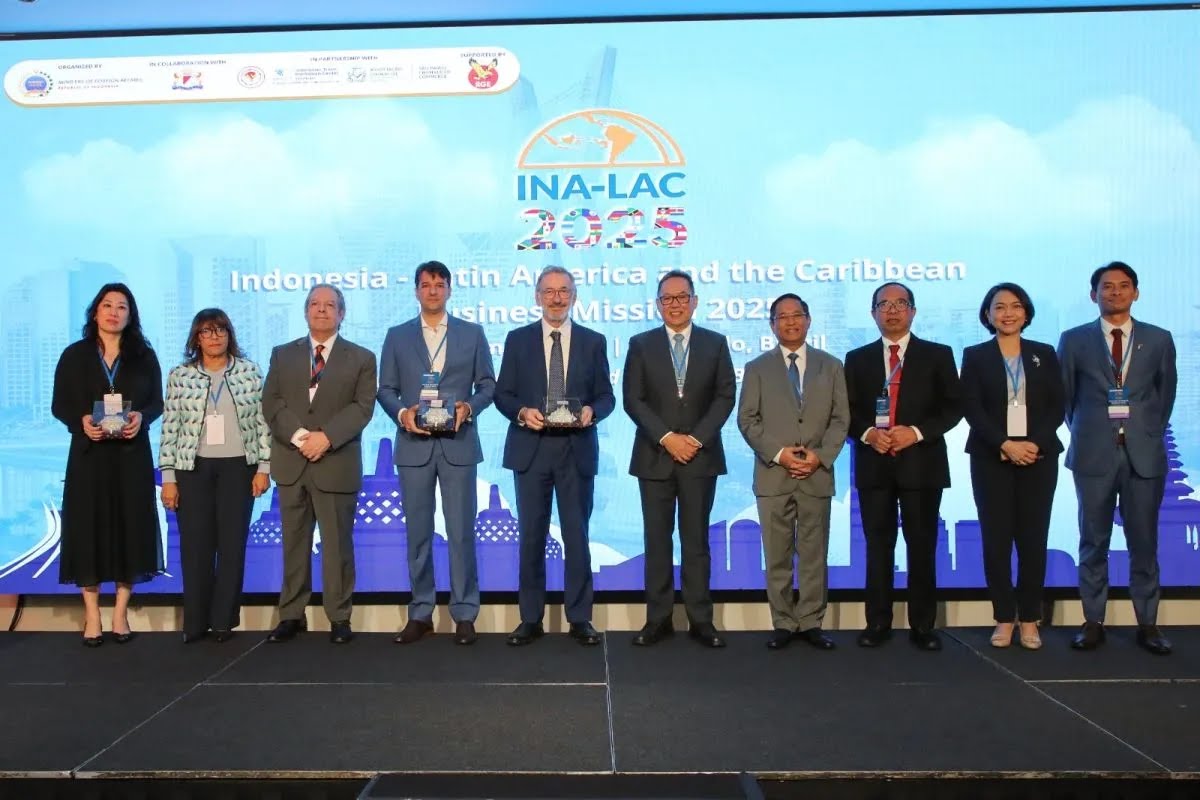
Indonesia Strengthens Global Halal Collaboration at INA-LAC 2025 Forum in Brazil
JAKARTA – Indonesia is intensifying its efforts to build a comprehensive global halal ecosystem through active participation in the Indonesia-Latin America and the Caribbean Business Forum (INA-LAC) 2025, held in São Paulo, Brazil. The initiative demonstrates the country’s commitment to expanding halal certification partnerships beyond traditional markets into emerging regions with significant growth potential.
Strategic Global Positioning
The Halal Product Assurance Organizing Agency (BPJPH) leveraged the international forum to strengthen collaborative frameworks with Latin American and Caribbean nations, emphasizing mutual benefits through standardized halal industry cooperation. Abd Syakur, Deputy for Halal Partnership and Standardization at BPJPH, articulated the vision during the forum.
“Global halal collaboration is expected to strengthen the ecosystem of industry cooperation and halal product trade in accordance with regulations and standards, bringing mutual benefits,” Syakur stated from Jakarta on Thursday.
This strategic approach positions Indonesia as a facilitator of international halal trade relationships while establishing standardized frameworks that benefit all participating nations.
Comprehensive Policy Framework Presentation
During the international forum, BPJPH presented Indonesia’s evolving halal certification policies, regulatory developments, and implementation progress to regional stakeholders. The presentation highlighted Indonesia’s transformation from voluntary to mandatory halal certification systems, demonstrating the country’s commitment to comprehensive halal assurance.
The mandatory certification framework is governed by Law No. 33 of 2014 concerning Halal Product Assurance and Government Regulation No. 42 of 2024 concerning the Implementation of Halal Product Assurance. This regulatory evolution reflects Indonesia’s systematic approach to ensuring halal product integrity across all market segments.
Beyond Religious Considerations
Syakur emphasized that halal certification transcends religious considerations, encompassing broader quality assurance principles. “Halal is not just a religious issue, but is also closely related to quality, hygiene, safety, and product competitiveness in global markets,” he explained.
This holistic approach to halal certification addresses multiple market demands simultaneously, making Indonesian-certified products attractive to diverse consumer segments worldwide, including non-Muslim consumers who associate halal certification with superior quality and safety standards.
Business Matching and Commercial Opportunities
The forum facilitated direct business matching sessions between BPJPH and numerous companies from Latin America and the Caribbean regions that expressed significant interest in halal certification services. These sessions created immediate commercial opportunities while establishing foundations for long-term business relationships.
Syakur noted that the meetings served as strategic platforms for bridging international business needs with Indonesia’s trusted and globally competitive halal certification services. This approach directly connects regulatory capabilities with market demands, creating practical pathways for business expansion.
Impressive International Network
BPJPH’s data reveals the extensive reach of Indonesia’s halal certification network. As of September 2025, 94 foreign halal institutions (LHLN) across 37 countries have established cooperative relationships with BPJPH, including three institutions specifically from Brazil. This network has facilitated the registration of more than 118,000 foreign halal-certified products in Indonesia.
The statistics demonstrate Indonesia’s role as both a destination market for international halal products and a certification authority recognized across diverse geographical regions. The inclusion of Brazilian institutions highlights the success of Indonesia’s engagement with Latin American markets.
Strategic Market Expansion
The participation in INA-LAC 2025 represents Indonesia’s systematic expansion into previously underexplored markets. Latin America and the Caribbean regions present significant opportunities for halal product growth, driven by increasing Muslim populations, growing awareness of halal quality standards, and expanding international trade relationships.
By establishing partnerships in these regions, Indonesia diversifies its halal certification portfolio while creating new revenue streams and strengthening its position as a global halal authority.
Competitive Certification Services
Indonesia’s halal certification system has gained international recognition for its rigorous standards, comprehensive oversight, and efficient processing capabilities. The system’s credibility attracts international businesses seeking reliable halal certification that enables access to global Muslim markets and quality-conscious consumers.
The competitive advantage stems from Indonesia’s large Muslim population, extensive regulatory experience, and systematic approach to halal assurance across diverse product categories and industrial sectors.
Regional Leadership and Influence
Through initiatives like INA-LAC 2025, Indonesia demonstrates leadership in establishing international halal trade standards and facilitating cross-border cooperation. This leadership position enables the country to influence global halal industry development while creating favorable conditions for Indonesian businesses seeking international expansion.
The collaborative approach also strengthens diplomatic and economic relationships between Indonesia and participating nations, creating broader benefits beyond the halal sector specifically.
Future Growth Trajectory
The expansion of Indonesia’s halal certification network into Latin America and the Caribbean creates foundations for sustained growth in international halal trade. As global demand for halal-certified products continues increasing, Indonesia’s early establishment of relationships in emerging markets positions the country advantageously for future opportunities.
The systematic approach to international partnership development, combining regulatory expertise with commercial facilitation, provides a scalable model for further geographic expansion.
Economic and Diplomatic Benefits
Indonesia’s halal collaboration strategy generates multiple benefits beyond immediate commercial gains. The partnerships strengthen bilateral trade relationships, create employment opportunities in certification and related services, and enhance Indonesia’s reputation as a reliable partner in international trade.
The approach also supports Indonesia’s broader economic diplomacy objectives by positioning the country as a solution provider for international trade challenges while building long-term relationships that extend beyond single sectors or products.
BPJPH’s participation in INA-LAC 2025 exemplifies Indonesia’s strategic approach to global halal ecosystem development, combining regulatory expertise, commercial facilitation, and diplomatic engagement to create comprehensive international partnerships that benefit all participating stakeholders.
Original Article:
Antara News. (2025, September 29). Indonesia perkuat kolaborasi halal dunia dalam INA-LAC 2025 Brasil. Retrieved from https://www.google.com/amp/s/jatim.antaranews.com/amp/berita/980193/indonesia-perkuat-kolaborasi-halal-dunia-dalam-ina-lac-2025-brasil