Malaysia Becomes South Korea’s Strategic Partner for Halal Market Entry
JAKARTA — Visitors to the Malaysia International Halal Showcase (MIHAS) this year witnessed a vibrant marketplace where halal commerce converges, featuring exhibits spanning food products, beverages, beauty items, and medical supplies—all vying for position in a market expanding well beyond traditionally Muslim regions.
A notable trend emerged this year: the significant representation of South Korean businesses. At various exhibition stands, Korean enterprises showcased their renowned products with an important addition—halal certification. Malaysian purchasers engaged enthusiastically, inquiring about ingredient compositions, certification procedures, and market distribution strategies. Korean representatives demonstrated confidence in discussing their collaboration with domestic and international regulatory bodies to achieve halal compliance.
For these companies, Malaysia represents far more than a simple trade venue—it serves as an essential gateway to penetrating the worldwide halal marketplace.
Korean Business Commitment to Halal
Throughout the MIHAS exhibition floor, a consistent pattern emerged. Korean snack producers presented halal-approved versions of seaweed-based products and condiments. Nutritional supplement manufacturers displayed halal-certified wellness products. Biotechnology companies investigated pathways to make their offerings suitable for Muslim markets.
The evidence suggested a coordinated strategic shift: South Korean businesses now view halal compliance not as discretionary but as a significant commercial prospect, with Malaysia positioned as the optimal entry point.
Malaysia’s Halal Infrastructure Advantage
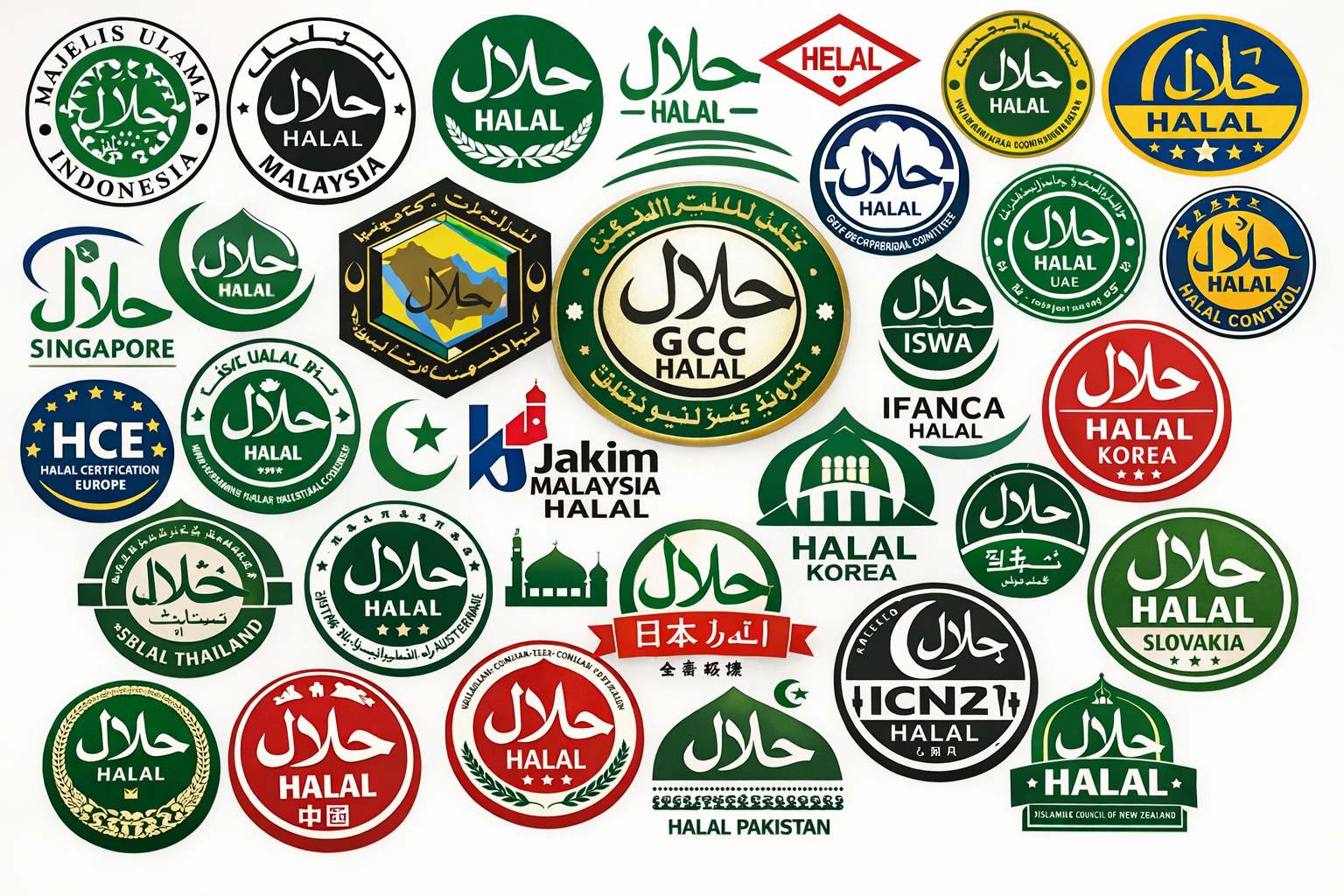
Malaysia’s prominence in the halal industry stems from decades of deliberate development. The Malaysian government, through its Islamic Development Department (JAKIM), has established a certification framework that commands international recognition. Numerous nations across the Gulf region and Southeast Asia recognize Malaysian certification as a reliable indicator of quality and regulatory adherence.
Beyond certification alone, Malaysia has constructed a comprehensive halal ecosystem encompassing testing laboratories, distribution networks, advisory services, trade exhibitions, and investment programs. For international enterprises seeking Muslim market access, Malaysia provides an established support infrastructure that minimizes both uncertainty and commercial risk. This arrangement particularly appeals to South Korean companies entering the halal sector with ambitious growth objectives.
Massive Market Potential
The worldwide halal economy demonstrates remarkable expansion momentum. Muslim consumers allocate over US$1.4 trillion annually to food and beverage purchases exclusively, with total spending climbing substantially higher when including cosmetics, pharmaceuticals, apparel, and tourism. These figures continue accelerating, driven by expanding young populations, increasing disposable incomes, and heightened consciousness regarding halal standards throughout Asia, the Middle East, Africa, and European markets.
For Korean enterprises, this market scale demands attention. These companies already possess competitive advantages in product development, brand management, and international distribution. Korean cuisine, skincare innovations, and cultural exports have achieved global recognition over recent decades, establishing a reputation for excellence and creativity.
The halal marketplace represents their next expansion opportunity. However, success requires establishing consumer confidence—and in halal commerce, confidence derives from proper certification and regulatory compliance, areas where Malaysia excels.
Strategic Approaches
At MIHAS, numerous Korean companies explained that obtaining halal certification constituted their initial priority. Without proper certification, they recognized that potential buyers would remain hesitant regardless of product popularity. Some enterprises are advancing further, establishing manufacturing operations within Malaysia or negotiating collaborative ventures with Malaysian partners.
The SPC Group, among Korea’s largest food producers, has already constructed production facilities in Malaysia. This positioning enables them to serve Malaysian consumers while utilizing the country as an export platform for halal products throughout the region. Smaller enterprises are adopting similar strategies, pursuing Malaysian partnerships to understand local market preferences and expand into territories including Indonesia, Saudi Arabia, and the United Arab Emirates.
Opportunities for Malaysian Enterprises
This surge of Korean commercial interest presents substantial opportunities for Malaysian businesses. Local companies need not limit themselves to distribution roles—they can advance as equivalent partners through co-developing innovative products, providing halal-compliant manufacturing services, or collaborating on branding and promotional initiatives.
A Malaysian production facility, for instance, could partner with a Korean snack producer to create flavor profiles appealing across diverse markets from Kuala Lumpur to Dubai to Jakarta. A halal advisory firm could assist a Korean beauty brand with product reformulation while simultaneously securing distribution participation. These mutually beneficial arrangements introduce technology, capital investment, and expertise while expanding Malaysia’s position in the international halal supply network.
Navigating Challenges
This expansion path presents certain obstacles. Varying national halal standards create navigational complexity. Products successful in Seoul may require modification for Muslim consumers in different markets—necessitating flavor adjustments, packaging redesigns, or ingredient substitutions. Establishing halal-compliant production facilities also demands significant capital investment, particularly challenging for smaller companies entering the market initially.
Nevertheless, the atmosphere at MIHAS conveyed determination: Korean businesses demonstrate willingness to commit necessary resources and effort for proper implementation. They approach the halal market as a sustained commitment rather than exploratory venture.
Transforming Global Trade Patterns
The underlying narrative reveals how halal commerce is evolving. It no longer functions exclusively as Muslim-majority nations producing for Muslim consumers. Instead, it has matured into a global value network where companies from diverse backgrounds collaborate to serve an expanding market founded on trust and cultural understanding.
South Korea’s market entry through Malaysian partnership illustrates the power of cross-border collaboration. Korea contributes innovation, technological capability, and global brand strength. Malaysia provides halal authenticity, market accessibility, and operational experience. Together, they can develop products that achieve both halal compliance and international competitiveness.
Future Prospects
Departing from MIHAS, past vibrant exhibitions and active networking areas, one conclusion emerged clearly: these developments mark only the beginning. South Korea approaches halal commerce with seriousness, and Malaysia stands prepared to facilitate connections. As these partnerships mature, Korean halal-certified products may soon appear on Middle Eastern retail shelves, halal-approved Korean beauty products in European outlets, and joint Malaysia-Korea brands achieving worldwide recognition.
This transcends simple commerce—it represents construction of innovative collaboration models where trust intersects with creativity. If Malaysia and South Korea leverage their respective strengths effectively, their partnership could emerge as among the most compelling developments in the global halal economy for years ahead.
Original Article:
Halal Times. (2025, September 30). South Korea Eyes Malaysia as Gateway to the Global Halal Economy. Retrieved from https://www.halaltimes.com/south-korea-eyes-malaysia-as-gateway-to-the-global-halal-economy/