Vietnam Accelerates Halal Product Exports to Türkiye Amid Growing Global Market
JAKARTA – Vietnam is intensifying efforts to expand its halal product exports to Türkiye as part of a comprehensive strategy to capitalize on the rapidly growing global halal market, currently valued at over $2.5 trillion. This initiative reflects Vietnam’s recognition of halal certification as a strategic pathway to boost international trade and strengthen its position in global supply chains.
Bilateral Cooperation Framework
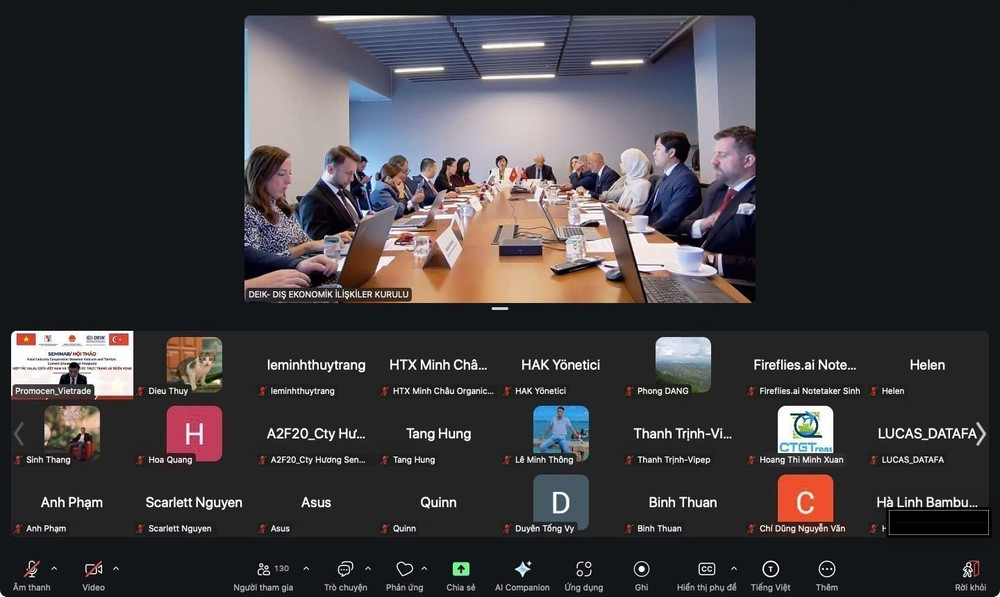
The Vietnam Trade Promotion Agency (VIETRADE), operating under the Ministry of Industry and Trade, recently organized a hybrid seminar on halal industry cooperation between Vietnam and Türkiye. The event was coordinated with the Vietnamese Embassy in Türkiye and the Foreign Economic Relations Board of Türkiye (DEIK), bringing together government representatives and business communities from both nations.
The seminar focused on strengthening bilateral trade and investment in halal products and services while showcasing Vietnamese companies’ production capabilities and compliance with international halal standards. It provided a crucial platform for direct engagement among regulatory agencies, certification bodies, and industry associations from both countries.
Complementary Strengths Drive Partnership
Ambassador Dang Thi Thu Ha highlighted that Vietnam-Türkiye diplomatic relations, approaching 50 years, have experienced dynamic development, particularly following Prime Minister Pham Minh Chinh’s 2023 visit. She characterized halal cooperation as a relatively nascent but highly promising area where both nations possess complementary advantages and benefit from strong governmental backing.
Le Hoang Tai, Deputy Director of VIETRADE, reported that bilateral trade has shown consistent growth, exceeding $2 billion in 2024. Vietnam now ranks as Türkiye’s second-largest ASEAN trading partner, while Türkiye functions as a vital gateway for Vietnamese products to reach Middle Eastern, European, and North African markets.
Market Positioning and Opportunities
Tai emphasized the strategic alignment between the two countries: Türkiye’s substantial Muslim population makes it both a significant consumer market and a regional halal processing center. Meanwhile, Vietnam is establishing itself as a dependable source of halal-certified products, particularly in sectors such as processed foods, agricultural products, beverages, tourism services, and logistics.
Zafer, Board Chairman of the Halal Accreditation Agency (HAK), noted the sharp increase in global demand for certified halal products and services. He pointed out that halal certification is increasingly recognized as a benchmark for safety, hygiene, and quality standards. He also detailed Türkiye’s certification requirements for imported halal goods.
Global Halal Summit Invitation
Yunus Ete, President of the World Halal Summit Council, emphasized the robust growth across halal food, cosmetics, pharmaceuticals, and tourism sectors worldwide. He highlighted Türkiye’s strategic geographical position bridging Asia and Europe and extended an invitation to Vietnamese businesses to participate in the World Halal Summit and Halal Expo scheduled for Istanbul from November 26-29.
Certification Support and Market Access
Ramlan Osman, Director of the National Halal Certification Centre (HALCERT) under the Ministry of Science and Technology, shared that his organization has already assisted several Vietnamese enterprises in exporting to Japan and Malaysia—a model that could be adapted for the Turkish market. HALCERT also facilitates business-to-business connections between Vietnamese and Turkish companies to enhance trade relationships.
Challenges in Market Entry
Despite substantial potential, participants identified several obstacles Vietnamese exporters face when entering the Turkish halal market:
Certification Complexity: Stringent certification requirements cover multiple aspects including ingredient sourcing, hygiene standards, humane production practices, transportation, and storage conditions.
Recognition Issues: The absence of mutual recognition of halal certificates among Islamic countries creates additional complications for exporters.
Competitive Landscape: Tran Viet Hung, head of Import-Export at Visimex JSC, noted that Vietnamese halal products face intense competition from established suppliers including India, Brazil, the United States, Malaysia, and Indonesia, as well as from domestic Turkish producers.
Cost Barriers: High certification costs and complex procedural requirements present particular challenges for small and medium-sized enterprises. Additionally, some Turkish importers insist on locally issued halal certificates despite recognizing foreign accreditations.
Government Support Initiatives
Recognizing the strategic importance of the halal sector, Vietnam has prioritized the development of a comprehensive halal ecosystem. The government has implemented programs designed to help enterprises enhance production capacity, improve product quality, and obtain necessary certifications. These efforts include deepening collaboration with international partners to facilitate market access in Islamic countries.
Reha Denemec, member of DEIK’s Chairman Board and Chairman of the Türkiye-Vietnam Business Council, affirmed DEIK’s commitment to supporting and connecting enterprises from both countries, particularly in halal cooperation initiatives.
Future Collaboration Plans
Deputy Director Tai confirmed that VIETRADE will maintain close cooperation with the Vietnamese Embassy in Türkiye, the Türkiye-Vietnam Business Council, and relevant industry associations to foster effective and sustainable halal collaboration. These efforts aim to contribute positively to bilateral economic and trade relations while strengthening Vietnam’s position in the global halal market.
Emerging Halal Hub
Vietnam is positioning certain regions, particularly Tay Ninh and the Mekong Delta, as strategic halal hubs. Success in this sector requires standardizing products and services to meet halal requirements, leveraging local advantages, and strengthening relationships with key markets to unlock opportunities in the Muslim world.
As global demand for halal products continues its rapid expansion, Vietnam’s strategic focus on developing halal certification capabilities and production capacity represents a forward-looking approach to international trade diversification and market development.
Original Article:
Vietnam Plus. (2025, October 6). Vietnam promotes Halal product exports to Türkiye. Retrieved from https://en.vietnamplus.vn/vietnam-promotes-halal-product-exports-to-turkiye-post329853.vnp