Leading Inclusive Halal Innovation in Cultivated Food
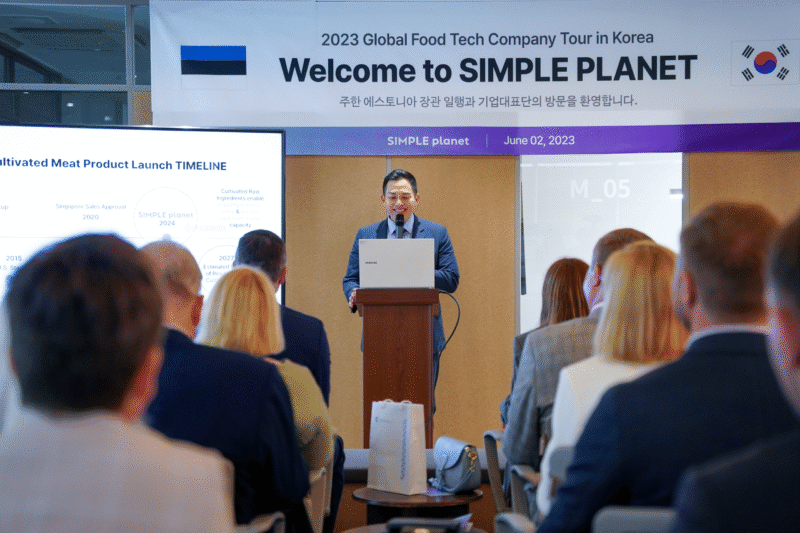
(Photo by: Simple Planet)
Redefining Food Innovation Through Cultural Inclusion
Discussions around food technology usually focus on scalability, efficiency, and sustainability, while cultural and religious inclusion is often overlooked. As alternative proteins and cultivated foods advance rapidly, an important question remains: are these innovations genuinely accessible to all consumers? Simple Planet challenges this gap by placing halal principles at the core of its biotechnology strategy, ensuring that innovation does not exclude faith-based dietary needs.
Guided by the belief that future food systems must be ethical, inclusive, and environmentally responsible, Simple Planet is positioning itself as a pioneer in halal-aligned cultivated food. According to CEO and co-founder Dominic Jeong, inclusivity is not an add-on but a foundational value embedded in the company’s vision.
Embedding Halal Principles from the Start
Rather than retrofitting products to meet halal requirements after development, Simple Planet integrates halal compliance directly into the research and production process. This approach is actively implemented through collaboration with Turion Labs, Southeast Asia’s first full-stack biotechnology platform. Through this partnership, Simple Planet gains both technical expertise in halal certification pathways and access to infrastructure that supports halal-compliant trials and manufacturing.
This strategy goes beyond meeting formal certification standards. It represents a broader shift toward designing food technologies that respect cultural and religious values at the earliest stages of innovation.
Halal Certification as a Gateway to Global Markets
With the global halal meat sector expected to reach USD 1.6 trillion by 2032, developing halal-compliant alternatives is increasingly urgent. Simple Planet sees halal certification not just as a regulatory requirement, but as a means of inclusion and market access, particularly in regions where halal consumers represent a significant share of the population.
The company’s memorandum of understanding with Thailand’s Halal Science Center at Chulalongkorn University strengthens this direction. The collaboration supports joint research, training, and certification development, while integrating Halal Good Manufacturing Practices into production systems. Educational initiatives and industry seminars further help connect scientific breakthroughs with halal compliance frameworks.
Ethical Ingredient Innovation in Cultivated Foods
One of the biggest challenges in cultivated food production is reliance on animal-derived inputs, especially fetal bovine serum (FBS), which is neither halal-compliant nor cost-efficient. Simple Planet has addressed this issue by developing an edible, serum-free culture medium based on probiotic-derived metabolites.
This innovation eliminates animal-based components entirely, aligning cultivation methods with halal principles. Beyond religious compliance, it dramatically lowers production costs by as much as 99.8 percent, improving affordability and scalability while advancing sustainability goals.
Religious Legitimacy and Consumer Trust
Technological advancement alone is not enough to secure acceptance in Muslim markets; religious validation plays a critical role. In early 2025, the Korea Muslim Federation issued a Fatwa stating that cultivated meat can be considered halal under specific conditions. This landmark ruling only the second globally after Singapore provided much-needed clarity for the halal status of cell-based foods.
For Simple Planet, which had long engaged with religious scholars and halal authorities, the Fatwa confirmed that cultivated ingredients derived from halal sources and produced under halal principles are permissible. While certification still requires strict facility inspections, the ruling removed significant uncertainty and accelerated pathways toward broader market trust.
Transparent Engagement and Halal Ecosystem Expansion
Building trust also requires openness and education. Simple Planet actively shares research outcomes, engages in halal industry forums, and participates in seminars to help regulators and consumers better understand cultivated food technologies. The aim is not only to secure approval, but to foster long-term acceptance.
Regionally, the company is expanding its halal innovation ecosystem across Southeast Asia. With Turion Labs establishing facilities in Indonesia and planned developments in Thailand and Malaysia, Simple Planet is strengthening cross-border collaboration. Potential expansion into the Philippines further signals its commitment to halal-driven growth in Asia.
Cultivated Food as a Tool for Food Security
Halal-certified cultivated foods hold promise beyond market access. By using fewer resources and generating lower greenhouse gas emissions than traditional livestock systems, cell-based foods could support food security, reduce environmental strain, and diversify global food supply chains.
Simple Planet’s work illustrates how science, ethics, and faith can intersect to create resilient food systems. By aligning technological innovation with religious values and sustainability goals, the company is contributing not just to the future of food, but to a more inclusive and responsible global food economy.
Original Article:
Isabedra, C. (2025). Leading the halal shift in cultivated food innovation. Asia Food Journal. https://asiafoodjournal.com/leading-the-halal-shift-in-cultivated-food-innovation/