Singapore’s Bold Vision: Becoming a Global Halal Hub

Source: Halal Times
Kawaguchiko, Japan – In the heart of Singapore’s vibrant Kampong Glam district, restaurants like the Michelin-recognized Hjh Maimunah serve aromatic beef rendang and sambal goreng to eager diners. Nearby, the iconic Sultan Mosque stands as a cultural landmark in this cosmopolitan city-state. This scene illustrates Singapore’s ambitious goal: to transform itself into the world’s premier halal hub—a central node for food, commerce, and tourism serving the $2.8 trillion global halal market. This strategic vision could redefine Singapore’s global position while reshaping the experiences of visitors and businesses in this culinary and cultural crossroads.
Strategic Advantages in the Halal Ecosystem
Singapore’s halal ambitions are built on solid foundations. Its strategic location along the Malacca Strait positions it as a crucial trade junction with direct access to Southeast Asia’s 350 million Muslims. The city’s world-class infrastructure, including the acclaimed Changi Airport and its massive port facilities, provides exceptional connectivity to both Asian and Middle Eastern markets.
The city-state’s multicultural makeup—with Muslims comprising 14.3% of its population living harmoniously alongside Chinese, Indian, and Eurasian communities—fosters a sophisticated understanding of halal principles that transcend dietary restrictions to embrace ethics, purity, and inclusivity. This cultural intelligence, combined with Singapore’s reputation for efficiency and innovation, creates a unique advantage in the rapidly expanding halal sector.
Singapore’s certification system stands as a critical asset. Since 1978, the Islamic Religious Council of Singapore (MUIS) has issued halal certifications widely recognized for their rigor and credibility. By 2011, approximately 3,000 businesses and eateries displayed the MUIS certification, a number that continues to grow. Unlike regions with fragmented standards, Singapore’s centralized approach ensures consistency—a valuable attribute in a market where consumer trust is paramount.
The Halal Hub: A Visionary Project
Central to Singapore’s strategy is an ambitious infrastructure project: a state-of-the-art halal hub announced in 2019 by the Singapore Malay Chamber of Commerce and Industry (SMCCI) in partnership with Elite Partners Capital. With an estimated cost between S$80-100 million, this multi-story complex in western Singapore aims to be Southeast Asia’s most advanced halal facility.
The planned development will integrate food processing units, central kitchens, cold storage facilities, and logistics centers to support the entire halal supply chain. At its core, the Halal Excellence Centre will provide research capabilities, training programs, and digital tools to help businesses navigate the complex halal landscape.
Beyond physical infrastructure, the hub emphasizes technological innovation. Tenants will have access to data analytics for tracking consumer trends and digital platforms for streamlining procurement and marketing. Strategic partnerships with organizations like ER Marketing and Pergas Investment Holdings will offer expertise in certification processes and market entry strategies. Singapore’s extensive free trade agreements, including with the Gulf Cooperation Council, further enhance the hub’s global market access.
Singapore’s vision extends beyond food to encompass other halal sectors. The global halal cosmetics market, projected to reach $54 billion by 2027, represents a significant opportunity. MUIS already certifies various personal care products from skincare to cosmetics. The nutraceutical segment—including halal-certified vitamins and supplements—shows promising growth potential. Even Islamic finance, with its Shariah-compliant banking and investment products, aligns with Singapore’s comprehensive halal ecosystem strategy.
Navigating Challenges and Competition
Despite its advantages, Singapore faces substantial challenges in realizing its halal hub ambitions. Regional competition is intense. Malaysia’s Halal Industry Master Plan 2030 targets RM70 billion in exports by 2030, building on its 2022 export value of RM59.46 billion. Indonesia, with its 231 million Muslims, is streamlining certification processes to capture greater market share. To succeed against these larger neighbors, Singapore must leverage its technological sophistication and quality standards.
Economic factors present another hurdle. The S$80-100 million investment represents a significant commitment for a nation of 5.6 million people. With Singapore’s high operating costs, including premium real estate and labor expenses, smaller businesses may struggle to participate in the halal hub ecosystem, potentially limiting its inclusivity.
Engaging the broader non-Muslim business community remains crucial. While Singapore’s Muslim population drives domestic demand, the halal industry’s growth depends on wider participation. Many non-Muslim entrepreneurs have limited understanding of halal requirements and may not recognize its appeal to non-Muslims seeking ethical, clean-label products. Educational initiatives led by organizations like SMCCI will be essential to bridge this knowledge gap.
Additionally, Singapore must continuously adapt to evolving global standards. As the halal market matures, consumers increasingly demand transparency and sustainability alongside traditional certification. Maintaining MUIS’s rigorous standards while aligning with international benchmarks, such as those established by the Organisation of Islamic Cooperation, will test Singapore’s regulatory agility.
Transforming the Visitor Experience
For travelers, Singapore’s halal focus is already enhancing the tourism experience. Restaurants like Positano Risto offer halal Italian cuisine in the historic Bussorah Street area, while Fika Swedish Café serves Scandinavian favorites prepared according to halal standards. Hawker centers such as Lau Pa Sat feature numerous halal-certified stalls offering local favorites from nasi lemak to satay. During Ramadan, the Geylang Serai bazaar transforms into a vibrant festival of lights and flavors, where families break their fast with traditional kuih desserts and teh tarik (pulled tea).
Hospitality providers are adapting to serve Muslim travelers better. The Pan Pacific Hotel provides prayer mats and qibla directions, while Resorts World Cruises features OIC/SMIIC-certified kitchens. Digital solutions make navigation simpler, with apps and guides directing visitors to mosques like Masjid Abdul Gafoor or halal-friendly attractions such as Gardens by the Bay. For Muslim families, Singapore offers an accessible destination with diverse experiences from theme parks to specialized food tours.
Practical advice for Muslim travelers includes looking for the MUIS halal logo on restaurant signage and menus, using digital platforms like my.trip.com to locate certified dining options, and exploring neighborhoods like Kampong Glam for their rich heritage and concentration of halal establishments. Visitors are encouraged to experience Singapore during Ramadan when night markets create an especially festive atmosphere.
Building Cultural Bridges Through Halal
Singapore’s halal hub initiative represents more than economic development—it serves as a cultural bridge. By fostering an ecosystem where halal principles thrive, the city-state strengthens bonds between Muslim and non-Muslim communities, demonstrating how inclusivity can drive prosperity. For travelers, this means a destination that accommodates diverse needs. For businesses, it opens doors to a trillion-dollar market increasingly focused on ethical consumption.
The growth of the global halal market reflects broader consumer trends toward conscious consumption. Both Muslims and non-Muslims increasingly seek products aligned with values of purity, sustainability, and ethical production—qualities that Singapore’s halal hub aims to deliver. If successful, Singapore could establish a template for other global cities from Dubai to London, helping to redefine halal as a mainstream global standard rather than a niche requirement.
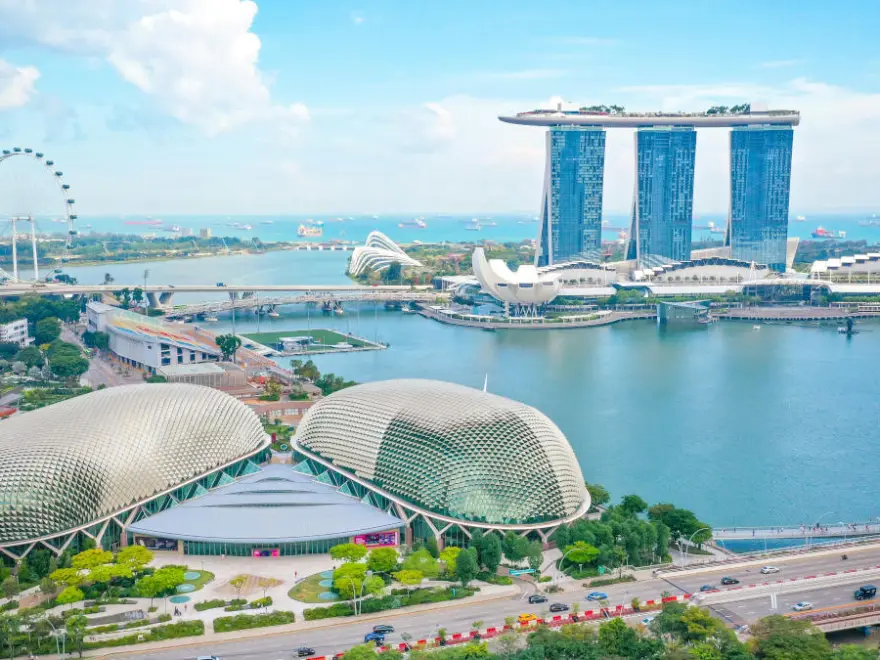
As Singapore’s iconic skyline illuminates the evening over Marina Bay, its halal hub project—still in development—represents a strategic bet on a future where food, faith, and innovation converge. For now, visitors can experience the city’s growing halal offerings, from street food to fine dining, participating in an evolving story with potentially global implications.
Original Articles:
halaltimes.com. (n.d.). Singapore Aiming To Become A Global Halal Hub. Retrieved April 20, 2025, from https://www.halaltimes.com/singapore-aims-become-global-halal-hub/