The Growing Impact of Islamic Schools on Minority Muslim Communities
JAKARTA – On an overcast morning in London’s outskirts, students arrive at Al-Noor Academy—a modest red-brick building without elaborate architectural features. Inside, however, something significant unfolds: an educational environment where academic rigor and religious identity develop in tandem.
These young learners come from families with connections to Pakistan, Somalia, Bosnia, and other regions. For them, this institution represents more than academics—it’s a foundation for belonging, cultural pride, and structured guidance through the complexities of Muslim life in non-Muslim-majority nations.
Islamic Education Expands Across Western Cities
Over the past twenty years, Islamic schools have steadily grown in cities including New York, Toronto, Sydney, Berlin, and Amsterdam. This expansion signals an important evolution in how Muslim families navigate education within Western and pluralistic societies.
Modern parents seek more than religious teaching alone. They want schools delivering strong academic results, emotional security, cultural awareness, and practical preparation—all anchored in values-based learning.
Key Questions Facing Educators and Policymakers
This growth prompts ongoing examination:
- What function do Islamic schools serve within minority contexts?
- Do these institutions foster isolation or enable more confident participation in broader society?
- How effectively do they equip young people for success in both their faith communities and wider professional spheres?
Identity Without Isolation: Why Parents Choose Islamic Schools
Many families make this choice driven by a core concern: preserving identity while avoiding social disconnection.
While public education systems typically provide solid academic foundations, some Muslim parents observe their children receiving limited exposure to Islamic history, ethical teachings, and daily religious practices. Others worry about social dynamics, cultural misunderstandings, or subtle biases that may gradually affect their child’s self-confidence.
A Sydney parent articulates this directly: “My priority extended beyond test scores. I wanted my children to feel genuine pride in their identity rather than learning to minimize themselves for acceptance.”
Islamic schools emerged partly to address this gap—creating spaces where religious identity requires no justification or constant explanation, allowing students to concentrate on personal development rather than cultural accommodation.
Academic Excellence: Standards and Values Combined
Contrary to widespread misconceptions, most Islamic schools adhere to identical national or state curriculum requirements as public institutions. Students engage with mathematics, sciences, national history, literature, and technology following official educational frameworks. Standardized assessments, university preparation, and academic benchmarks remain central priorities.
The distinguishing factor isn’t what these schools exclude—it’s what they incorporate.
Beyond standard subjects, students receive Arabic language training, Qur’anic education, and Islamic ethics instruction. Educators weave values including integrity, community service, and personal responsibility throughout classroom experiences. The objective isn’t religious focus at academic expense—it’s moral foundation alongside intellectual achievement.
At a Toronto-area science facility, seventh-graders examine biological specimens while exploring anatomy, ethical considerations, and the responsibilities accompanying scientific knowledge. School leaders characterize this as “comprehensive education”—treating critical analysis and spiritual consciousness as mutually reinforcing rather than contradictory.
Community Bridges: Promoting Integration Through Connection
A persistent criticism of faith-based schooling centers on concerns about social segregation. However, numerous Islamic schools deliberately create programming that links students with surrounding communities.
In the United States, schools frequently host open-house events, interfaith conversations, and community service projects. Throughout Europe, certain institutions collaborate with local museums, cultural organizations, and municipal governments to ensure students connect with national heritage and civic participation.
One Midwestern Islamic school organizes an annual “Neighbors’ Day,” welcoming area residents, educators, and community leaders for classroom tours, student demonstrations, and shared meals. Staff members note these gatherings frequently dispel misunderstandings from multiple perspectives—non-Muslim guests discover a welcoming, academically-oriented environment, while students develop confidence navigating cross-cultural and interfaith interactions.
Navigating Identity: Supporting Young Muslims in Diverse Societies
For minority students, educational institutions serve purposes beyond academics and assignments—they’re formative spaces for identity development.
Young Muslims in non-Muslim-majority contexts regularly encounter questions regarding dietary practices, dress choices, prayer observance, and social customs. Routine moments—turning down certain foods, acknowledging religious observances, or explaining hijab—can carry emotional weight.
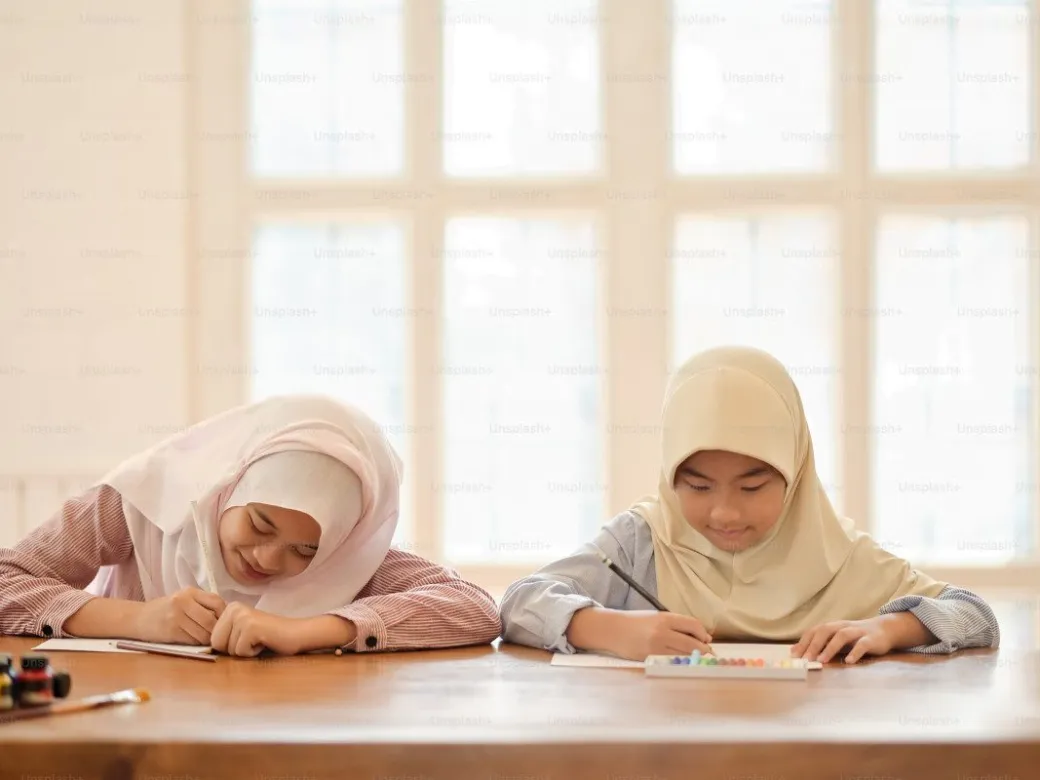
Islamic schools establish environments where these experiences represent common ground rather than individual burdens. Students connect with peers who share the rhythms of fasting, prayer, and cultural traditions. This collective understanding can diminish social stress and strengthen emotional fortitude.
Simultaneously, educators stress outward-facing confidence. Students receive encouragement to engage respectfully across all backgrounds, preparing them for universities, workplaces, and professional settings characterized by diversity.
A New York school counselor notes: “Students initially arrive uncertain about discussing their faith. We rehearse those exchanges. We help them articulate their identity with assurance rather than apology.”
Career Readiness: Academic Achievement and Professional Success
Many families select Islamic schools with future outcomes firmly in mind. University acceptance, career preparation, and professional accomplishment remain fundamental considerations.
Graduates commonly pursue competitive colleges and careers spanning medicine, engineering, law, finance, and technology. Former students often acknowledge their schools not solely for academic training—but for cultivating discipline, organizational skills, and purposefulness that extends into professional life.
A Toronto cardiologist reflects: “My school equipped me with confidence to enter any environment without concealing aspects of my identity. That proved equally valuable as my academic record.”
Institutional Challenges: Financial and Regulatory Pressures
Despite their positive influence, Islamic schools confront structural and economic obstacles. Many depend substantially on tuition fees and community contributions, constraining capacity to invest in advanced infrastructure, athletics programs, or specialized academic options.
Regulatory requirements can prove extensive, particularly throughout Europe, where governments maintain close oversight of religious institutions to verify national curriculum adherence and child protection standards.
Media coverage and international political developments occasionally subject these schools to heightened public examination, requiring administrators to maintain ongoing transparency efforts affirming their educational—rather than ideological—mission.
Strategic Integration: Identity Strength as a Foundation
What these schools demonstrate isn’t a narrative of separation—but of purposeful integration built on identity confidence.
Islamic schools within minority societies increasingly operate as cultural connectors. They help students understand their heritage while preparing them to contribute meaningfully to their current communities.
Whether situated in suburban Chicago, outer London, or Berlin’s periphery, these institutions pursue a shared objective: producing students who are academically proficient, ethically grounded, socially assured, and civically active.
Global Education: An Evolving Model for Diverse Societies
In a world shaped by migration, globalization, and cultural complexity, the role of Islamic schools grows increasingly visible and relevant. They challenge assumptions that faith-based education must operate at society’s margins. Instead, they present a framework where belief, belonging, and public contribution coexist within unified educational structures.
For families, educators, and policymakers exploring approaches to support minority students in pluralistic societies, Islamic schools represent more than an option. They exemplify an evolving educational philosophy—one seeking not merely to prepare students for examinations and careers, but for meaningful participation in a diverse, interconnected world.
Original Article:
Halal Times. (2026, January 21). What Is the Role of Islamic Schools in Supporting Minority Education? Retrieved from https://www.halaltimes.com/what-is-the-role-of-islamic-schools-in-supporting-minority-education/