Halal or Haram? Examining the Islamic Ruling on Consuming Sea Creatures
JAKARTA (April 03, 2026)
In Islamic teaching, every Muslim is commanded to follow what Allah has permitted and to avoid what He has forbidden — including in matters of food and drink. Some foods are clearly prohibited, such as pork, alcohol, blood, and the carcasses of animals that died before being slaughtered. These rulings are a significant concern for Muslims in their daily lives.
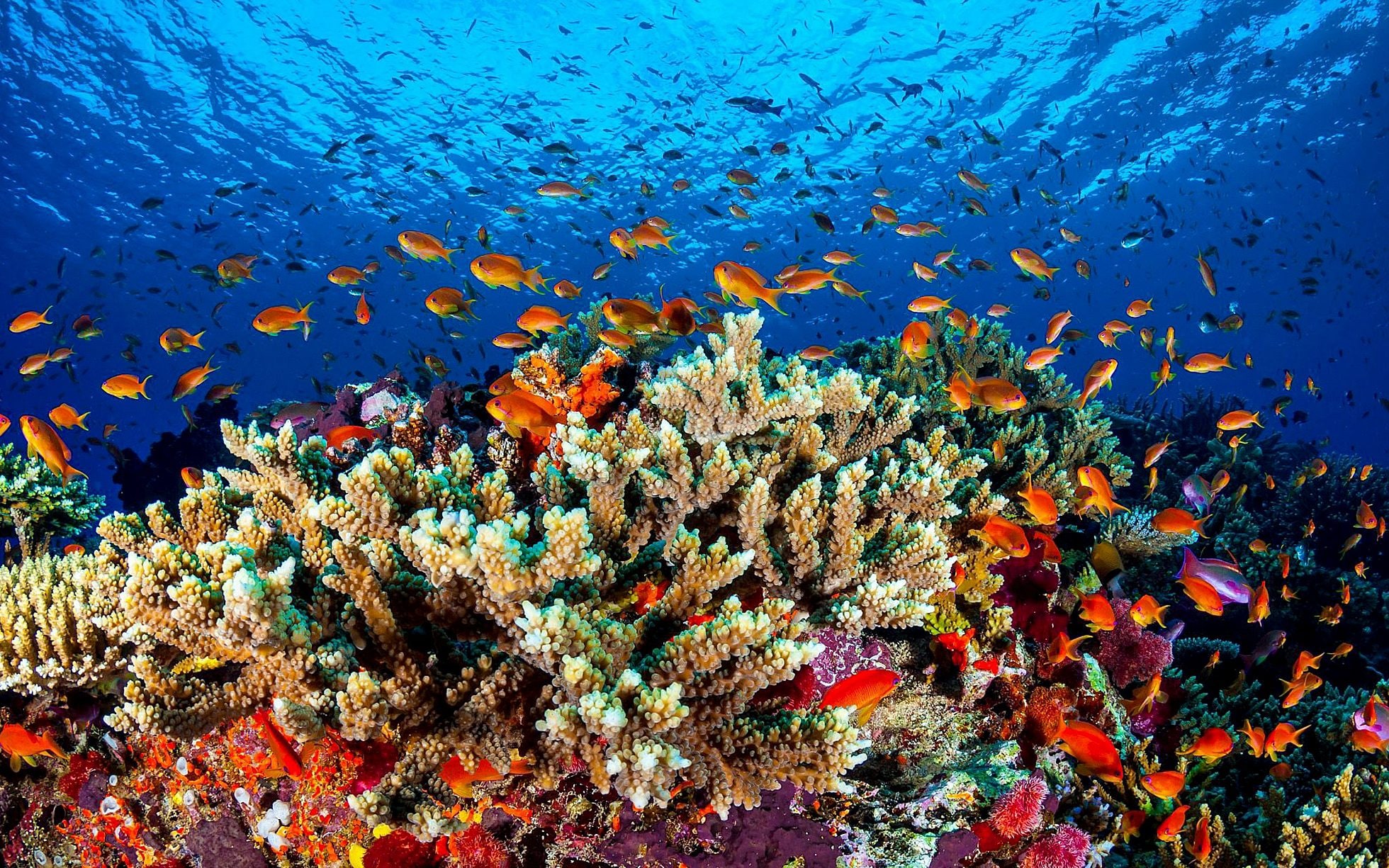
However, there is one domain where the rules seem considerably more lenient: the ocean. In many scholarly opinions, sea creatures are considered entirely halal — even their carcasses are permissible to consume. Is this really the case? Is everything that lives in the sea truly lawful to eat?
The Legal Basis for the Permissibility of Sea Creatures
The primary foundation for the permissibility of sea creatures comes from Allah’s words in Surah Al-Mā’idah, verse 96:
أُحِلَّ لَكُمۡ صَيۡدُ ٱلۡبَحۡرِ وَطَعَامُهُۥ مَتَٰعٗا لَّكُمۡ وَلِلسَّيَّارَةِ
“Lawful to you is the game of the sea and its food as provision for you and for the travelers.” (QS. Al-Mā’idah: 96)
This verse explicitly states that the catch of the sea is permitted, whether for those living on land or those traveling.
On the matter of carcasses, Allah states in Surah Al-Mā’idah, verse 3, that carrion is forbidden. Yet elsewhere, an important exception is noted:
أُحِلَّتْ لَنَا مَيْتَتَانِ وَدَمَانِ، فَأَمَّا الْمَيْتَتَانِ فَالْحُوتُ وَالْجَرَادُ
“Two types of dead animals and two types of blood have been made lawful for us. As for the two dead animals, they are fish and locusts.” (HR. Ahmad and Ibn Majah)
From this narration, scholars concluded that the carcass of fish — and more broadly, sea creatures — is exempted from the prohibition on carrion that applies to land animals. Many scholars then extended the meaning of “fish” here to encompass all creatures that live in water.
The Views of Fiqh Scholars
Although the general conclusion is similar, the leading imams of Islamic jurisprudence differ in their positions, particularly on the matter of sea creature carcasses.
Imam al-Shafi’i, Imam Malik, and Imam Ahmad ibn Hanbal held that all sea creatures are permissible to consume, including their carcasses. They based this on the words of the Prophet Muhammad SAW regarding seawater: “It (the sea) is pure its water, and lawful its dead.” (HR. Abu Dawud and Tirmidhi). According to these three imams, the word “its dead” in this hadith covers all animals that die in the ocean, without exception.
Imam Abu Hanifah took a different position. He held that while sea creatures are lawful to eat, their carcasses remain forbidden — on the basis of the general ruling in Al-Mā’idah verse 3, which prohibits carrion without distinguishing between land and sea animals. In other words, according to the Hanafi school, a sea creature must still be caught first; it cannot simply be consumed when found already dead.
Why Can Sea Creatures and Their Carcasses Be Halal? A Scientific Explanation
Grounded in the textual evidences above, scientists have also investigated these claims through the lens of modern science. The findings are quite compelling — there are strong scientific reasons why sea creatures are “safer” than land animals, even in death.
- The salt content of seawater acts as a natural preservative
Seawater contains roughly 3.5% salt by total volume. In a single cubic kilometer of seawater, there are approximately 34 million tons of salt. This content is not made up of sodium alone — it also includes magnesium (Mg), calcium (Ca), sulfur (S), potassium (K), and various other minerals. This combination of minerals functions as a natural preservative that significantly slows decomposition in sea creature carcasses, making them far less susceptible to bacterial contamination compared to land animal carrion.
This scientific reality finds a remarkable parallel in Islamic tradition. Centuries before modern chemistry could explain why, the Prophet Muhammad SAW had already affirmed the unique purity of the sea and the safety of what it contains. This fact is strengthened by the following hadith:
حَدَّثَنَا عَبْدُ اللَّهِ بْنُ مَسْلَمَةَ، عَنْ مَالِكٍ، عَنْ صَفْوَانَ بْنِ سُلَيْمٍ، عَنْ سَعِيدِ بْنِ سَلَمَةَ مِنْ آلِ ابْنِ الأَزْرَقِ، أَنَّ الْمُغِيرَةَ بْنَ أَبِي بُرْدَةَ وَهُوَ مِنْ بَنِي عَبْدِ الدَّارِ أَخْبَرَهُ أَنَّهُ سَمِعَ أَبَا هُرَيْرَةَ يَقُولُ: سَأَلَ رَجُلٌ رَسُولَ اللَّهِ صَلَّى اللَّهُ عَلَيْهِ وَسَلَّمَ فَقَالَ: يَا رَسُولَ اللَّهِ، إِنَّا نَرْكَبُ الْبَحْرَ وَنَحْمِلُ مَعَنَا الْقَلِيلَ مِنَ الْمَاءِ، فَإِنْ تَوَضَّأْنَا بِهِ عَطِشْنَا، أَفَنَتَوَضَّأُ بِمَاءِ الْبَحْرِ؟ فَقَالَ رَسُولُ اللَّهِ صَلَّى اللَّهُ عَلَيْهِ وَسَلَّمَ: هُوَ الطَّهُورُ مَاؤُهُ الْحِلُّ مَيْتَتُهُ
‘Abdullāh ibn Maslamah narrated to us, from Mālik, from Ṣafwān ibn Sulaym, from Sa’īd ibn Salamah — of the family of Ibn al-Azrāq — that al-Mughīrah ibn Abī Burdah — of the Banī ‘Abd al-Dār — informed him that he heard Abū Hurairah say: “A man asked the Messenger of Allah SAW, saying: O Messenger of Allah, we sail the sea and we carry only a small amount of water with us. If we use it for ablution, we will go thirsty. May we perform ablution with seawater? The Messenger of Allah SAW replied: ‘It is pure, its water; and lawful, its dead.'”
What is striking about this hadith is not only its legal ruling, but its scientific precision. The Prophet SAW connected the purity of seawater directly to the permissibility of what dies within it — a connection that modern science now explains through the preservative properties of salt and minerals. The same high salinity that makes seawater unsuitable for drinking is the very reason it inhibits bacterial growth and preserves the flesh of creatures that die in it. In this light, the hadith stands not only as a religious ruling, but as one of the many instances in which prophetic wisdom preceded scientific discovery by more than a thousand years.
- The salt content of seawater acts as a natural preservative
Seawater contains roughly 3.5% salt by total volume. In a single cubic kilometer of seawater, there are approximately 34 million tons of salt. This content is not made up of sodium alone — it also includes magnesium (Mg), calcium (Ca), sulfur (S), potassium (K), and various other minerals. This combination of minerals functions as a natural preservative that significantly slows decomposition in sea creature carcasses. This is precisely what scientific evidence supports regarding the claim that sea carcasses are “safer” than those of land animals.
- Differences in toxin accumulation between land and sea predators
Land carnivores, as apex consumers in terrestrial food chains, tend to accumulate pathogens and parasites that transfer more readily to humans. This is due to the physiological similarities between land mammals — including humans — and the animals they prey upon. The flesh of land predators also tends to carry higher concentrations of uric acid and nitrogen waste, making it harder to digest.
Sea predators, by contrast, have a fundamentally different metabolism. They store urea in their tissues to maintain osmotic balance with saltwater — which is why shark meat often smells of ammonia. Furthermore, the risk of pathogens from sea creatures “jumping” to humans is far lower, owing to the significant environmental and physiological differences between marine and terrestrial ecosystems.
Sea Creatures That Are Not Permissible to Consume
Although the general principle holds that sea creatures are halal, not every creature found in or near the ocean automatically falls into that category. There are several important exceptions.
- Creatures that live in two realms (amphibious or semi-aquatic animals)
Animals such as crocodiles, turtles, land crabs, and frogs inhabit the space between two ecosystems — land and water. It is precisely this in-between existence that renders them syubhat — a matter of ambiguous permissibility whose status is unclear and therefore best avoided.
Beyond the legal reasoning, there is also a scientific basis: because they inhabit the transition zone between often-polluted waters and dry land, these animals frequently serve as hosts for various dangerous parasites and bacteria, such as Salmonella, which can transfer to humans if the food is not prepared with sufficient care.
- Creatures that carry poison in their bodies
The pufferfish (fugu) is a prime example — it contains tetrodotoxin, an extremely potent nerve toxin that can be lethal even in tiny amounts. Although it is considered a luxury dish in some countries, consuming it without expert preparation can be fatal. In Islam, consuming anything that causes serious harm to oneself is forbidden, regardless of the creature’s original halal status.
Certain species of jellyfish and venomous sea snails also fall under this category.
Creatures That Were Once Halal, but Are Now Prohibited
There are also circumstances in which sea creatures that are fundamentally halal become impermissible due to external factors.
- Creatures exposed to industrial waste
Rapid industrialization in many parts of the world has led to waste disposal practices that frequently contaminate rivers, lakes, and oceans. Sea creatures living in polluted waters can accumulate dangerous chemical substances — such as mercury, lead, and other heavy metals — within their tissues. Consuming such creatures poses a serious risk to health, causing their status to shift into that which brings harm (mudharat) — and therefore not permissible to consume.
- Sea creatures protected due to the threat of extinction
Some contemporary scholars have ruled that sea creatures which are originally halal may also become impermissible if their populations are on the brink of extinction. Sharks, dolphins, and several species of sea turtles, for instance, are now endangered due to environmental degradation and poaching. Governments and international bodies have enacted regulations prohibiting the capture of these animals, including for consumption.
This prohibition is not merely a human legal construct — it also aligns with Islamic principles of preserving the balance of ecosystems and preventing corruption on earth (fasad fil ardh). Protecting creatures on the verge of extinction is part of humanity’s responsibility as stewards (khalifah) of the earth.
Conclusion
The original ruling for sea creatures in Islam is halal — including their carcasses according to the majority of scholars — based on the Qur’an, hadith, and the consensus of leading imams. Modern scientific research also confirms that sea creatures possess biological characteristics that make them genuinely safer for consumption, whether alive or dead.
However, this permissibility is not without its limits. Creatures that inhabit two realms, carry dangerous toxins, have been contaminated by industrial waste, or are protected due to near-extinction — each carries its own ruling that cannot be simply overlooked.
Ultimately, the Islamic principle regarding food is not merely about formal halal or haram status, but also about goodness and safety — for oneself, and for the natural world that has been entrusted to us by Allah.
Written by: Alhayya Maritza
REFERENCES
Fakhruddin, A., Islamy, M. R. F., Salsabila, A. P., Erma, N., & Sururi, Z. F. (2023). A Scientific Study on the Unlawfulness of Carcasses as Food and its Impact on Health. Islamic Review: Jurnal Riset dan Kajian Keislaman, 12(1), 91-102.
Muklihah, M., Izzah, H., & A’yun, Q. (2025). Air Laut Dalam Perspektif Hadis Dan Sains: Analisis Makna Ṭahuūr Dan Relevansinya Dengan Kimia. AR ROSYAD: Jurnal Keislaman dan Sosial Humaniora, 4(1), 35-52.
Tohir, M., & Ghufron, A. (2024). Bangkai Hewan Perspektif al-Qur’an dan Sains. Al-Thiqah: Jurnal Ilmu Keislaman, 7(1), 137-154.
Bincang Muslimah. (2023). Apakah Semua Hewan Laut Halal Dimakan?. https://bincangmuslimah.com/kajian/apakah-semua-hewan-laut-halal-dimakan-39973/