Homegrown Innovation: Philippines Develops Local Halal Cosmetics for Global Markets
DOST-ITDI Creates Technology Transfer-Ready Products
The Department of Science and Technology-Industrial Technology Development Institute has developed halal-compliant cosmetics with personal care products ready for transfer to Philippine industry, aiming to boost the country’s presence in global halal markets. ITDI presented these products at a Philippine Information Agency press conference, demonstrating the agency’s response to Republic Act 10817, the Philippine Halal Export Development plus Promotion Act of 2016.
DOST-ITDI Standards plus Testing Division Chief Science Research Specialist Rachel V. Parcon emphasized that improving the halal industry will not only advance Muslim Filipino lives plus attract tourists, but could also spur Philippine economic growth.
Market Projections Demonstrate Substantial Growth Potential
The global halal cosmetics market reached $47 billion valuation in 2024 with projections to reach $115 billion by 2032, exhibiting 11.67% compound annual growth rate. The Asia Pacific region dominated the market with 64.07% share in 2024, positioning Philippines strategically for regional market participation.
In the Philippines, the overall cosmetics market projects reaching $852 million in 2025, growing at 3.5% compound annual growth rate from 2020 to 2030. The skincare market specifically projects expanding from P51.8 billion in 2021 to P74.8 billion by 2026.
Two-Batch Product Development Addresses Different Markets
ITDI has developed two distinct sets of halal-compliant products targeting different market segments.
1. First Batch: Includes moisturizing lipstick, moisturizing lip balm, skin-lightening soap enriched with plant extracts, antibacterial toothpaste, hair-growth promoting shampoo. Three products from this batch have been adapted under the brand name Shahin, are FDA-registered, halal-certified, available in the market.
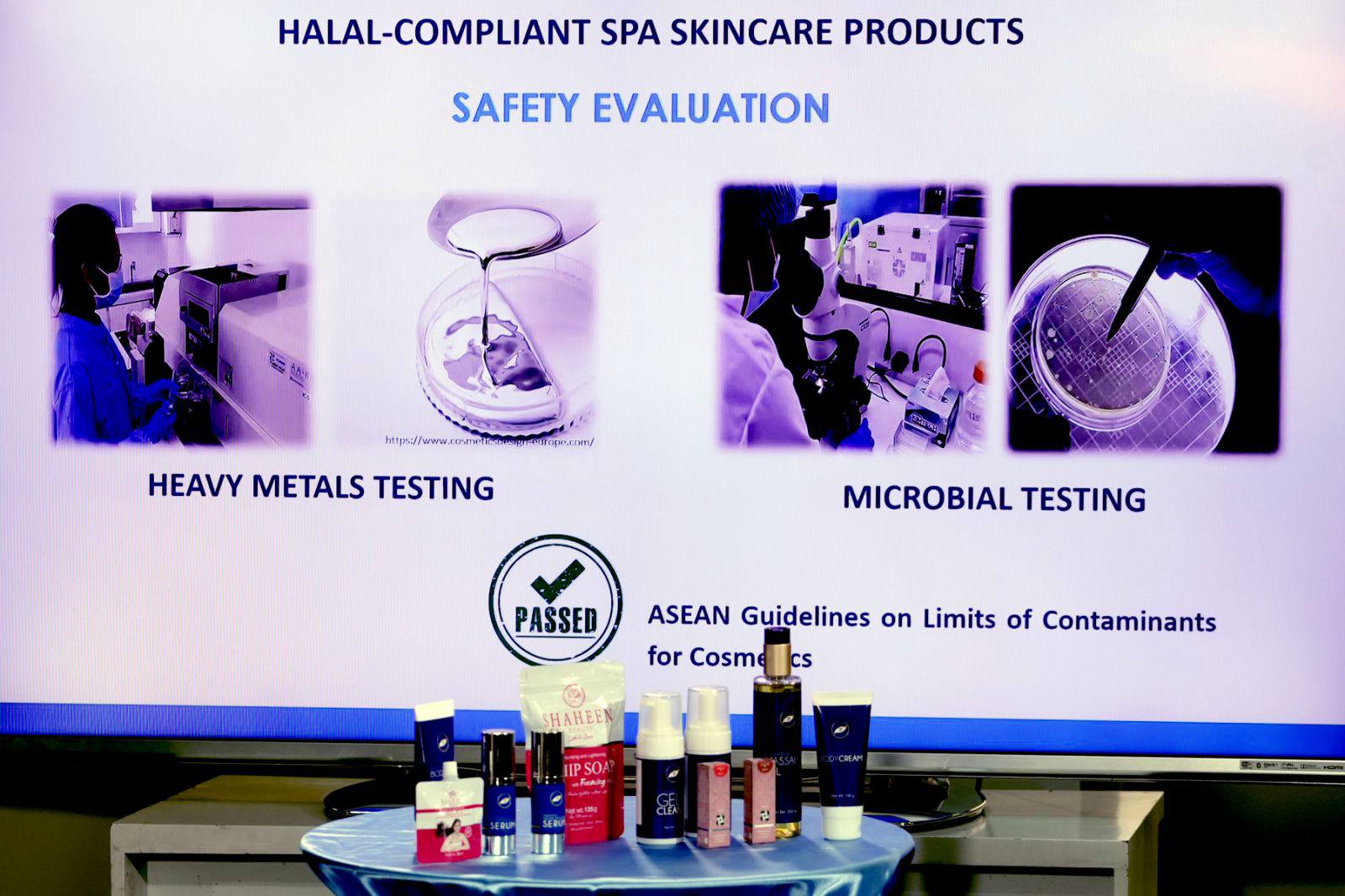
2. Second Batch: Comprises halal spa skincare products intended for spa establishments, hotels, salons, pasalubong shops, including essential oils extracted from lemongrass, ylang-ylang, calamansi peels; relaxing massage oil; moisturizing body cream; anti-aging serum containing natural pineapple peel exfoliant; gel cleanser.
Rigorous Testing Ensures International Compliance Standards
All products underwent evaluation for heavy metals content with microbial load, passing maximum allowable limits set by ASEAN guidelines plus international standards. Some technologies also passed tests for alcohol, porcine DNA, genetically modified organisms—vital requirements for exporting to Middle Eastern countries. The spa skincare products were tested for hypoallergenicity, proven safe plus non-irritating for all skin types, ensuring suitability for diverse consumer populations.
Malaysian Certification Validates Production Facility
ITDI’s facility for producing halal cosmetics maintains halal certification from a Malaysian certifying organization while maintaining a halal assurance management system. However, DOST itself does not certify products as halal—the Islamic Da’wah Council of the Philippines serves as the authorized certifying body, visiting facilities to ensure compliance with Sharia principles. This dual certification approach ensures both production facility standards plus individual product compliance meet required religious standards.
Government Support Programs Enable SME Participation
DOST provides financial assistance through startup programs helping small to medium enterprises improve manufacturing areas while dedicating production facilities for halal-compliant products. This support structure enables broader industry participation beyond large corporations, democratizing access to halal market opportunities. The assistance programs address capital barriers that might otherwise prevent smaller manufacturers from meeting halal production requirements.
Filipino Ingredients Create Distinctive Market Identity
The halal cosmetics incorporate Filipino raw materials including ylang-ylang, lemongrass, calamansi, giving products distinctly Philippine identity for international markets. This localization strategy differentiates Philippine halal cosmetics from competitors while highlighting the country’s unique botanical resources. Using indigenous ingredients creates authentic Filipino brand positioning that appeals to international consumers seeking distinctive regional products rather than generic halal alternatives.
Original Article:
Paunan, J. C. (2025, October 5). DOST develops halal‑compliant cosmetics, personal care products. Philippine Information Agency. https://pia.gov.ph/news/dost-develops-halal-compliant-cosmetics-personal-care-products/