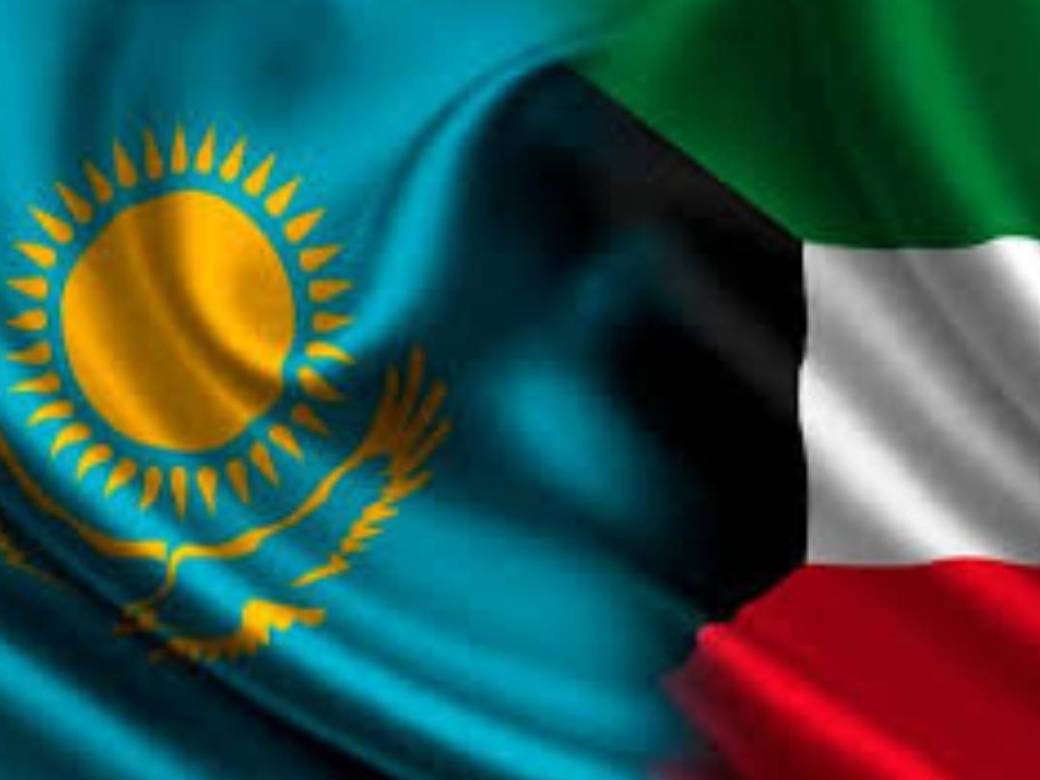
Kuwait and Kazakhstan Forge Strategic Halal Meat Partnership
JAKARTA – In a move set to reshape regional food supply chains, Kuwait’s leading livestock company Al Mawashi has entered into a strategic partnership with Kazakhstan to enhance agro-industrial cooperation, with a particular focus on halal meat supplies. The agreement, formalized on October 8, 2025, represents a significant step toward addressing the Gulf region’s food security challenges while opening new export markets for Kazakhstan’s agricultural sector.
A Meeting of Mutual Interests
The partnership came together during high-level discussions in Kuwait City between Ahmed Al-Majed, CEO of Al Mawashi, and Kazakhstan’s Ambassador to Kuwait, Yerzhan Yelekeyev. The meeting centered on establishing reliable supply channels for premium halal meat products to satisfy the Gulf’s increasing appetite for ethically sourced protein.
Al-Majed expressed Al Mawashi’s determination to identify new collaborative partners to strengthen Kuwait’s food security infrastructure. He identified Kazakhstan’s expansive grazing lands and contemporary agricultural facilities as ideal components for this strategic alliance. Ambassador Yelekeyev reciprocated this enthusiasm, highlighting Kazakhstan’s position as Central Asia’s leading meat exporter, equipped to provide consistent, Shariah-compliant products to Kuwaiti consumers.
This October agreement builds upon preliminary discussions held in April 2025, when both nations initially explored opportunities for agro-industrial collaboration spanning meat processing operations to logistics networks. The partnership has now crystallized around halal meat supply—a strategic convergence where Kuwait’s heavy dependence on food imports (approximately 90%) intersects with Kazakhstan’s expanding export capabilities.
Al Mawashi: A Regional Industry Leader
Understanding Al Mawashi’s role illuminates the partnership’s significance. Established in 1973 during the leadership of Sheikh Jaber Al-Ahmad Al-Sabah, the company began as a modest livestock trading operation. By 1984, it had achieved public listing on the Kuwait Stock Exchange with KD 8 million in capital, subsequently growing into a $200 million enterprise processing over one million animals annually.
The company’s operations span from specialized vessels transporting livestock across international waters to advanced processing facilities capable of handling 6,000 animals per shift. Al Mawashi has established itself as the Middle East’s premier meat supplier through strategic positioning across multiple markets.
Its international footprint demonstrates both scale and precision: in the United Arab Emirates, its subsidiary operates premium feedlot facilities; in Australia, it connects local producers with Gulf market buyers; and in South Africa, it manages quarantine operations to maintain stringent health standards. Within Kuwait alone, the company operates 36 retail butchery locations, offering products ranging from fresh lamb to vacuum-sealed beef, all adhering to strict halal certification protocols that resonate with ethically conscious consumers globally.
The company’s competitive advantage lies in its technological integration, including real-time voyage monitoring systems and organic feed production from proprietary facilities, guaranteeing quality control throughout the supply chain. For Kuwait, where imported food dominates consumption patterns, Al Mawashi’s expansion toward Kazakhstan diversifies supply sources, mitigating risks from regional disruptions such as Red Sea shipping bottlenecks or African climate-related shortages.
Kazakhstan’s Agricultural Renaissance
Kazakhstan presents an compelling partner profile—a nation with vast agricultural potential across 2.7 million square kilometers of territory. Its extensive grasslands provide optimal conditions for livestock production, generating 40,000 tons of meat exports in merely the first five months of 2025. Beef and lamb products dominate these exports, yet Kazakhstan’s agricultural ambitions extend well beyond raw commodity sales.
With $4.8 billion allocated to development projects through 2028, the country is making substantial investments in processing infrastructure, mechanization, and market diversification across 80 international destinations. Recent achievements include a $100 million grain and legume processing complex in Astana and a $150 million vegetable processing facility in Zhambyl producing 38,000 tons annually.
These developments align with Kazakhstan’s 2021-2030 Agricultural Concept, which aims to triple productivity through digital technologies and water-conservation methods across 150,000 hectares each year. The nation has also established 200,000 certified hectares for organic farming as of 2023, exporting 26,000 tons to European Union and United States markets.
For halal-focused markets, Kazakhstan’s predominantly Muslim regions ensure cultural compatibility, with Middle Eastern exports accelerating through new logistics agreements with China and Turkey. While challenges such as irrigation limitations persist, Kazakhstan is addressing these through vertical farming initiatives and climate-resilient seed varieties.
For Kuwait, this translates to dependable halal meat supplies and opportunities for joint processing ventures that could generate employment and reduce import expenditures. Industry trends suggest that high-value segments like organic feeds or premium halal beef exports could deliver 20-30% profit margins for entrepreneurs.
Future Implications and Opportunities
The partnership’s trajectory appears promising, with initial trial shipments of Kazakh lamb expected to reach Kuwait by the first quarter of 2026, facilitated by Al Mawashi’s maritime logistics network. Longer-term possibilities include jointly owned feedlot operations or technology-sharing arrangements that could support Kazakhstan’s goal of reaching $2 billion in agricultural exports.
For Kuwait, this partnership promises more stable food supplies for its expanding population of 4 million residents. For Kazakhstan, it provides access to Gulf premium pricing, where halal-certified meat commands 15-20% price premiums over conventional products.
The broader implications extend across the Gulf Cooperation Council, where member states rely on imports for approximately 80% of food consumption. This model could serve as a template for other Muslim-majority nations seeking to strengthen food security through strategic partnerships.
While obstacles such as certification harmonization and tariff structures require attention, scheduled Kuwait-Kazakhstan business forums will provide platforms for resolution. Early market indicators suggest investor interest, with Al Mawashi’s stock price rising 5% following the partnership announcement, while Kazakh agricultural investment funds present growth opportunities.
Building Enduring Trade Relations
As Ambassador Yelekeyev noted, this collaboration focuses on “enduring ties built on trust.” In an era of vulnerable global supply chains, Kuwait and Kazakhstan are establishing foundations for a future where food systems are sustainable, ethically grounded, and widely accessible.
For agricultural producers, exploring halal export certifications through Kazakh Invest could open new market channels. For consumers, the partnership promises more affordable, traceable meat products that align with religious and ethical values. The alliance between Kuwait’s established halal expertise and Kazakhstan’s agricultural potential creates a framework that benefits stakeholders across the entire value chain—from farm to table.
Original Article:
Halal Times. (2025, October 13). Kuwait’s Al Mawashi Partners with Kazakhstan to Develop Agro Industrial Cooperation. Retrieved from https://www.halaltimes.com/kuwaits-al-mawashi-partners-with-kazakhstan-to-develop-agro-industrial-cooperation/