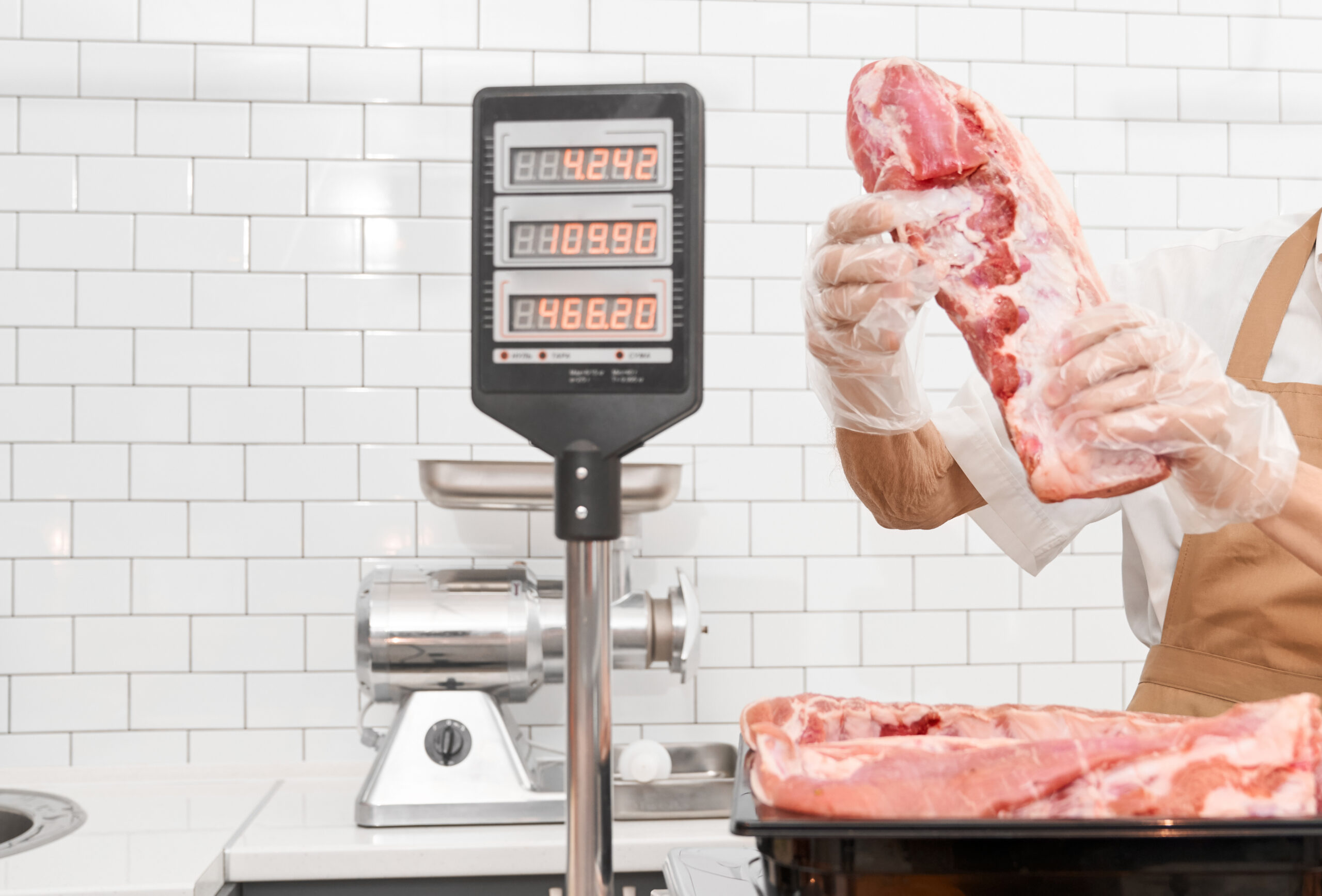
The Halal Meat Inspector: Guardians of Faith and Food Safety in a Global Industry
Jakarta, Indonesia — The role of halal inspectors has become increasingly significant alongside the growing global demand for halal products that are safe, authentic, and compliant with Islamic law. This profession requires not only technical expertise in meat inspection and food safety but also profound knowledge of shariah to ensure that slaughtering, processing, and distribution comply with halal and thayyib principles.
This article comprehensively outlines the functions, competencies, and regulatory frameworks governing halal meat inspectors in various countries. It also discusses field practices, supporting technologies, and global challenges in maintaining the integrity of halal systems. Using comparative approaches and case studies, this work provides policy recommendations to strengthen the professionalization and harmonization of halal inspection systems at the international level.
Why Halal Inspectors Matter More Than Ever
Global demand for halal products has risen dramatically over the past two decades, driven by increasing awareness among both Muslim and non-Muslim consumers regarding food safety, hygiene, and ethical production. Halal products are no longer viewed merely as religious requirements but as indicators of quality and integrity within global supply chains.
However, as demand grows, challenges have emerged regarding the authenticity and consistency of halal certification. Misuse of halal labels, violations in slaughter procedures, and differences in national standards have led to public skepticism. In this context, halal inspectors play a strategic role in ensuring that the entire production process—from slaughtering to distribution—complies with shariah principles and modern food safety standards.
Halal regulations vary widely between countries in terms of authority, auditing procedures, and legal enforcement. For example, Indonesia and Malaysia operate centralized halal certification systems under government supervision, while the United States and European countries rely on private organizations recognized by Muslim communities. Despite these variations, all systems position halal inspectors as the frontline defenders of halal integrity.
This article explores how regulations, practices, and inspector competencies evolve globally while analyzing challenges stemming from standard disharmony and limited human resources in this field.
How Different Countries Regulate Halal Certification
The international halal regulatory framework is built upon collaboration among religious institutions, governments, and global standardization bodies. The Organization of Islamic Cooperation (OIC), through the Standards and Metrology Institute for Islamic Countries (SMIIC), has developed unified halal standards to harmonize certification across member states.
In parallel, the Codex Alimentarius Commission issued the Guidelines for the Use of the Term “Halal” (CAC/GL 24-1997), which provide general principles for halal labeling in international trade. Although Codex does not delve into religious jurisprudence, its guidelines serve as a foundation for aligning halal terminology globally.
At the national level, Indonesia pioneered mandatory halal regulation through Law No. 33 of 2014 on Halal Product Assurance (JPH), designating the Halal Product Assurance Agency (BPJPH) as the main authority, with LPPOM MUI as the technical auditor and fatwa body. Malaysia, on the other hand, established its national halal ecosystem earlier through JAKIM and the MS1500 standard—widely recognized as a global model for integrating shariah, science, and policy.
In Western countries such as the United States and Canada, halal certification is handled by non-governmental organizations like Halal Monitoring Services (HMS) and the Islamic Food and Nutrition Council of America (IFANCA), which operate independently based on community trust.
Integration between halal systems and modern food safety frameworks is crucial. Crutchfield et al. (1997), in An Economic Assessment of Food Safety Regulations, demonstrated that the HACCP (Hazard Analysis and Critical Control Points) approach not only improves food safety but also yields economic benefits that exceed implementation costs. Integrating HACCP with the Halal Assurance System (HAS) allows for more systematic and science-based halal supervision, positioning inspectors as both religious and technical professionals.
What Makes a Qualified Halal Inspector
Halal inspectors bear substantial responsibility in ensuring that all stages of meat production—from pre-slaughter to distribution—meet halal and thayyib standards. During the ante-mortem stage, they assess animal health and fitness, ensuring no diseases or conditions compromise halal status.
At the slaughter stage, inspectors ensure that slaughtermen are competent Muslims who recite tasmiyah for each animal and make precise cuts according to shariah guidelines. Post-slaughter, inspectors examine carcasses for disease, infection, or najis contamination and monitor processing, packaging, and distribution to prevent cross-contamination with non-halal materials.
In addition to religious expertise, inspectors must possess technical competencies in food safety and industrial auditing. They must understand animal anatomy, hygiene management, microbial control, and standards such as HACCP and ISO 22000. In the digital era, technological literacy—such as proficiency in traceability systems, barcoding, RFID, and blockchain—is becoming essential. Ethical conduct remains the foundation of this profession, as integrity and honesty determine public confidence in halal certification.
Step-by-Step: How Halal Meat Inspection Works
Halal inspection follows a systematic sequence:
-
Document verification and pre-slaughter assessment: Inspectors review animal permits, health certificates, and slaughtermen’s credentials.
-
Ante-mortem examination: Physical inspection of animals for disease or injury.
-
Slaughter supervision: Inspectors ensure that slaughtering is humane, swift, and compliant with shariah; animals must die solely from the act of slaughter, not from stunning or stress.
-
Post-mortem examination: Evaluation of internal organs and tissue for signs of disease or contamination, ensuring complete blood drainage.
-
Processing and packaging inspection: Verification of segregation between halal and non-halal lines and cleanliness of facilities.
-
Labeling and distribution control: Ensuring that every product carries a valid halal certificate and traceable production data.
Institutions such as HMS in the U.S. have digitalized this reporting process, using electronic systems and surprise inspections to enhance transparency.
Digital Tools Transforming Halal Verification
Technological innovation has revolutionized halal inspection. Traceability systems using barcodes, QR codes, RFID, and blockchain enable transparency across the supply chain—from farms to retail shelves. Siregar and Zahradika (2024) found that implementing the Halal Traceability System (HTS) in Indonesia’s poultry industry improved inspection efficiency and consumer confidence. Similarly, Ibrahim et al. (2024) highlighted that IoT integration at Halal Critical Control Points enhances supervision in Malaysia’s poultry supply chain.
Blockchain-based data storage also prevents document forgery and label manipulation, though implementation challenges remain, especially for small-scale slaughterhouses lacking digital infrastructure.
Real-World Lessons from Three Continents
Delos Reyes (2024) found that implementing the Philippine Meat Inspection Code (RA No. 10536) remains ineffective due to a lack of accreditation, facilities, and expertise. Many traditional slaughterhouses fail to meet national standards, and inspectors often lack training and equipment.
Conversely, Crutchfield et al. (1997) reported that HACCP implementation in the U.S. reduced contamination risks while improving economic efficiency—making its integration with halal systems a strategic necessity. HMS in the U.S. exemplifies a successful community-based approach by conducting unannounced inspections, involving ulama in decision-making, and providing free certification for Muslim communities—thereby maintaining credibility and transparency.
The Biggest Obstacles Facing Halal Inspection
Despite rapid global development, several challenges persist:
- Lack of international competency standards causes disharmony among certification bodies.
- Differences in fiqh interpretation across madhhabs lead to varying views on stunning and permissible additives.
- Human resource shortages hinder quality assurance, as halal inspector training requires dual expertise in shariahand food science.
- High technological costs limit adoption of digital traceability tools among small producers.
- Public mistrust continues due to certification violations, weak enforcement, and lack of transparency.
Building a Stronger Future for Halal Certification
Halal inspectors play a vital role in bridging shariah values with global food safety standards. This multidisciplinary profession demands competence in Islamic jurisprudence, food science, technology, and ethics. To strengthen this role, efforts should focus on:
-
Harmonizing competency standards through OIC/SMIIC;
-
Enhancing national training and certification programs; and
-
Leveraging digital technologies to increase efficiency and transparency.
Governments, certification bodies, and academic institutions must collaborate to build a global halal ecosystem that is not only shariah-compliant but also safe, fair, and sustainable.
References
Crutchfield, S. R., Buzby, J. C., Roberts, T., Ollinger, M., & Lin, C.-T. J. (1997). An Economic Assessment of Food Safety Regulations: The New Approach to Meat and Poultry Inspection. United States Department of Agriculture (USDA).
Delos Reyes, M. B. (2024). Implementation of Meat Inspection Code (RA No. 10536) and Challenges Encountered by Butchers and Meat Inspectors in Calamba City. Journal of Public Administration Research.
Halal Monitoring Services (HMS). (2022). Understanding Halal Certification for Meat Processors. Shariah Board of America.
Ibrahim, I., Shuib, A., & Yusoff, F. H. (2024). Planning of Halal Compliance Critical Control Points and IoT Integration in Halal Chicken Meat Supply Chain Traceability System. Journal of Halal Industry and Services.
Siregar, M. L., & Zahradika, A. (2024). Halal Traceability System for Chicken Meat Supply Chain in Indonesia. Agroindustrial Technology Journal.
Bachtiar, W. F., Masruroh, N. A., Asih, A. M. S., & Puspita, D. S. (2024). Halal food sustainable traceability framework for the meat processing industry. Journal of Islamic Marketing, 15(11), 2759-2784.
SMIIC. (2019). OIC/SMIIC Halal Standards. Standards and Metrology Institute for Islamic Countries.
Codex Alimentarius Commission. (1997). Guidelines for the Use of the Term “Halal” (CAC/GL 24-1997). Rome: FAO/WHO.


