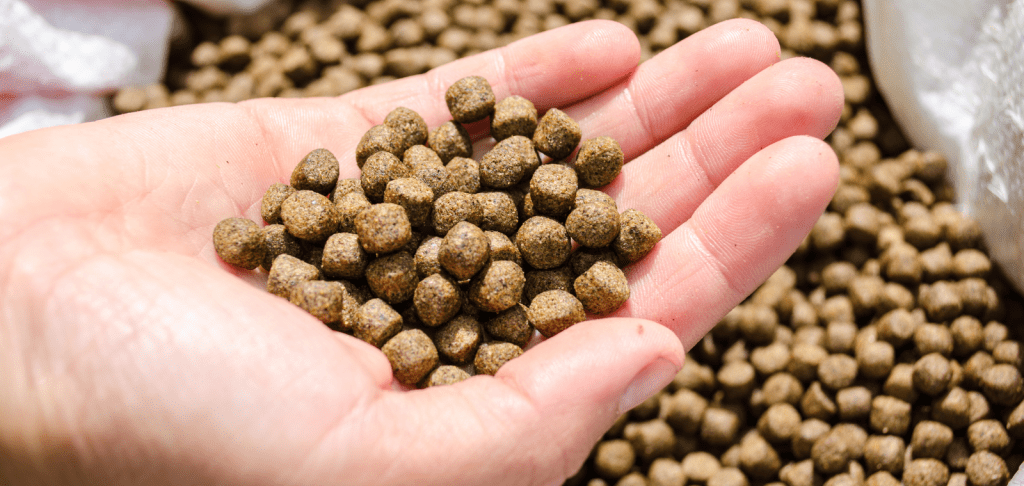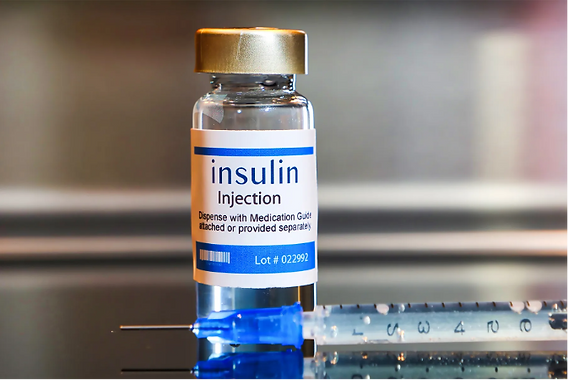
When Medicine Meets Faith: Is Insulin Truly Haram?
JAKARTA (05/22/2026)
Illness is an inevitable part of life. No matter how carefully we take care of ourselves, sickness can find its way in and when it does, the most important thing is how we respond to it. Fortunately, the rapid advancement of science and medical technology has given us increasingly effective treatments. One of the most significant breakthroughs in modern medicine is the widespread use of insulin — a life-saving therapy for millions of people living with diabetes worldwide.
But for Muslim patients, a long-circulating question adds a layer of anxiety: “Is insulin derived from pigs? Is it haram?” This concern has caused many diabetics to hesitate, delay, or even refuse medication that they genuinely need. Let’s unpack this together, simply, clearly, and honestly.
What Is Insulin, and Why Do Some People Need It?
Insulin is a hormone naturally produced by the pancreas. Its role is to regulate blood sugar by helping glucose move from the bloodstream into the body’s cells, where it is converted into energy.
In people with Type 1 diabetes, the body produces absolutely no insulin — meaning they must receive insulin injections to survive. In Type 2 diabetes, approximately one in four patients also requires insulin supplementation because the body fails to produce enough on its own.
For many people, insulin is not a lifestyle choice. It is a matter of life and death.
Where Did the “Haram” Claim Come From?
This concern did not arise from nowhere and it is completely legitimate.
When insulin was first discovered in 1921 at the University of Toronto, it was extracted from the pancreases of animals, primarily pigs and cows. Porcine (pig-derived) insulin was widely adopted for decades because its molecular structure is remarkably similar to human insulin.
Since pig-derived products are classified as haram (forbidden) in Islam, pigs being considered najis (impure). The use of porcine insulin understandably raised concerns among Muslim patients and scholars. This is where the worry began, and it was entirely reasonable to ask the question.
The Islamic Basis for Prohibition
Islam’s prohibition of pork-derived products is clearly stated in the Quran:
إِنَّمَا حَرَّمَ عَلَيْكُمُ ٱلْمَيْتَةَ وَٱلدَّمَ وَلَحْمَ ٱلْخِنزِيرِ وَمَآ أُهِلَّ بِهِۦ لِغَيْرِ ٱللَّهِ
“He has only forbidden to you dead animals, blood, the flesh of swine, and that which has been dedicated to other than Allah.” (Al-Baqarah (2):173)
Based on this, all four major schools of Islamic law (Hanafi, Maliki, Shafi’i, and Hanbali) agree: insulin derived from pigs is haram by default. A 2023 study published in the Journal of Fatwa Management and Research confirms that porcine-derived pharmaceutical ingredients ,including insulin, are considered impermissible, while also outlining the conditions under which exceptions apply.
The Good News: Most Insulin Today Is Not from Pigs
Here is where the facts change everything.
Medical technology has advanced dramatically since the 1920s. Today, the overwhelming majority of insulin is produced through recombinant DNA technology processes in which bacteria or yeast are genetically engineered to produce insulin structurally identical to human insulin, with no animal material involved at any stage.
A 2025 review published in Frontiers in Endocrinology traces this journey: from animal-derived insulin in the early 20th century, through biosynthetic human insulin (first FDA-approved in 1982), to today’s wide range of highly refined insulin analogue products all recombinant, all animal-free. The same review notes there are now over 50 FDA-approved insulin products, the vast majority of which are biosynthetic.
The two main categories of halal-status insulin widely available today are:
Recombinant Human Insulin: Fully synthetic, produced via microbial fermentation. Examples: Insulin human (soluble), Insulin human (isophane/NPH).
Human Insulin Analogues: Synthetically modified for improved clinical performance. Examples: insulin lispro, insulin aspart, insulin glargine, insulin detemir, insulin degludec.
Porcine insulin still exists but is increasingly rare. Its availability continues to be phased out globally. The Indonesian Ulema Council (MUI) has issued a fatwa confirming that recombinant insulin is halal, as it contains no impure derivatives and is produced through a clean, traceable process.
What If Porcine Insulin Is the Only Option? The Islamic Solution
Islam is a religion of mercy and practicality. It is not designed to place people in impossible situations, and Islamic jurisprudence has built-in provisions for exactly these moments.
The Principle of Necessity (Darurah)
One of the most well-known legal maxims (qawaid fiqhiyyah) in Islamic jurisprudence states:
الضَّرُورَاتُ تُبِيحُ الْمَحْظُورَاتِ
“Necessities permit that which is otherwise prohibited.”
This maxim holds that when a person’s life or health is genuinely at risk, and no halal alternative is accessible, the use of a normally forbidden substance becomes temporarily permissible. This is not a loophole — it is a deliberate, compassionate provision built into Islamic law to protect human life, one of the five essential objectives (maqasid al-shariah) of Islam.
The Quran reinforces this directly:
فَمَنِ ٱضْطُرَّ غَيْرَ بَاغٍ وَلَا عَادٍ فَلَآ إِثْمَ عَلَيْهِ ۚ إِنَّ ٱللَّهَ غَفُورٌ رَّحِيمٌ
“But whoever is forced [by necessity], neither desiring [it] nor transgressing [its limit], there is no sin upon him. Indeed, Allah is Forgiving and Merciful.” — (Al-Baqarah (2):173)
The Conditions That Must Be Met
- The use of non-halal insulin is only permitted when all of the following conditions are satisfied:
- The treatment is medically essential for managing the condition
- No halal-certified or synthetic alternative is available
- The medicine is prescribed by a qualified, trustworthy healthcare professional
- It is used only for as long as strictly necessary
- The patient has genuinely sought a halal alternative without success
The Principle of Hardship Bringing Ease
A second relevant qawaid fiqhiyyah provides further support:
الْمَشَقَّةُ تَجْلِبُ التَّيْسِيرَ
“Hardship brings about ease.”
If a Muslim patient has made sincere efforts to find halal insulin but faces real barriers whether due to availability, geography, or cost Islamic law allows for leniency, ensuring the person is not burdened beyond their capacity.
This is not merely a theoretical position. A 2025 qualitative study in the International Journal of Clinical Pharmacy found that Muslim patients do indeed apply these Islamic principles flexibly in the context of chronic or life-threatening illness, distinguishing between necessity-driven use and avoidable exposure.
Practical Alternatives to Seek First
Before concluding that porcine insulin is the only option, patients and caregivers are strongly encouraged to:
- Check your insulin brand name. Most modern brands such as Lantus, Levemir, NovoRapid, Humalog, and Tresiba are synthetic and halal.
- Ask your pharmacist or doctor directly whether your prescribed insulin is porcine-derived or biosynthetic. A 2025 practical guide in Currents in Pharmacy Teaching and Learning highlights that pharmacists can play a key role in identifying halal-compatible alternatives systematically using drug databases.
- Consult a Muslim healthcare professional who can advise on both the medical and Islamic dimensions of your treatment.
- Seek guidance from a trusted Islamic scholar ideally someone with knowledge of both fiqh (jurisprudence) and modern pharmaceutical science.
Conclusion
Islam does not place burdens on its followers beyond what they can bear. The religion is clear: porcine-derived insulin is not permitted by default. At the same time, Islam equally recognises that preserving human life is a sacred priority and when a diabetic patient has no access to a halal alternative, using porcine insulin is permissible under the principle of necessity.
That said, the priority always remains: seek the halal option first. The encouraging reality is that in most parts of the world today, biosynthetic halal insulin l is already the standard of care.
Written by: Alhayya Maritza
References
Yang, Y., Shahinozzaman, M., Shin, H., Bupp, S., & Sourbier, C. (2025). Impact of structure and formulation changes on the function of insulin products. Frontiers in Endocrinology, 16, 1601119. https://doi.org/10.3389/fendo.2025.1601119
Nazar, Z., Ali, B., Rutter, P., & Barnes, N. (2025). Islamic reasoning and the use of prohibited medicines among Muslim patients: A qualitative study. International Journal of Clinical Pharmacy, 47(6), 2083–2093. https://doi.org/10.1007/s11096-025-02046-3
Abubshait, L., Tasnim, N., & Cangoz, T. (2025). Pharmacological considerations for healthcare providers when caring for Muslim patients: A practical guide. Currents in Pharmacy Teaching and Learning, 17(10), 102429. https://doi.org/10.1016/j.cptl.2025.102429
Lisco, G., De Tullio, A., De Geronimo, V., Giagulli, V. A., Guastamacchia, E., Piazzolla, G., Disoteo, O. E., & Triggiani, V. (2024). Once-weekly insulin icodec in diabetes mellitus: A systematic review and meta-analysis of randomized clinical trials (ONWARDS clinical program). Biomedicines, 12(8), 1852. https://doi.org/10.3390/biomedicines12081852
Yu, G., Zhao, W., Wang, Y., & Xu, N. (2024). Current advances and future prospects in production of recombinant insulin and other proteins to treat diabetes mellitus. PeerJ, 12, e17957. https://doi.org/10.7717/peerj.17957
HalalMed. (2025). Literature review: The awareness concerning ‘Halal Medicines’ in Muslim patients and healthcare providers. https://halalmed.org/wp-content/uploads/2025/02/Literature-Review.pdf