The Connection Between Hajj and Eid al-Adha in Islamic Tradition
Hajj and Eid al-Adha are two major acts of worship in Islam that are observed during the month of Dhu al-Hijjah and are deeply interconnected both historically and spiritually. Both originate from the prophetic tradition of Prophet Ibrahim (Abraham) AS, who in Islam is regarded as a symbol of monotheism, obedience, and sacrifice to Allah SWT. Therefore, the relationship between Hajj and Eid al-Adha lies not only in their simultaneous observance, but also in the shared values and spiritual objectives that connect the two forms of worship.
Over time, Hajj and Eid al-Adha have come to be understood not merely as religious rituals, but also as symbols of Muslim identity and unity across the world. These two acts of worship demonstrate how Islamic teachings integrate spirituality with humanitarian values, social solidarity, and equality among human beings.
Hajj and Eid al-Adha in the Legacy of Prophet Ibrahim AS
The connection between Hajj and Eid al-Adha originates from the story of Prophet Ibrahim AS and his family, which constitutes an important part of Islamic history. Many rituals performed during Hajj symbolize the spiritual struggles of Prophet Ibrahim’s family. The ritual of sa’i between the hills of Safa and Marwah represents the struggle of Siti Hajar (Hagar) as she searched for water for Prophet Ismail AS in the desert. Meanwhile, the sacrifice of animals during Eid al-Adha is associated with the event in which Prophet Ibrahim AS was commanded by Allah SWT to sacrifice his son as an act of obedience to Him.
This event is described in the Qur’an, Surah Ash-Shaffat verses 102–107. In these verses, Prophet Ibrahim AS accepted Allah’s command with complete submission, while Prophet Ismail AS also demonstrated obedience to the will of God. When both had fully surrendered themselves, Allah SWT replaced Ismail with a sacrificial animal.
“And We ransomed him with a great sacrifice.”
(Qur’an, Ash-Shaffat [37]: 107)
In Islam, this story is not understood merely as an event of animal slaughter, but rather as a symbol of humanity’s spiritual triumph in placing obedience to God above personal interests. Prophet Ibrahim AS represents an individual capable of overcoming ego, fear, and worldly attachment in order to fulfill Allah’s command. Consequently, Eid al-Adha is commemorated as a symbol of sincerity, sacrifice, and piety.
The Observance of Eid al-Adha During the Peak of Hajj
Eid al-Adha is observed on the 10th of Dhu al-Hijjah, coinciding with the central rites of Hajj in Makkah. On this day, pilgrims complete several important rituals, including the stoning of the jamarat and the slaughtering of hadyu or sacrificial animals. At the same time, Muslims around the world perform the Eid al-Adha prayer and conduct qurban sacrifices in their respective regions.
This simultaneous observance demonstrates the spiritual connection between Muslims performing Hajj and the wider global Muslim community. Although not all Muslims have the opportunity to perform Hajj due to financial limitations, health conditions, or pilgrimage quotas, Eid al-Adha serves as a moment through which Muslims worldwide can participate in the values of sacrifice and spirituality that also form the essence of Hajj.
The obligation of Hajj is emphasized in the Qur’an:
“…Pilgrimage to the House is a duty owed to Allah by all who are able to undertake the journey…”
(Ali ‘Imran [3]: 97)
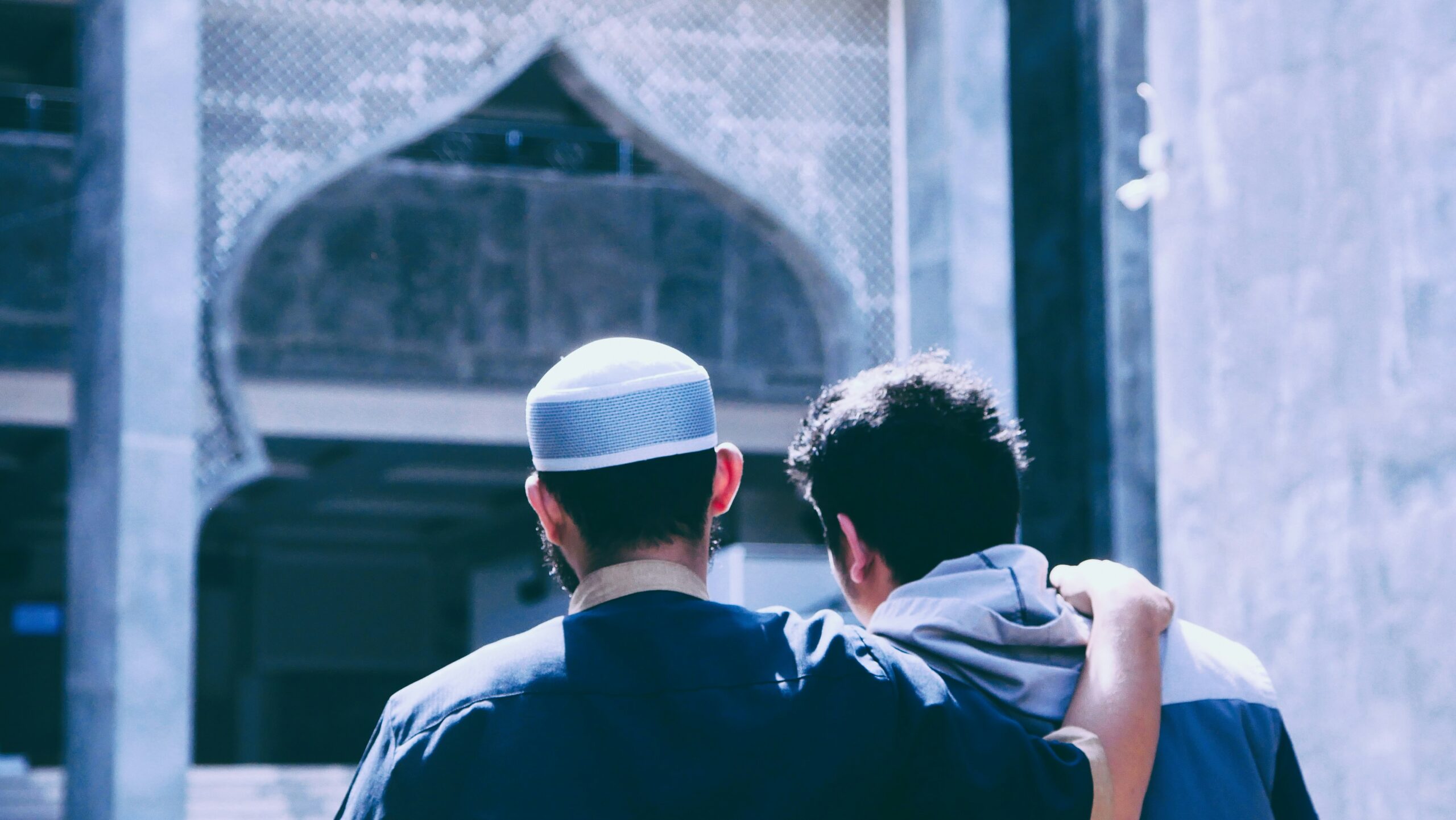
Beyond being an individual act of worship, Hajj also demonstrates how millions of Muslims from different countries, cultures, and linguistic backgrounds gather within the same spiritual space. This creates a collective experience that strengthens the sense of brotherhood and the global identity of the Muslim community. In this context, the simultaneous observance of Eid al-Adha across different parts of the world further reinforces the spiritual interconnectedness among Muslims.
The Meaning of Sacrifice in Hajj and Eid al-Adha
Both Hajj and Eid al-Adha teach the value of sacrifice in the life of a Muslim. During Hajj, pilgrims leave behind personal comfort, work, family, and daily routines in order to perform worship in the Holy Land. Such sacrifice is not merely material, but also physical and emotional, as Hajj requires patience, discipline, and self-control.
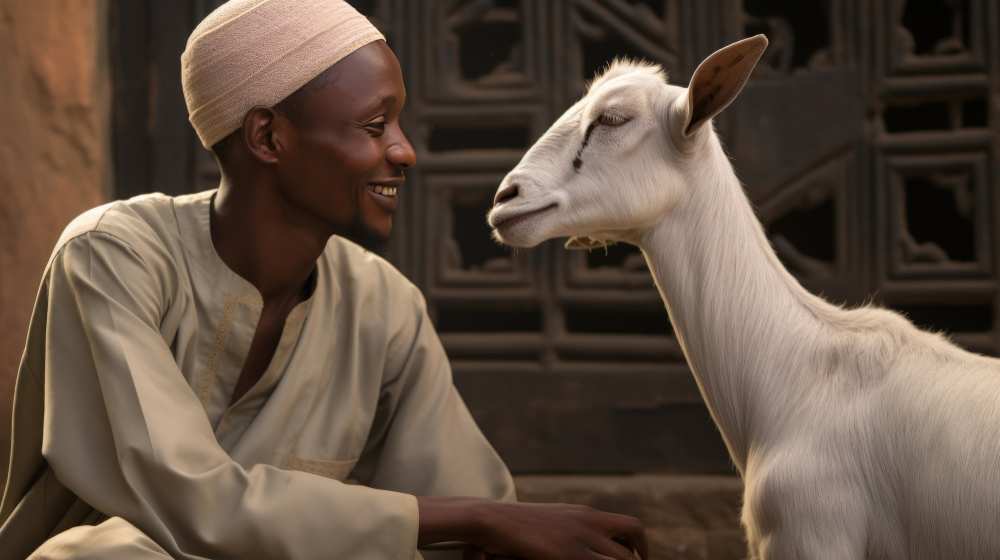
Meanwhile, Eid al-Adha teaches sacrifice through the slaughtering of sacrificial animals as a symbol of piety and social responsibility. However, Islam emphasizes that the essence of qurban does not lie in the blood or meat of the animal itself, but in the quality of human devotion to Allah SWT. This is explained in the Qur’an:
“Neither their meat nor their blood reaches Allah, but what reaches Him is your piety…”
(Al-Hajj [22]: 37)
This verse demonstrates that qurban possesses a broader spiritual dimension, namely cultivating sincerity, obedience, and social empathy. Through the distribution of sacrificial meat to the community, Eid al-Adha also represents the values of solidarity and social equity in Islam, particularly toward those in need.
In the modern context, the meaning of sacrifice has also evolved into a reflection on humanity’s relationship with other living beings. Muslim communities have increasingly paid attention to aspects such as animal health, animal welfare, and more ethical methods of slaughter. This development illustrates how the practice of qurban continues to adapt to evolving social awareness without abandoning its core spiritual values.
The Values of Equality and Unity in Islam
In addition to spiritual significance, Hajj and Eid al-Adha also reflect the Islamic principle of equality. During Hajj, all pilgrims wear simple ihram garments without displaying differences in social status, rank, race, or nationality. This condition symbolizes that all human beings are equal before Allah SWT.
This value of equality is likewise reflected in Eid al-Adha through the distribution of sacrificial meat to society without discrimination based on social or economic background. Therefore, Eid al-Adha functions not only as a religious ritual but also as a social mechanism that strengthens solidarity and mutual care among people.
The spirit of unity becomes even more visible when Muslims across different countries celebrate Eid al-Adha simultaneously with pilgrims in Makkah. This simultaneity creates a collective awareness that Muslims are part of a global community connected through shared values and rituals.
The Prophet Muhammad ﷺ explained the virtue of Hajj in a hadith:
“Whoever performs Hajj and does not engage in obscenity or wrongdoing will return as pure as the day his mother gave birth to him.”
(Narrated by Bukhari and Muslim)
Regarding Eid al-Adha, the Prophet ﷺ also said:
“Indeed, the greatest day in the sight of Allah is the Day of Sacrifice (Eid al-Adha)…”
(Narrated by Abu Dawud)
These hadiths indicate that Hajj and Eid al-Adha are regarded as moments of spiritual purification as well as opportunities to strengthen social relationships within the Muslim community.
Conclusion
The relationship between Hajj and Eid al-Adha in Islamic tradition demonstrates that both acts of worship originate from the same spiritual foundation: piety, sacrifice, and obedience to Allah SWT. Together, they represent the enduring legacy of Prophet Ibrahim AS, which continues to be practiced by Muslims throughout the world.
In the modern era, Hajj and Eid al-Adha are understood not only as religious rituals, but also as symbols of global solidarity, human equality, and social responsibility. Through the observance of these two acts of worship, Islam affirms that spirituality cannot be separated from humanitarian values and social relationships among human beings.
– Written by Naflah –
References
Arafat, M. (2024). Transculturality and the hajj: Diasporas as mediators of cross-cultural encounters. Journal of Ethnic and Migration Studies, 50(4), 1080–1097.
Raihani, R., Noor, I., & Supriansyah, S. (2023). Commodification of Ḥajj Rituals amongst Banjarese Pilgrims. Studia Islamika, 30(1), 129–156.
Ibrahim, A., Budisatria, I. G. S., Artama, W. T., Widayanti, R., & Atmoko, B. A. (2022). Sacrificers’ Preferences on Selection and Procurement of Sacrificial Animals for Eid al-Adha Celebration. ANIMAL PRODUCTION, 24(1), 37-44.
Kusnadi, Kusnadi. (2022). Tafsir Tematik Tentang Ibadah Kurban (Studi Surat Al-Hajj: 36). Ulumul Syar’i: Jurnal Ilmu-Ilmu Hukum dan Syariah, 10(2), 30-44
Majelis Tarjih dan Tajdid Pimpinan Pusat Muhammadiyah. (2025). The scriptural foundations for the sacrifice of qurban animals during Eid al-Adha.