The Ruling on Using Cochineal Insect as a Colorant from an Islamic Perspective
JAKARTA (2026/11/05)
To make a product that stands out and sells well, businesses need a “wow factor.” That is why producers compete to make their products as appealing as possible, from design and production techniques to the choice of colorants. Behind every shade lies a wide range of raw materials.
Synthetic colorants are now widely used, but many producers still choose natural ones. The reasons are usually to keep colors vivid and rich, and because natural colorants are considered healthier. One of the most popular natural red colorants is carmine, a red extract derived from an insect called cochineal. Its use is now widespread across many industries, from food and beverages to everyday consumer goods.
Despite this popularity, cochineal remains a gray area in halal compliance from an Islamic perspective. The reason is that the colorant comes from an insect, and insects are often regarded as repulsive creatures that Muslims should avoid consuming.
So what is the actual ruling on using cochineal in industry? This article explains.
The Cochineal Insect and Its Fiery Red Secret
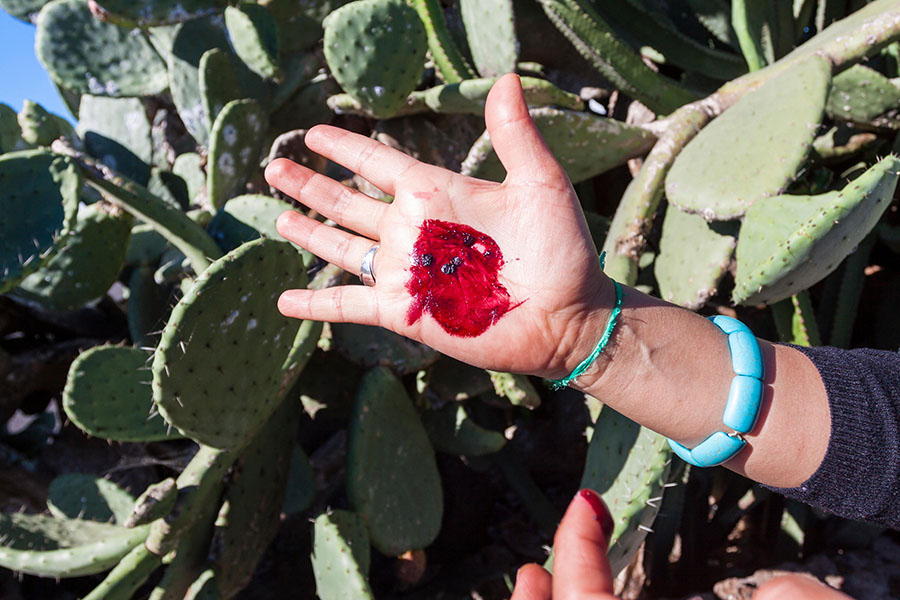
The cochineal insect (Dactylopius coccus) is a small, soft-bodied, red insect that typically lives on cactus plants. It is native to South America, particularly Peru, and is now also cultivated in places such as Mexico, the Canary Islands (Spain), and other regions where prickly pear cacti grow.
Despite its size, this tiny creature produces a brilliant natural red pigment, one that has been prized since the time of the Aztec civilization. The pigment is found in the female insects, which are dried and ground into a fine powder. The powder is then mixed with aluminum and calcium salts to produce a red extract known as carmine. Carmine is also labeled E120 or Natural Red 4.
Synthetic dyes are now cheaper and faster to produce, yet cochineal still holds its place in the market. Many buyers prefer natural colorants that are perceived as healthier and more environmentally friendly. Today, it is widely used in food and beverages such as yogurt, flavored drinks, ice cream, and processed fruit. It also appears in cosmetics and textiles.
Is the Cochineal Insect Halal or Haram?
The Basic Ruling on Consuming Insects
Although cochineal is used in almost every industry, its status under Islamic law is still questioned, mainly because it comes from an insect. In Islamic jurisprudence, many insects are avoided for consumption because they are considered khabā’ith, things that people of sound nature find repulsive. (This differs from najis, which refers to ritual impurity, such as blood or pork, that must be washed away before prayer.) Islam also instructs believers to stay away from what is repulsive. Allah says:
الَّذِيْنَ يَتَّبِعُوْنَ الرَّسُوْلَ النَّبِيَّ الْاُمِّيَّ الَّذِيْ يَجِدُوْنَهٗ مَكْتُوْبًا عِنْدَهُمْ فِى التَّوْرٰىةِ وَالْاِنْجِيْلِ يَأْمُرُهُمْ بِالْمَعْرُوْفِ وَيَنْهٰىهُمْ عَنِ الْمُنْكَرِ وَيُحِلُّ لَهُمُ الطَّيِّبٰتِ وَيُحَرِّمُ عَلَيْهِمُ الْخَبٰۤىِٕثَ وَيَضَعُ عَنْهُمْ اِصْرَهُمْ وَالْاَغْلٰلَ الَّتِيْ كَانَتْ عَلَيْهِمْ ۗ فَالَّذِيْنَ اٰمَنُوْا بِهٖ وَعَزَّرُوْهُ وَنَصَرُوْهُ وَاتَّبَعُوا النُّوْرَ الَّذِيْٓ اُنْزِلَ مَعَهٗٓ ۙ اُولٰۤىِٕكَ هُمُ الْمُفْلِحُوْنَࣖ
“Those who follow the Messenger, the unlettered prophet, whom they find written [i.e., described] in what they have of the Torah and the Gospel, who enjoins upon them what is right and prohibits them from what is wrong and makes lawful for them what is good and forbids them from what is evil and relieves them of their burden and the shackles which were upon them. So they who have believed in him, honored him, supported him and followed the light which was sent down with him, it is those who will be the successful.” (Qur’an 7:157)
Citing this verse, some scholars rule that using cochineal colorant is haram. They place cochineal among the insects that should be avoided, and therefore hold that consuming or using it is prohibited.
Why the Ruling Is More Nuanced Than It Seems
The matter turns out to be less simple than that. Animals are living creatures with many different types and biological conditions, and these differences affect their halal status. A ruling therefore cannot be made from a general classification alone.
In Islamic jurisprudence, animals are divided into two categories based on their type of blood:
- Lahu dam sā’il (animals with flowing blood, i.e. warm-blooded). Examples: deer and cattle. The carcasses of these animals are considered impure (najis).
- Laysa lahu dam sā’il (animals without flowing blood, i.e. cold-blooded). Examples: fish and locusts. The carcasses of these animals are considered pure.
Cochineal falls into the second category, since insects are cold-blooded creatures without flowing blood. Most scholars therefore consider it pure. Because it is also safe and harmless, they hold that its use is permissible.
Islam also encourages believers to make good use of what Allah has provided on earth. Cochineal is a useful colorant for production and industry, sectors that support people’s livelihoods. Allah says:
هُوَ الَّذِيْ جَعَلَ لَكُمُ الْاَرْضَ ذَلُوْلًا فَامْشُوْا فِيْ مَنَاكِبِهَا وَكُلُوْا مِنْ رِّزْقِهٖ ۗ وَاِلَيْهِ النُّشُوْرُ
“It is He who made the earth tame for you, so walk among its slopes and eat of His provision, and to Him is the resurrection.” (Qur’an 67:15)
Scholarly Statements on the Halal Status of Cochineal
Although its status is still debated, several scholarly councils and halal authorities have issued clear positions on the halal status of cochineal.
MUI (Indonesia)
“The cochineal insect lives on cactus plants and feeds on their moisture and nutrients. It shares many similarities with locusts, and its blood does not flow. Food and beverage colorants derived from cochineal are halal, as long as they are beneficial and not harmful.” (MUI Fatwa No. 33/2011)
JAKIM (Malaysia)
“The use of cochineal colorant in food, beverages, and consumer goods is permissible, and the permitted level of use follows the provisions set by the Malaysian Ministry of Health, provided it causes no harm.” (JAKIM, 2015)
Besides these two, other countries such as Egypt and Jordan also permit the use of cochineal colorant.
Two Important Things You Shouldn’t Overlook When Using Cochineal
Even though many authorities affirm that cochineal is permissible, the issue is still debated among scholars. Some countries continue to prohibit its use in food and consumer products. One of them is Brunei Darussalam, where scholars hold that cochineal colorant is haram because it follows the original ruling on insects as repulsive creatures.
This leads to two points every producer should keep in mind:
- Check the regulations of your destination country. Rulings on cochineal differ from country to country. Before exporting products that contain this insect-based colorant, review the halal regulations of the target market.
- Keep the colorant halal-compliant. Even though it is permissible, cochineal colorant must remain free of contamination with prohibited (haram) substances. Protecting its purity protects the quality of your product.
Final Thoughts
Cochineal shows that a halal ruling is rarely black and white. It depends on the nature of the material, the scholarly opinion followed, and the regulations of each market. For producers, a permissible ingredient is only the starting point. Halal integrity depends on keeping the entire process clean, from sourcing and storage to production and distribution. Careful handling is what ultimately earns consumers’ trust.
Writer: Alhayya Maritza
Editor: Naflah Azizah Wibowo
References:
Salleh, M. M. M., Ahmad, N. M., & Fadzillah, N. A. (2020). Pewarna makanan dari serangga (cochineal) menurut perspektif halal: analisis fatwa di beberapa negara ASEAN: cochineal food coloring from halal perspective: a fatwa analysis in several ASEAN countries. Journal of Fatwa Management and Research, 19(1), 1-14.
Britannica. (2026). Cochineal. Retrieved November 5, 2026 from https://www.britannica.com/technology/cochineal
Indonesian Folks. (2023). Hukum Karmin Halal atau Haram? Kontroversi Penggunaan Pewarna dari Serangga di Indonesia. Retrieved November 5, 2026 from https://www.indonesiafolks.com/kabar-indonesia/86910361979/hukum-karmin-halal-atau-haram-kontroversi-penggunaan-pewarna-dari-serangga-di-indonesia
McGill University. (2012). Carmine Dye and the Cochineal Insect. Retrieved November 5, 2026 from https://www.mcgill.ca/oss/article/general-science-history/carmine-dye-and-cochineal-insect