Kenya’s Strategic Pivot: Analyzing President Ruto’s China Visit and Its Implications
Source: Aljazeera Net
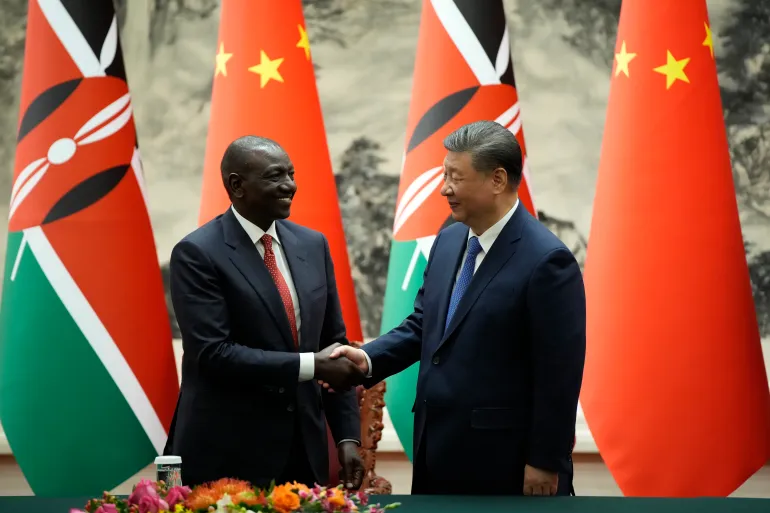
JAKARTA – In May 2025, Kenyan President William Ruto embarked on a significant diplomatic mission to Beijing, marking his third visit to China since assuming office in September 2022. This five-day state visit, conducted at the invitation of Chinese President Xi Jinping, has generated considerable attention both regionally and internationally, particularly given the current geopolitical climate and Kenya’s complex web of international relationships.
The Visit’s Strategic Context
President Ruto’s journey to China came at a particularly sensitive moment in global trade relations. Just weeks prior to his departure, the United States had imposed a 10% tariff increase on imports from various countries, including Kenya. This move was part of a broader pattern of trade tensions between Washington and Beijing, though a temporary 90-day “trade truce” was later negotiated.
The timing of Ruto’s visit reflects a pragmatic approach to foreign policy, reminiscent of the philosophy articulated by Chinese reform leader Deng Xiaoping regarding “reform and opening up.” This strategic flexibility appears to align with Ruto’s own economic vision, which he has termed “bottom-up economics” – a comprehensive approach built on six pillars: reducing living costs, eliminating hunger, creating employment opportunities, expanding the tax base, improving foreign exchange balance, and promoting inclusive growth.
Major Outcomes and Agreements
The visit yielded substantial concrete results, with both nations signing 20 agreements and memoranda of understanding valued at 137 billion Kenyan shillings (approximately $1.6 billion). These agreements span multiple sectors including infrastructure development, trade, education, agriculture, healthcare, and information and communication technology.
Infrastructure Development
One of the most significant outcomes was China’s commitment to financing the extension of the railway line from Naivasha, Kenya, to Malaba, Uganda. Additionally, China agreed to fund the expansion of the Nairobi-Nakuru-Mau highway extending to Malaba, Uganda, and the construction of a connecting road from Kiambu highway to Eldoret province, alongside 15 internal roads.
Enhanced Partnership Status
The relationship between the two countries was elevated to a “comprehensive strategic partnership” level. China also provided a grant worth 100 million yuan (1.7 billion Kenyan shillings) to support various projects, particularly in the healthcare sector.
Diplomatic Ramifications
The visit had immediate diplomatic consequences, prompting swift responses from Kenya’s Western allies. The United States quickly extended an invitation to Kenya’s Prime Minister and Foreign Minister Musalia Mudavadi to visit Washington for discussions with Secretary of State Marco Rubio. Similarly, the European Union launched a business forum with Kenya from May 12-14, 2025, establishing the European-Kenyan Chamber of Commerce.
Finland’s President also made a historic visit to Kenya – the first by a Finnish head of state – resulting in several memoranda of understanding covering political consultations, peace and mediation support, and cooperation in health, renewable energy, and information technology.
The Debt Challenge
Kenya’s relationship with China is complicated by significant debt obligations. The World Bank recently ranked Kenya as the fourth most debt-burdened country globally. Chinese debt to Kenya stands at approximately $6.3 billion, according to the Kenyan Treasury, out of a total public debt of about 11.02 trillion shillings ($82 billion) as of January 2025.
This debt represents roughly 67% of Kenya’s GDP, with the government spending 152.6 billion shillings in the 2023/2024 financial year to service Chinese debt alone. Economic experts note that for every 100 shillings of government revenue, 60 shillings go toward debt servicing, leaving only 40 shillings for salaries and development spending.
American Concerns and Congressional Response
The visit did not go unnoticed in Washington. Jim Risch, Chairman of the Senate Foreign Relations Committee, expressed dismay during a May 13, 2025 hearing titled “East Africa and the Horn of Africa: Turning Point or Breakdown?” He described Ruto’s characterization of Kenya-China relations as a “strategic partnership” as “shocking,” particularly given Kenya’s recent designation as a Major Non-NATO Ally of the United States.
Risch’s comments reflected broader American concerns about China’s growing influence in Africa and the potential implications for U.S. strategic interests in the region. However, even as these concerns were being aired in Congress, a Chinese investment delegation was in Nairobi with President Ruto, exploring expanded Kenyan tea exports to China.
Geopolitical Implications
President Ruto’s visit represents a careful balancing act in Kenya’s foreign policy. During the visit, he reaffirmed Kenya’s support for the “One China” policy, the two-state solution for Israel and Palestine, and dialogue-based resolution of the Ukraine-Russia conflict. These positions align Kenya more closely with Chinese diplomatic stances on key global issues.
The visit also raises questions about Kenya’s potential membership in BRICS, which could provide access to concessional loans and assistance from the group’s development bank. Such a move would represent a significant shift in Kenya’s international alignment and could be viewed as a setback for Washington’s influence in the Horn of Africa.
Strategic Calculations
For Kenya, the visit represents an attempt to diversify its international partnerships and secure crucial economic support at a time of financial pressure. The country’s leadership appears to be leveraging the current U.S.-China trade tensions to maximize benefits from both sides.
For China, Kenya represents a crucial gateway for expanding economic, diplomatic, and security influence in East Africa. Kenya’s strategic location on the East African coast and its role as a regional hub make it an invaluable partner in China’s Belt and Road Initiative.
Conclusion
President Ruto’s visit to China illustrates the complex realities of modern African diplomacy, where countries must navigate between major powers while pursuing their national interests. The visit’s outcomes suggest that Kenya is positioning itself to benefit from great power competition rather than being constrained by it.
The challenge for Kenya will be managing the expectations and concerns of its traditional Western allies while deepening its relationship with China. The success of this balancing act will likely depend on Kenya’s ability to maintain its strategic autonomy while avoiding the debt trap concerns that have characterized much of the debate around China-Africa relations.
As the geopolitical landscape continues to evolve, Kenya’s experience may serve as a model for other African nations seeking to maximize their options in an increasingly multipolar world. The coming months will reveal whether this strategic pivot proves beneficial for Kenya’s development goals or creates new complications in its international relationships.
Original article:
aljazeera.net. (n.d.). أبرز مكاسب كينيا من زيارة رئيسها إلى الصين. Retrieved July 7, 2025, from https://www.aljazeera.net/opinions/2025/6/3/