Imports and Self-Sufficiency: The Dilemma Surrounding Halal Beef Demand in Indonesia

source: jakartaglobe.id
Kawaguchiko, Japan – Beef demand in Indonesia increases every year, with estimates suggesting that by 2025, beef requirements will reach 739 thousand tons. However, until now, Indonesia has been unable to meet this demand due to resource limitations. To address this issue, Indonesia is forced to import beef from other countries. This situation has sparked debate, particularly regarding the source of imported beef, which comes from non-Muslim countries, raising doubts about its halal status. This is significant because Indonesia is a country with a Muslim majority population that heavily depends on the halal industry.
Let’s examine this issue more deeply!
Population Growth and Increasing Beef Demand
Indonesia’s population continues to experience significant growth. According to data from Badan Pusat Statistik (Indonesia’s Central Bureau of Statistics), Indonesia’s population in 2024 is estimated to reach 281.6 million people, showing a surge compared to previous years. This condition causes the demand for beef to increase, especially during certain periods such as Eid al-Fitr and Eid al-Adha, when beef consumption becomes very high to fulfill traditional culinary customs. However, despite the rising demand, Indonesia faces a large gap between demand and its ability to meet beef requirements. Beef consumption in Indonesia is currently growing twice as fast as domestic cattle production, resulting in supply shortages and prices that continue to rise every year.
Limitations in the Domestic Beef Processing Industry
The beef processing industry in Indonesia also faces major challenges. Most cattle farmers in Indonesia come from middle to lower-class backgrounds with limited capital. As a result, the processing methods used tend to be traditional and time-consuming, hampering efficiency and causing domestic beef prices to become increasingly expensive. Additionally, limited technology in meat processing makes domestic production results less than optimal.
Import Policies to Cover Supply Shortages
To meet beef requirements, the Indonesian government has issued policies to import beef from beef-producing countries such as Australia, Brazil, New Zealand, and India. While this policy helps fill the beef supply gap, it also brings negative impacts. The significant price difference between domestic and international markets allows some importers to take advantage of this situation for substantial profits, which in turn harms small farmers domestically. Moreover, mass imports also impact the trade deficit, disadvantage local cattle industries, and threaten Indonesia’s food security.
Dependence on Imported Beef and Socio-Cultural Influences
Additionally, Indonesian society has begun to depend on imported beef. One reason people prefer imported beef is its perceived better quality. This phenomenon is also driven by westernization and urbanization, causing changes in consumer preferences. Amid the increasing popularity of foreign lifestyle trends, many young people are interested in trying meat products from abroad, such as the famous Japanese wagyu. Social media accelerates this trend by encouraging the younger generation to follow global tastes.
Government Efforts to Increase Production and Maintain Halal Status
The government has attempted various measures to address these issues. Indonesia’s Minister of Agriculture has issued Ministerial Decree Number 50/2011 regulating import quotas and permits, but this policy has been hampered by various political and technical factors. One of the main obstacles is the difficulty in limiting import quotas to meet the continuously increasing demand.
Furthermore, the government is also working to improve the logistics system and beef supply chain through several policies. One of these is the procurement of livestock vessels designed to meet animal welfare standards. The government is also trying to change the market structure so that beef prices at the farmer level increase, while prices at the consumer level can be suppressed. To support self-sufficiency, an 80% subsidy is allocated for livestock loading costs on livestock vessels. Additionally, the construction of modern slaughterhouses is being carried out in production centers to improve the quality of domestic beef.
Halal Status of Imported Beef: Regulation and Certification
source: retailworldmagazine.com
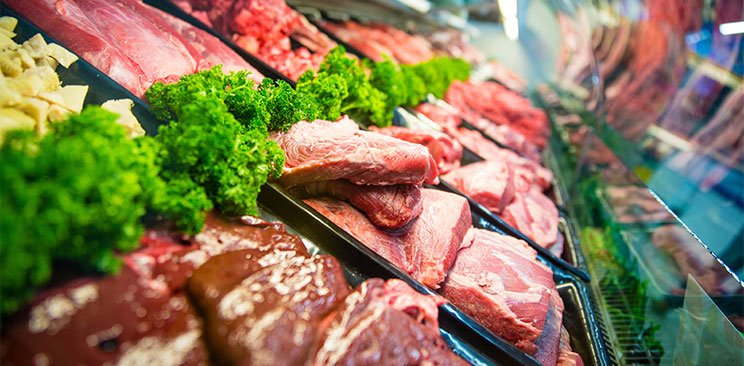
One crucial issue in beef imports is its halal status. Based on Article 127 of Government Regulation No. 39 of 2021, imported products, including beef, must obtain halal certification from foreign halal institutions that have collaborated with the Halal Product Assurance Agency (BPJPH). Law No. 33 of 2014 on Halal Product Assurance also requires all products circulating in Indonesia to have halal certification. This includes imported products that will be marketed in Indonesia. Although halal certification for imported products differs from domestic products, if the foreign halal institution has collaborated with BPJPH, then the product does not need to apply for a halal certificate again, but must register before being distributed in Indonesia.
The continuously increasing demand for beef in Indonesia presents significant challenges for the government and local cattle farmers. Limitations in domestic resources and dependence on imports mean Indonesia must seek long-term solutions to achieve beef self-sufficiency. Government efforts to increase domestic production, improve the distribution system, and ensure the halal status of imported beef are important steps in maintaining the sustainability of this industry and meeting the increasingly diverse needs of consumers.
References
Hadi, S. N., & Chung, R. H. (2022). Estimation of demand for beef imports in Indonesia: An autoregressive distributed lag (ARDL) approach. Agriculture, 12(8), 1212.
Maharani, S., Mayulu, H., Haris, M. I., & Fanani, A. F. (2024). Mengungkap Dinamika Impor Sapi Hidup: Peluang dan Tantangan Menuju Swasembada Daging Sapi di Indonesia. INOVASI: Jurnal Ekonomi, Keuangan, dan Manajemen, 20(3), 626-639.
Pratama, C. I. (2025). KEBIJAKAN LUAR NEGERI INDONESIA TERHADAP IMPOR DAGING SAPI BRAZIL PASCA KASUS SENGKETA DAGANG (BOVINE MEAT) TAHUN 2022. Global Insights Journal: Jurnal Mahasiswa Hubungan Internasional, 2(1).
R., Suryana, A. T., & Hanoum, F. C. (2021). The effect of changes in beef prices on beef supply and demand in Indonesia. Enrichment: Journal of Management, 12(1), 374-385.
Tenrisanna, V., & Kasim, S. N. (2020). Trends and forecasting of meat production and consumption in Indonesia: Livestock development strategies. IOP Conference Series: Earth and Environmental Science, 492, 012156.
Akuhalal.com. (n.d.). Mekanisme sertifikasi halal untuk produk impor. Retrieved March 20, 2025, from https://www.akuhalal.com/?page_id=1010
Badan Pusat Statistik. (n.d.). Jumlah penduduk pertengahan tahun (ribu jiwa). Retrieved March 20, 2025, from https://www.bps.go.id/id/statistics-table/2/MTk3NSMy/jumlah-penduduk-pertengahan-tahun–ribu-jiwa-.html