Bangladesh and Malaysia Forge Strategic Partnership for Halal Industrial Development
JAKARTA – Bangladesh has initiated strategic discussions with Malaysia to establish a halal industrial park, positioning itself to capitalize on the burgeoning global market for Islamic-compliant products and food items. This collaborative effort represents a significant step toward tapping into what industry experts describe as one of the world’s fastest-growing consumer segments.
High-Level Diplomatic Engagement
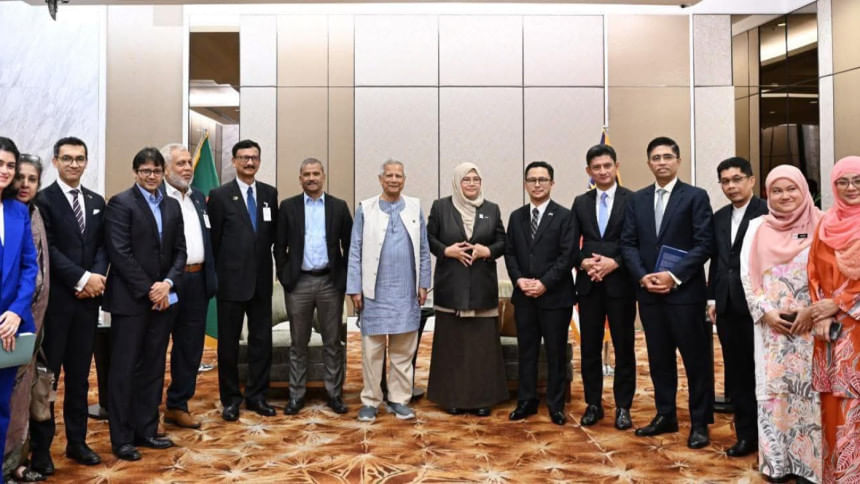
During a pivotal meeting in Kuala Lumpur, Chief Adviser Prof Muhammad Yunus engaged with Malaysian halal industry representatives to explore partnership opportunities. The discussions, held on Tuesday, focused on leveraging Malaysia’s extensive experience in halal industrial development to support Bangladesh’s market entry ambitions.
“Let’s make a move on this,” Chief Adviser Yunus emphasized during the meeting, signaling Bangladesh’s commitment to advancing this strategic initiative. The engagement reflects Bangladesh’s recognition of the substantial economic opportunities present in the global halal marketplace.
Market Scale and Growth Projections
Industry officials presented compelling market data demonstrating the sector’s impressive scale and growth trajectory. The global halal products market currently commands a valuation of $3 trillion, with projections indicating expansion to $5 trillion by 2030. This remarkable growth rate underscores the significant commercial potential available to countries capable of establishing competitive positions within this market segment.
Malaysia has emerged as a dominant player in this space, operating at least 14 specialized halal industrial parks and maintaining a substantial market share. The country’s success provides a proven model for halal industrial development that Bangladesh seeks to adapt for its own market conditions.
Other significant participants in the global halal market include various Middle Eastern nations, Thailand, Australia, and New Zealand, each contributing unique strengths and specializations to the overall ecosystem.
Bangladesh’s Strategic Position and Potential
Bangladesh possesses considerable natural advantages for halal market participation, most notably its position as home to the world’s third-largest Muslim population. This demographic foundation provides both domestic market demand and cultural understanding necessary for successful halal product development.
However, realizing this potential requires substantial improvements in infrastructure development and certification system enhancement. Current certification capabilities remain limited, with the Islamic Foundation Bangladesh serving as the primary certifying body, having certified only 124 manufacturers to date. Additionally, the Bangladesh Standards and Testing Institution provides supplementary certification services for halal products.
This relatively modest certification capacity highlights the substantial development opportunities available through international partnership and knowledge transfer initiatives.
Collaborative Framework and Implementation Strategy
Chowdhury Ashik Mahmud Bin Harun, Executive Chairman of the Bangladesh Investment Development Authority, specifically requested Malaysian assistance in identifying requirements for establishing halal industrial parks within Bangladesh. This request demonstrates Bangladesh’s commitment to learning from Malaysia’s proven expertise while adapting successful models to local conditions.
The Malaysian delegation brought considerable expertise to the discussions, led by Datin Paduka Hajah Hakimah binti Mohd Yusoff, who serves as coordinator of halal affairs under the Malaysian Prime Minister’s Department. Key participants included Sirajuddin Bin Suhaimee, Director General of the Department of Islamic Development Malaysia (JAKIM), and Hairol Ariffein Sahari, Chief Executive Officer of the Halal Development Corporation (HDC).
This high-level representation indicates Malaysia’s serious commitment to supporting Bangladesh’s halal industry development efforts.
Formal Cooperation Agreement
The partnership received formal recognition through the exchange of a cooperation note in halal ecosystems between the two countries. Officials characterized this agreement as representing “halal diplomacy,” reflecting the growing importance of halal trade relationships in international economic cooperation.
This diplomatic framework provides the foundation for sustained collaboration and knowledge exchange between the two nations, facilitating long-term partnership development beyond initial project implementation.
Assessment and Implementation Timeline
Malaysia has committed to conducting comprehensive assessment activities to understand Bangladesh’s specific needs and requirements. Sirajuddin Bin Suhaimee announced that Malaysia would deploy a specialized team to Bangladesh for detailed country assessment, indicating the partnership’s progression toward concrete implementation phases.
This assessment phase will likely examine existing infrastructure capabilities, regulatory frameworks, market conditions, and investment requirements necessary for successful halal industrial park establishment.
Government Support and Multi-Sectoral Engagement
The initiative enjoys broad government support, as demonstrated by the diverse participation of senior officials in the Kuala Lumpur meeting. Attendees included Foreign Adviser Md Touhid Hossain, Law Adviser Asif Nazrul, Energy Adviser Fouzul Kabir Khan, Chief Adviser’s Special Envoy Lutfey Siddiqi, and Senior Secretary for SDG Affairs Lamiya Morshed.
This multi-sectoral representation indicates the government’s recognition of the halal industrial park initiative’s potential impact across various policy areas, from foreign relations and legal frameworks to energy infrastructure and sustainable development goals.
Economic Development Implications
The halal industrial park initiative represents more than simple market entry—it offers opportunities for comprehensive economic development through manufacturing capacity building, export market expansion, and value chain development. Success in this sector could contribute significantly to Bangladesh’s broader economic diversification efforts while creating employment opportunities across multiple skill levels.
Furthermore, the initiative aligns with Bangladesh’s ongoing efforts to enhance its manufacturing capabilities and reduce dependence on traditional export sectors. Halal product manufacturing could provide new avenues for industrial growth while serving both domestic and international market demand.
Regional and Global Market Integration
Partnership with Malaysia offers Bangladesh access to established regional and global halal trade networks, potentially facilitating market entry and distribution relationships that would be challenging to develop independently. Malaysia’s existing relationships with major halal-consuming markets could provide valuable pathways for Bangladeshi halal products to reach international consumers.
This regional integration approach reflects broader trends in Islamic economic cooperation, where countries leverage shared religious and cultural foundations to build mutually beneficial trade relationships.
Strategic Outlook and Future Development
The Bangladesh-Malaysia halal industrial park partnership represents the initial phase of what could become a comprehensive halal economy development strategy. Success in this initiative could position Bangladesh as a significant regional player in halal manufacturing while contributing to the country’s long-term economic transformation goals.
The partnership’s emphasis on knowledge transfer, capacity building, and infrastructure development suggests a sustainable approach to market entry that prioritizes long-term competitiveness over short-term gains. This strategic perspective increases the likelihood of creating lasting economic benefits for both participating countries.
As the global halal market continues expanding toward its projected $5 trillion valuation by 2030, Bangladesh’s proactive engagement with established industry leaders like Malaysia positions the country to capture meaningful market share while contributing to broader economic development objectives.
The success of this initiative will likely depend on effective implementation of assessment recommendations, adequate investment in infrastructure development, and sustained commitment to quality standards and certification processes that meet international halal market requirements.
Original Article:
thedailystar.net. (n.d.). Bangladesh seeks Malaysia’s support to set up halal industrial park. Retrieved August 14, 2025, from https://www.thedailystar.net/business/news/bangladesh-seeks-malaysias-support-set-halal-industrial-park-3961651