Condolences in Islam: Meaning, Etiquette, and Ongoing Benefits for the Deceased
Death is a universal human experience, and every culture has its own way of responding to loss. In Islam, offering condolences (known as ta’ziyah) is a recommended and meaningful act of compassion. It is not limited to the death of a Muslim; rather, Muslims are encouraged to express sympathy and support regardless of the religious identity of the deceased.
The Ruling and Purpose of Ta’ziyah
In Islamic teachings, offering condolences is considered sunnah (a recommended act modeled by the Prophet Muhammad ﷺ). The purpose of ta’ziyah is twofold: to comfort the grieving family and to pray for the deceased. It is an act of empathy and solidarity during one of life’s most painful moments.
The Prophet Muhammad ﷺ emphasized the spiritual reward of consoling others. A narration recorded by Imam al-Bayhaqi and Ibn Majah states that a believer who consoles a grieving person will be honored by God on the Day of Judgment. In another narration reported by Imam at-Tirmidhi, the Prophet ﷺ said that whoever comforts a parent who has lost a child will be granted a special garment of honor in Paradise. These teachings highlight that offering condolences is not merely social etiquette, it is a spiritually significant act.
Words of Consolation Taught by the Prophet
Islam encourages specific phrases that express patience and trust in God. Among the most well-known words taught by the Prophet ﷺ, recorded in both Sahih al-Bukhari and Sahih Muslim, are:
“Be patient and seek reward from Allah. Indeed, to Allah belongs what He takes and what He gives, and everything with Him has an appointed time.”
Another recommended supplication is:
“May Allah magnify your reward, grant you good consolation, and forgive your deceased.”
These expressions gently remind the bereaved that life and death are ultimately within God’s wisdom and that patience carries spiritual reward.
Public Announcements and Traveling for Condolences
Islam permits informing the community of someone’s death, especially if funeral prayers will be held at a certain place. The Prophet ﷺ himself informed his companions of the passing of An-Najashi (the King of Abyssinia) and led a funeral prayer in absentia.
Traveling to offer condolences is also allowed, particularly when the deceased or the grieving family has a close relationship with the visitor. In some cases, not attending may be considered neglecting family ties. Islam places great importance on maintaining bonds of kinship, even in times of grief.
Simplicity in Funeral Prayer
Islamic funeral prayer (salat al-janazah) is intentionally simple and concise. Unlike the five daily prayers, it does not include the opening supplication (du‘a al-istiftah). The focus remains on praying for mercy and forgiveness for the deceased rather than lengthy ritual recitations.
Proper Etiquette When Visiting the Bereaved
Islamic scholars also discuss the manners of visiting a grieving family. The classical scholar Al-Ghazali outlined several key etiquettes in his works:
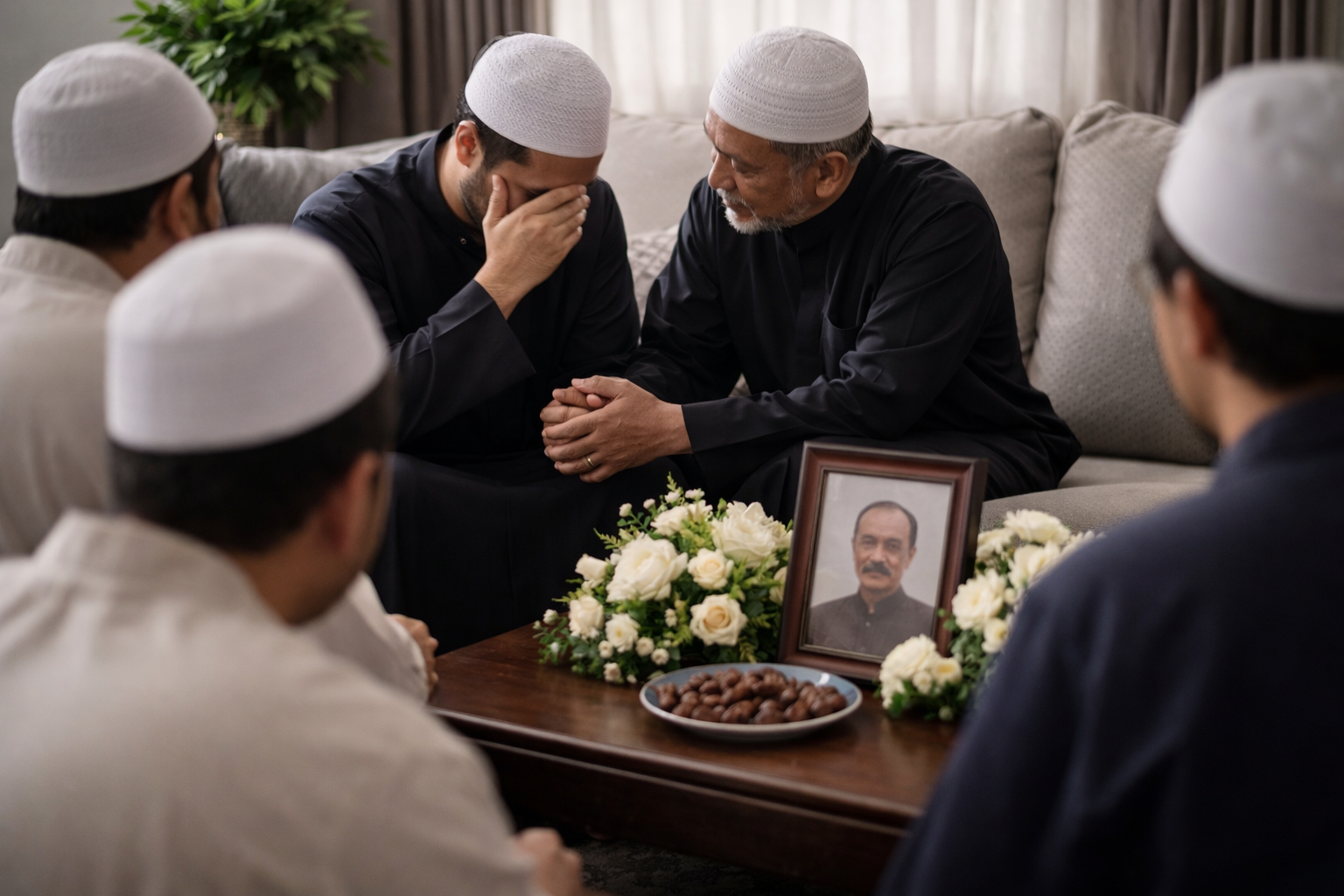
- Maintain modesty and simplicity. Visitors should avoid excessive adornment or strong fragrances that may be inappropriate in a setting of mourning.
- Show genuine empathy. It is recommended to display sincere sadness and compassion.
- Speak briefly. The grieving family may be emotionally overwhelmed, so conversations should not be prolonged.
- Avoid excessive smiling or casual behavior. The atmosphere should reflect respect and sensitivity to the loss.
These guidelines ensure that condolences remain focused on comfort and respect rather than social formalities.
Acts That Continue to Benefit the Deceased
Islam teaches that death does not completely sever a person’s connection to the world. Certain deeds can continue to benefit someone even after they pass away.
The Qur’an, in Qur’an (Al-Hashr: 10), encourages believers to pray for those who came before them. Supplication from fellow Muslims is considered one of the greatest gifts for the deceased.
Other beneficial acts include:
- Paying off the deceased’s debts. Financial obligations remain serious matters in Islam, and settling them helps the deceased.
- Fulfilling uncompleted vows. In an authentic narration, Sa‘d ibn ‘Ubadah consulted the Prophet ﷺ about his mother who died with an unfulfilled vow, and he was instructed to fulfill it on her behalf.
- Righteous deeds of a pious child. The Qur’an (An-Najm: 39) emphasizes personal responsibility, yet Islamic scholarship explains that a child’s good deeds reflect the upbringing and guidance of the parent, thus bringing ongoing benefit.
- Ongoing charity (sadaqah jariyah). A famous hadith teaches that when a person dies, their deeds end except for three: continuous charity, beneficial knowledge, and a righteous child who prays for them.
This perspective offers comfort: a person’s positive contributions to society (such as building institutions, spreading knowledge, or raising good children) can continue generating reward even after death.
A Message of Compassion and Responsibility
In essence, ta’ziyah in Islam combines compassion for the living and responsibility toward the deceased. It encourages emotional support, dignified behavior, spiritual reflection, and continued acts of goodness.
For non-Muslims seeking to understand Islamic practices, this tradition demonstrates that Islam views grief as natural and acknowledges human sorrow. At the same time, it frames loss within a broader spiritual worldview—one that emphasizes patience, prayer, and ongoing charity as pathways of hope beyond death.
Sources
Almanhaj.or.id. (2014, December 5). Adab-adab ta’ziyah, shalat jenazah dan tata cara penguburannya. https://almanhaj.or.id/4012-adab-adab-taziyah-shalat-jenazah-dan-tata-cara-penguburannya.html
Badawi al-Khalaf, A. A. bin. (2011). Al-Wajiz: Ensiklopedi Fiqih Islam dalam Al-Qur’an dan As-Sunnah As-Shahihah. Pustaka as-Sunnah.
Jabar.nu.or.id. (2023, November 25). Doa takziah dan adab yang harus diperhatikan ketika melayat jenazah. https://jabar.nu.or.id/doa/doa-takziah-dan-adab-yang-harus-diperhatikan-ketika-melayat-jenazah-eIhOa
Kumparan.com. (2023, February 22). Tata cara takziah dalam Islam sesuai dalil. https://kumparan.com/berita-hari-ini/tata-cara-takziah-dalam-islam-sesuai-dalil-1zsqjFKquRa/4