The Role of Friendship in Islam: Shaping Good Character
Introduction
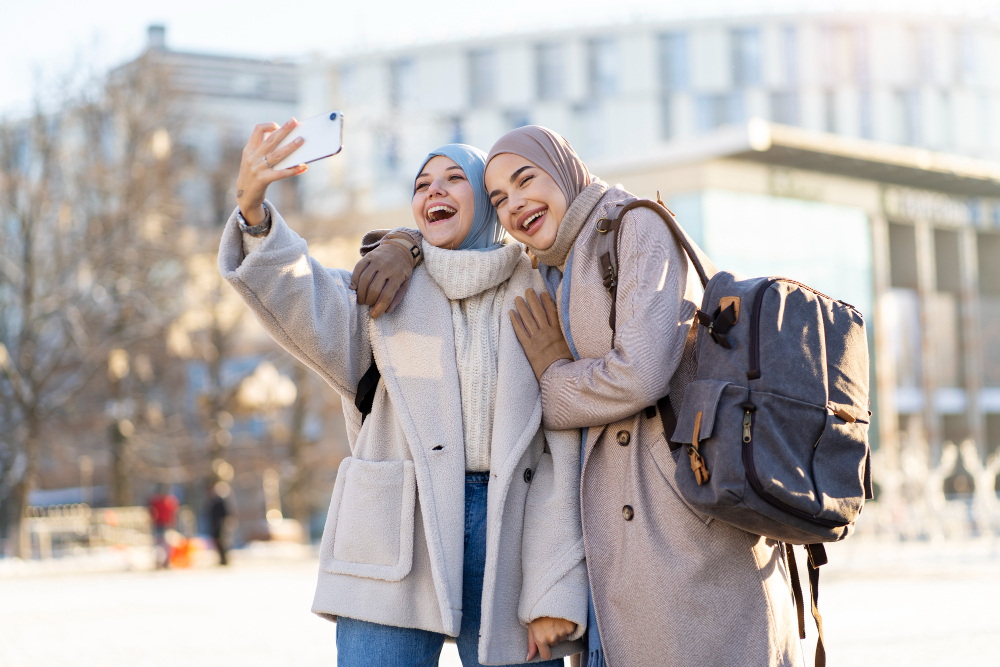
Humans are social beings who cannot live without interacting with others. One of the closest forms of interaction is friendship, often called a “friendship circle.” In modern life, a friendship circle refers to a group of people who share similar interests, goals, and values, both in real life and online.
In Islam, friendship is not just a social relationship, but also has spiritual and moral meaning. The people we spend time with greatly influence our character and behavior. Prophet Muhammad (peace be upon him) gave an example: a good friend is like a perfume seller, while a bad friend is like a blacksmith. This shows that friendships can bring positive or negative effects.
Therefore, it is important to understand the concept of friendship in Islam so we can build healthy relationships and develop good character (akhlakul karimah).
The Concept of Friendship in Islam
In Islam, friendship is a relationship with moral and spiritual goals. It is not just ordinary interaction, but something connected to shared values and a common purpose.
The teachings of the Prophet show that friendship includes love, care, and social responsibility. A good Muslim is also someone who treats their friends well.
So, friendship in Islam is not only based on shared interests, but also on faith, brotherhood (ukhuwah), and doing good together.
The Role of Friends in Shaping Character
Friends, especially peers, have a strong influence on a person’s character, especially for teenagers and students.
Friends can motivate us, encourage us to do good things, and support us in difficult times. Through friendship, people share experiences and ideas that shape their mindset and behavior.
Friends also act as social control, they can remind us when we make mistakes and guide us toward better actions. However, if the environment is unhealthy, the influence can be negative. That is why choosing good friends is very important.
Ethical Principles in Islamic Friendship
Islam provides clear guidelines for building friendships. The main principle is loving someone for the sake of Allah, meaning the relationship is sincere and not based only on worldly benefits.
Islam also teaches us to remind each other in goodness and prevent wrongdoing. A good friend helps guide us to the right path.
Other important values include avoiding bad suspicion, not gossiping (ghibah), and not looking for others’ faults. Empathy and caring are also essential, helping friends and feeling what they feel. This is part of ta’awun (mutual help).
By applying these principles, a friendship circle becomes healthy and positive.
The Impact of Friendship Circles
Friendship circles have a big impact on a person’s life.
Positive effects include strengthening faith, giving emotional support, and helping achieve life goals. Good friends can inspire and motivate us.
On the other hand, bad friendships can lead to negative behavior, social problems, and moral decline. The Prophet said that a person follows the religion or way of their friend, showing how strong the influence of friendship is.
So, choosing the right circle is very important.
Relevance in Modern Life
Today, technology and social media have changed how people interact. Friendship circles are no longer only in real life but also online. This creates more opportunities but also challenges, such as cyberbullying, misinformation, and unhealthy relationships.
In this situation, Islamic values remain important as guidance. Honesty, empathy, and responsibility should be maintained both offline and online.
Thus, the Islamic concept of friendship can help us deal with modern social challenges.
Conclusion
In Islam, friendship is not just social, it has moral and spiritual value. Friends play an important role in shaping a person’s character.
Islam teaches that friendships should be based on good values such as sincerity, mutual advice, empathy, and helping each other. A good friendship circle brings positive impact, while a bad one can lead to harm.
Therefore, we should be careful in choosing friends and build a positive environment, so we can live better lives both in this world and the hereafter.
Source
Andaluzi, F., & Alif, M. (2025). Friendship Circles in Hadith. ESENSIA: Jurnal Ilmu-Ilmu Ushuluddin, Vol. 26 No.1. https://ejournal.uin-suka.ac.id/ushuluddin/esensia/article/view/5775
Fadilah, N., & Gunawan, M. R. (2024). Peran Circle Pertemanan Sebaya Seorang Muslim Terhadap Pembentukan Akhlakul Karimah. DARUL ILMI: Jurnal Ilmu Pendidikan dan Keislaman, 11(2). http://jurnal.uinsyahada.ac.id/index.php/DI/article/view/10470