Similar, Yet Different: Understanding the Difference Between Halal Food and Vegan Food
JAKARTA (2026/10/12)
Food labels can be confusing. A product may be vegan without necessarily meeting halal requirements, while a halal product may contain animal-derived ingredients.
More Than Just What We Eat
In today’s food industry, consumers are becoming increasingly conscious of what they eat. From halal-certified products to plant-based alternatives, food choices are influenced by religious beliefs, ethical considerations, health concerns, and environmental awareness.
Among these choices, halal food and vegan food are often perceived as similar because both may encourage consumers to pay closer attention to ingredients and food production. However, despite some similarities, halal and vegan are not interchangeable concepts.
Halal food follows Islamic dietary requirements, while vegan food excludes ingredients derived from animals. Understanding this distinction is important for consumers, food manufacturers, and professionals working in food safety and halal assurance.
What does Halal Food Mean?
In islam, the concept of halal refers to what is permissible under Islamic law. When applied to food, halal requirements involve more than simply identifying whether a product contains meat or animal-derived ingredients. The source of ingredients, slaughter requirements for relevant animals, and aspects of processing and handling may also affect a product’s halal status.
The Qur’an emphasizes the importance of consuming what is lawful and good. Allah says in Surah Al-Baqarah, verse 168:
يٰٓاَيُّهَا النَّاسُ كُلُوْا مِمَّا فِى الْاَرْضِ حَلٰلًا طَيِّبًا ۖ وَّلَا تَتَّبِعُوْا خُطُوٰتِ الشَّيْطٰنِ ۗ اِنَّهٗ لَكُمْ عَدُوٌّ مُّبِيْنٌ
“O mankind, eat from whatever is on earth [that is] lawful and good…”
This verse establishes the principle of consuming food that is both lawful and good. In the context of halal food assurance, this means that a product’s permissibility cannot be determined solely by whether it contains animal ingredients. Its ingredients, relevant processing methods, and handling practices may also need to be examined under applicable Islamic requirements.
Meanwhile, vegan food follows a different set of criteria. According to The Vegan Society, products seeking its Vegan Trademark must not involve animal products, by-products, or derivatives in their manufacture or development. Its standards also address animal testing and the management of cross-contamination risks.
Consequently, although halal and vegan food may overlap, neither category automatically guarantees compliance with the other. This distinction becomes particularly important when examining processed foods, where the origin and function of individual ingredients may not be immediately apparent to consumers.
| Aspect | Halal | Vegan |
| Core requirements | Ingredients and raw materials must comply with Islamic dietary laws. Meat must come from animals slaughtered according to Islamic guidelines, while pork and its derivatives are prohibited. Alcohol is also subject to strict restrictions. | Products must be completely free from animal-derived ingredients, including meat, eggs, dairy, honey, and gelatin. Animal-derived processing aids are also excluded. |
| Use of animal-derived ingredients | Animal-derived ingredients are acceptable as long as they meet halal requirements. All animal-derived ingredients are prohibited, regardless of their source. | All animal-derived ingredients are prohibited, regardless of their source. |
| Alcohol restrictions | Alcohol is strictly regulated under halal standards, with specific limits depending on the applicable certification requirements. | Alcohol is not inherently prohibited, so vegan products may contain alcoholic ingredients or beverages. |
| Target Consumers | Primarily Muslim consumers, as well as consumers who associate halal certification with product quality and assurance. | Vegans, plant-based consumers, and individuals concerned about animal welfare, environmental sustainability, and health. |
| Common certification bodies and labels | Examples include BPJPH in Indonesia, JAKIM in Malaysia, IFANCA in the United States, and HFC. | Examples include V-Label in Europe, The Vegan Society in the United Kingdom, and IVA. |
| Certification requirements | Halal certification is legally required for certain products and markets, subject to applicable regulations, including those in Indonesia. | Vegan certification is generally voluntary and often pursued to meet consumer expectations and market demand. |
But What Happens When the Ingredients Look Harmless?
The distinction between halal and vegan food becomes more apparent when we examine the ingredients used in modern food manufacturing. Many products contain additives, processing aids, and flavoring substances that cannot be fully evaluated from their product names alone.
Consider a plant-based burger. Its patty may consist entirely of soy protein, peas, vegetables, and vegetable oils. From a vegan perspective, these ingredients may satisfy the requirement to exclude animal-derived substances. However, the complete product may also contain flavorings, emulsifiers, or other ingredients that require additional verification to establish their halal status.
This does not mean that plant-based products are inherently questionable. Rather, it demonstrates that the absence of animal-derived ingredients is only one part of halal assessment.
A similar issue arises with beverages, sauces, and desserts containing alcohol-related ingredients or substances produced through fermentation. Some of these ingredients may be compatible with vegan standards, but their halal status must be assessed according to their identity, source, function, production process, and the applicable Islamic requirements. The mere presence of the word alcohol on an ingredient list is not, by itself, sufficient to determine a definitive ruling for every substance or application.
These examples illustrate an important principle in food assurance: an ingredient’s acceptability under one standard does not automatically establish its acceptability under another.
The Hidden Ingredient Problem: Gelatin, Emulsifier, and Flavorings
One of the most interesting intersections between halal and vegan food lies in the use of ingredients whose sources may vary.
Modern food manufacturing often involves additives whose origins cannot always be determined from their names alone. Some ingredients may be derived from plant, animal, or microbial sources, making their origin and production process relevant to halal assessment. Mariyam et al. (2022) discuss the importance of examining questionable food additives and verifying their raw material sources and processing methods during halal certification. Similarly, Ng et al. (2022) highlight the challenges of authenticating halal food when undeclared components or species substitution may occur. These findings demonstrate why ingredient verification is an important component of halal assurance.
1. Gelatin: Animal-Derived or Plant-Based?
Gelatin is widely used in confectionery, desserts, and other processed foods because of its gelling properties. Conventional gelatin is generally obtained from animal collagen, making it incompatible with vegan criteria. Its halal status, however, depends on its source and compliance with applicable halal requirements. Plant-derived alternatives, such as pectin, can provide similar functions in certain food applications. A product formulated with pectin may therefore meet vegan criteria, but its overall halal status still depends on the other ingredients and relevant production requirements.
2. Emulsifiers: The importance of Ingredient Origin
Emulsifiers help ingredients such as oil and water remain mixed in products including sauces, baked goods, and plant-based beverages. Some emulsifiers can be obtained from plant sources, while others may have animal-derived origins or involve different production methods. For halal auditors, the ingredient’s name may not provide enough information to establish its status. Supplier specifications and supporting documentation can help clarify the source and manufacturing process.
3. Flavorings: ore Than Just A Taste
Flavorings are another area where ingredient verification matters. A flavoring formulation may contain several components, and its assessment can require information about its composition, carriers, solvents, and production process. A vegan product may satisfy the relevant vegan criteria while still requiring a separate halal assessment of these components. Nevertheless, it would be inaccurate to conclude that all flavorings are problematic or that all alcohol-related ingredients are automatically prohibited. Each case must be evaluated using the relevant evidence and requirements. These examples demonstrate why ingredient traceability and reliable supplier documentation are important in maintaining confidence in food products.
The Ruling: Can a Product Be Both Halal and Vegan?
Yes. A product can satisfy both halal and vegan criteria, provided that it meets the applicable requirements of each standard.
To understand the distinction more clearly, consider three scenarios:
- Halal but not vegan: Chicken that meets halal requirements can be consumed as part of a halal diet, but it is not vegan because it comes from an animal.
- Vegan, but halal status not yet established: A plant-based dessert may exclude animal-derived ingredients but contain other components that require further halal verification. Its vegan status alone does not establish whether it complies with halal requirements.
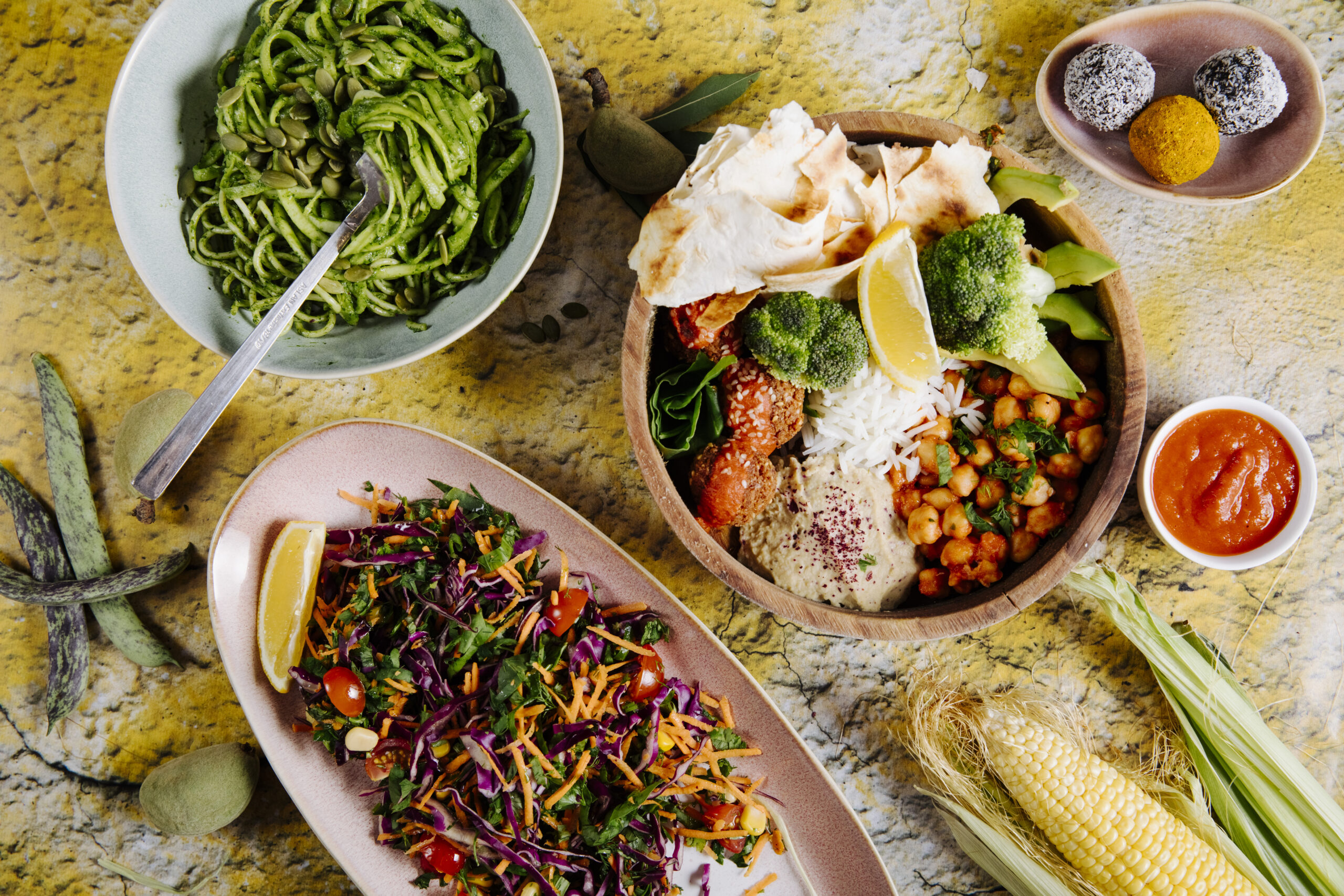
- Both halal and vegan: A vegetable-based meal prepared with suitable ingredients and processes may satisfy both sets of criteria.
The Role of Halal Auditor
A halal auditor helps assess whether a product and its production system comply with the relevant halal requirements. This work may involve reviewing ingredient lists, evaluating supporting documents, checking supplier information, examining manufacturing processes, and identifying gaps that require clarification or corrective action.
When assessing a vegan product, an auditor should not conclude that is halal simply because it contains no obvious animal ingredients. Instead, the auditor evaluates the evidence required under the applicable halal certification system.
A More Informed Way to Read Food Labels
For consumers, understanding the difference between halal and vegan can make food choices more informed without creating unnecessary suspicion about plant-based products.
When a product is labelled vegan, consumers can look at what the claim means under the relevant standard and whether independent certification is provided. Muslim consumers who require assurance of halal compliance can look for credible halal certification and verify the product’s status through the relevant certification body or official database, where available.
For manufacturers, the same distinction presents an opportunity. Clear ingredient specifications, reliable supplier documentation, traceability, and appropriate certification can help communicate product suitability to different consumer groups.
Food labels are useful, but no single word should be expected to communicate every aspect of a product’s composition, production, or compliance.
Ultimately, informed choices depend on understanding what each claim establishes—and what it does not.
Supporting Businesses in a Growing Market
As consumer awareness of halal products continues to grow, businesses have an opportunity to strengthen consumer confidence by ensuring that their products meet the relevant halal requirements. For manufacturers of vegan and plant-based products, halal certification can provide an additional layer of assurance for Muslim consumers who seek more than a vegan claim alone.
However, obtaining halal certification involves more than adding a logo to product packaging. Businesses need to understand the applicable requirements, review their ingredients and suppliers, maintain appropriate documentation, and ensure that their production processes meet the relevant standards.
For businesses looking to take this step, the Japan Halal Certification Promotion Organization (JHCPO) offers a potential point of reference for exploring halal certification and related support. Businesses can learn more about its services and certification process through its official website: jhcpo.com.
By taking a proactive approach to halal assurance, businesses can strengthen the credibility of their product claims, build trust with Muslim consumers, and explore opportunities in halal markets. When supported by a robust compliance system, halal certification can serve not only as evidence of conformity with applicable requirements but also as a meaningful part of a business’s commitment to transparency and consumer confidence.
Writer: Nabila Qotrun Nada
Editor: Naflah Azizah Wibowo
Proofreader: Alhayya Maritza
References:
Fathima, A. M., Rahmawati, L., Windarsih, A., & Suratno. (2024). Advanced halal authentication methods and technology for addressing non-compliance concerns in halal meat and meat products supply chain: A review. Food Science of Animal Resources, 44(6), 1195–1212. https://doi.org/10.5851/kosfa.2024.e75
Mariyam, S. (2022) “Safety Assessment of Questionable Food Additives in the Halal Food Certification: A Review”, Indonesian Journal of Halal Research, 4(1), pp. 19–25. doi: 10.15575/ijhar.v4i1.12097.
Hassan, N., Ahmad, T. and Zain, N.M. (2018), Chemical and Chemometric Methods for Halal Authentication of Gelatin: An Overview. Journal of Food Science, 83: 2903-2911. https://doi.org/10.1111/1750-3841.14370
Ng, P. C., Ruslan, N. A. S. A., Chin, L. X., Ahmad, M., Hanifah, S. A., Abdullah, Z., & Khor, S. M. (2022). Recent advances in halal food authentication: Challenges and strategies. J Food Sci., 87, 8–35. https://doi.org/10.1111/1750-3841.15998
Halal Foundation. (2024). Halal and Vegan: Differences and Similarities. Retrieved 12 October 2026: https://halalfoundation.org/halal-and-vegan-differences-and-similarities/
Sinoqual. (2026). Apa Beda Halal dan Vegan? Apakah Vegan Berarti Halal, dan Mana yang Perlu Diurus untuk Produk Anda. Retrieved 12 October 2026: https://www.halalkosher.com/id-ID/articles/halal-vs-vegan
The Vegan Society. (2025). Vegan Trademark Standards. Retrieved 12 October 2026: https://www.vegansociety.com/trademark/vegan-trademark-standards