Global Halal Food Industry Set for Remarkable Growth Through 2030
Source: Yahoo.com
JAKARTA – The international halal food sector is experiencing unprecedented expansion, with industry analysts projecting substantial growth over the next five years. New market research indicates that this rapidly evolving industry will see significant increases in both market value and global reach, driven by demographic shifts and changing consumer preferences worldwide.
Impressive Market Projections
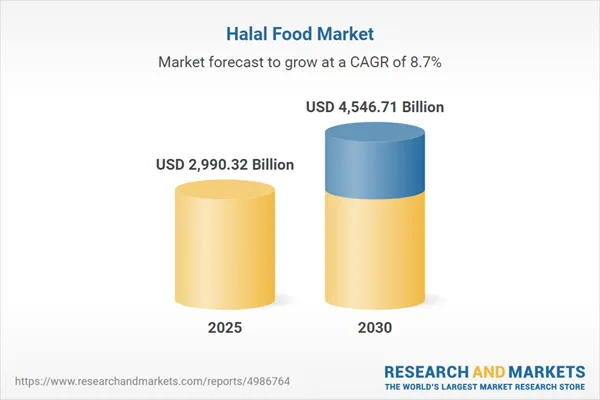
According to recent industry analysis, the global halal food market is positioned for exceptional growth, with valuations expected to rise from approximately $2.99 trillion in 2025 to an estimated $4.54 trillion by 2030. This represents a compound annual growth rate of 8.74%, highlighting the sector’s robust expansion trajectory.
The remarkable growth projections reflect the increasing mainstream acceptance of halal-certified products beyond traditional Muslim consumer bases, as well as the sector’s ability to meet evolving food safety and quality standards that appeal to diverse consumer groups.
Key Growth Drivers Shaping the Market
Several interconnected factors are fueling this extraordinary market expansion. The most significant driver remains the steady increase in the global Muslim population, which continues to create sustained demand for certified halal products across all food categories.
Rising global meat consumption patterns also contribute substantially to market growth, as halal meat processing adheres to stringent preparation protocols that many consumers associate with higher quality standards. This has led to increased acceptance of halal products among non-Muslim consumers who value the rigorous certification processes.
The accessibility of halal beverages in mainstream retail environments, including major supermarket chains and hypermarkets throughout Western countries, demonstrates the sector’s successful integration into conventional food distribution networks. This mainstream availability has significantly expanded the potential consumer base for halal-certified products.
Industry Innovation and Strategic Positioning
Food manufacturers and retailers are implementing sophisticated strategies to capture market opportunities while maintaining adherence to halal requirements. Companies are focusing on product innovation initiatives, expanding their halal-certified product lines, and developing customization approaches that preserve nutritional value and taste preferences while meeting certification standards.
Both Muslim and non-Muslim consumers are increasingly attracted to halal products due to their associations with enhanced safety protocols, superior hygiene standards, and overall product reliability. This broad appeal has encouraged more companies to pursue halal certification as a strategic business decision rather than merely serving niche markets.
The emphasis on halal certification among major food companies reflects their recognition of consumer expectations for quality and taste consistency, indicating strong future prospects for halal products, particularly in predominantly Islamic markets where demand remains consistently high.
Regional Market Dynamics
North American and European markets are experiencing particularly notable growth in halal food consumption, driven by evolving lifestyle patterns, increased demand for premium food products, and rising household income levels. These regions benefit from growing per capita food expenditure and expanding Muslim populations that maintain strong preferences for halal-certified options.
Traditional Islamic markets in the Middle East, including Saudi Arabia, the United Arab Emirates, Kuwait, Bahrain, Oman, and Qatar, continue to demonstrate exceptionally strong demand for halal food products due to deep cultural and religious connections to halal dietary practices.
The global market segmentation encompasses North America, South America, Europe, the Middle East, Africa, and the Asia Pacific region. Each geographical area presents distinct opportunities for manufacturers, with market analysis revealing sustained growth potential driven by varying consumer preferences and economic conditions across different regions.
Competitive Landscape
The halal food industry features a diverse array of major players, including established multinational corporations and specialized halal food producers. Key companies operating in this space include global food giants like Cargill, Unilever, and Nestle, alongside specialized halal food companies such as Al Islami Foods, QL Resources, and Halal Fine Foods.
Other significant market participants include Danisco, American Foods, Tahira Foods, and Pacmoore, representing the breadth of companies recognizing the commercial potential of halal-certified products. This competitive landscape demonstrates how both traditional food industry leaders and specialized halal producers are positioning themselves to capture market opportunities.
Market Accessibility and Consumer Trends
The increasing availability of halal products in mainstream retail channels reflects a fundamental shift in how these products are perceived and marketed. Major grocery chains now regularly stock halal-certified items alongside conventional products, making them accessible to a broader consumer base.
Consumer trends indicate growing awareness of halal certification as a quality indicator, with many non-Muslim consumers choosing halal products based on perceptions of superior safety standards and ethical production practices. This trend expansion beyond traditional religious motivations has significantly broadened the market potential for halal-certified foods.
Future Market Outlook
The halal food industry’s strong growth trajectory through 2030 is supported by multiple reinforcing factors, including demographic trends, economic developments, and evolving consumer preferences. Industry stakeholders are well-positioned to capitalize on these favorable market conditions.
The sector’s ability to maintain high growth rates while expanding into new geographical markets and consumer segments demonstrates its resilience and adaptability. As global food safety standards continue to evolve and consumers become increasingly conscious of product quality and ethical sourcing, halal certification is likely to maintain its appeal as a premium quality indicator.
This dynamic growth environment presents substantial opportunities for both established food industry players and emerging companies seeking to enter the halal food market, making it one of the most promising sectors in the global food industry landscape.
Original article:
yahoo.com. (n.d.). Halal Food Market Forecasts Report 2025-2030 | Competitive Analysis of Cargill, Al Islami Foods, QL Resources, Unilever, Nestle, Danisco, Halal Fine Foods, American Foods, Tahira Foods, Pacmoore. Retrieved July 31, 2025, from https://finance.yahoo.com/news/halal-food-market-forecasts-report-141600028.html