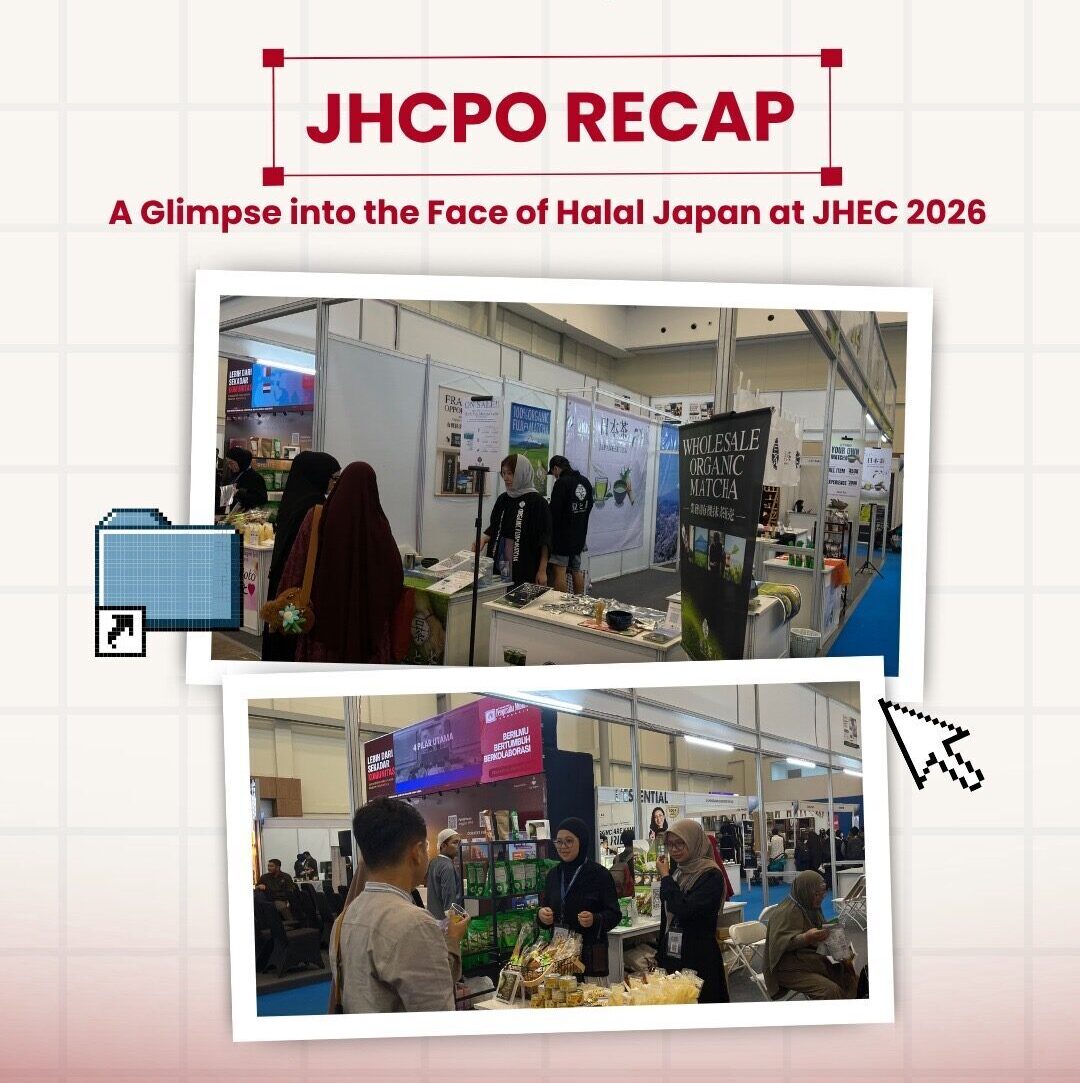
JHCPO Recap: Inside the 5th Halal 20 Summit 2026
JAKARTA (22/09/2026)
The Unforgettable 3 Days Experience at Jakarta
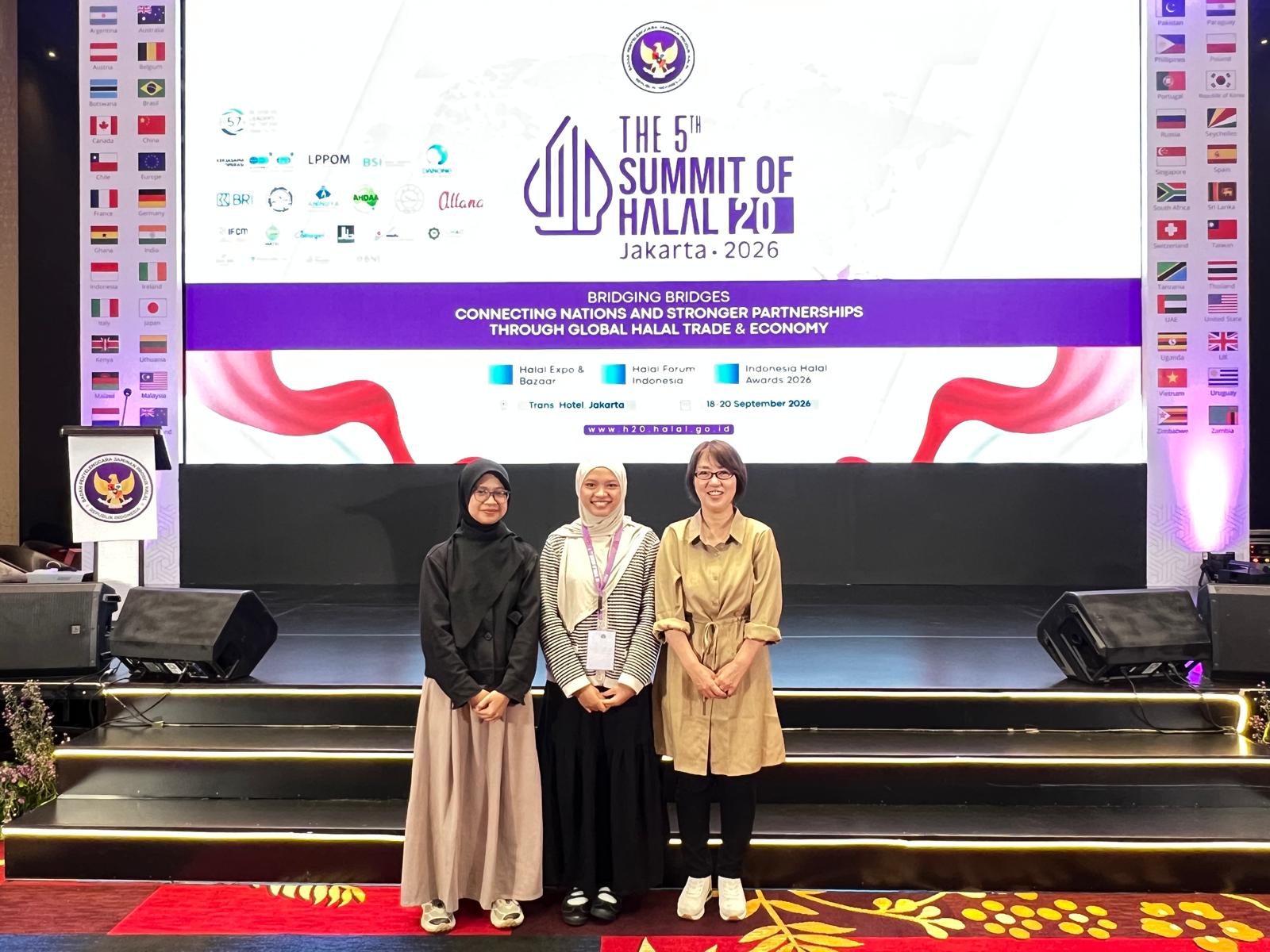
On September 18, 2026, JHCPO had the honor of taking part in the 5th Halal 20 Summit, an international forum convened by BPJPH (Indonesia’s Halal Product Assurance Agency) to bring together global policymakers, business leaders, and halal industry stakeholders in Jakarta. Over three days, the summit charted a course for Indonesia’s ambitions to become a leading force in the global halal economy.
The event opened with a warm and spirited welcome that reflected Indonesia’s enthusiasm for transforming itself into a global halal hub. This set the tone for a landmark signing session, in which JHCPO joined international business stakeholders and halal certification bodies in signing a Memorandum of Understanding, a Memorandum of Cooperation, and a Plan of Action with BPJPH. This is a concrete step toward deeper cross-border collaboration in the halal industry. The signing marked a solid foundation for JHCPO’s continued growth, expanding market reach and contributing to Indonesia’s halal ecosystem.
The summit also featured eleven business seminars examining the state and future of Indonesia’s halal industry, spanning topics from halal slaughtering practices to demographics, fintech, and supply chains. The three-day program closed with a gala dinner that doubled as a business matchmaking event, connecting global halal industry players in an atmosphere of celebration and opportunity.
From the many seminars held throughout the event, here is a summary of the key sessions and insights that emerged.
The Global Halal Conscious Consumer
In a keynote address, Rafi-uddin Shikoh, CEO of Dinar Standard. He reframed that halal not merely as a product category but as an ethical commitment shaping consumer behavior worldwide. One of his central messages stated that trust, anchored by credible certification, is the foundation of the entire halal economy.
Several insights stood out. First, halal’s appeal now extends well beyond Muslim consumers. For example, the global success of The Halal Guys illustrates how non-Muslim audiences are increasingly drawn to products and values associated with Muslim lifestyles. Second, values such as justice, social responsibility, modesty, and family are shaping a distinct and fast-growing Islamic consumer segment, with the halal economy projected to reach a market value in the trillions of dollars.
Growth is being driven from both sides of the market. On the supply side: proactive government policy, growing participation from global brands, rising investment, and stronger trade agreements among OIC member countries. On the demand side: a young population (Gen Z consumers averaging around 24 years old), rising prosperity, values-driven lifestyles, and growing digital connectivity.
One particularly notable trend is the “boycott phenomenon”. This campaign shifting consumer loyalty toward local alternative brands such as Kopi Kenangan, Janji Jiwa, and Palestine Cola throughout Muslim market in regional and worldwide view. This shift illustrates how identity and values are increasingly shaping purchasing decisions.
Mr. Shikkoh also informed consumer’s outlook from various muslim countries:
- Southeast Asia leads as the largest halal market, propelled by e-commerce, livestreaming, and strong regulatory frameworks.
- The GCC (Saudi Arabia, UAE, Oman, Qatar, Kuwait, Bahrain) shows strong demand in premium wellness, modest fashion, and digital finance including crypto and tokenization.
- Türkiye and MENA are driven by values-aligned media and ethical, faith-consistent consumption.
- Africa, home to the world’s youngest and fastest-growing Muslim population, shows strong demand in Sharia-compliant savings and heritage-based beauty products.
- North America and the West are seeing boycott-driven retail shifts and growing non-Muslim adoption of halal and modest products.
A closer look at Saudi Arabia revealed four emerging consumer archetypes: rooted pragmatists, integrated modernists, digital natives, and mindful achievers. This scope teaches balancing faith, technology, and lifestyle differently.
The session also posed a pointed question: why hasn’t Indonesia become the world’s leading halal tourism destination? The answer mainly lies in the lack of marketing campaigns and English language accessibility for the websites, applications, and regulations. This problem must be faced by Indonesian government and business stakeholders to build the international trust that drives tourism and trade.
A New Method of Stunning for Halal Slaughtering
This session tackled one of the halal industry’s more technical challenges: reconciling animal welfare, meat quality, and religious requirements in livestock slaughter. Conventional stunning methods carry known drawbacks, including risks of brain damage and blood splashing, which can compromise both welfare standards and halal compliance.
The proposed solution is Diathermic Syncope (DTS), a method developed over more than a decade of research (2008–2022). DTS uses electromagnetic energy to selectively and briefly raise brain temperature, inducing a rapid, fully reversible loss of consciousness. This is critical for halal compliance, since the animal must remain capable of recovery unless slaughtered. The process achieves unconsciousness in under five seconds, sustains it for the required window, and allows natural recovery within two to four minutes if slaughter does not proceed.
Results have been encouraging: first-time stunning effectiveness of 98.5%, continued strong heart function supporting complete blood drainage, and minimal tissue damage. Notably, Indonesia’s BPJPH has now formally recognized electromagnetic stunning applied to the head area, marking a significant regulatory milestone.
The session also reviewed core technical requirements for halal slaughter more broadly, from blade specifications and the recitation of the basmalah, to strict separation of transport and holding facilities from any exposure to pigs or non-halal animals.
Global Perception and the October 2026 Mandate
A session on media and market integration underscored the growing global interest in halal cosmetics and the powerful role media plays in shaping international perceptions of Islam and Muslim consumers. With Indonesia’s halal certification mandate taking effect in October 2026, the practical takeaway for businesses was clear: ensure product compliance is verified across the entire supply chain well ahead of the deadline.
Toward a Halal Passport
One of the summit’s more forward-looking discussions centered on regional partnerships and the concept of a Halal Passport, envisioned as a unified database granting stakeholders streamlined access to halal certification records across borders. With the global halal market projected to reach USD 5.6 trillion, the session identified two central challenges: getting certificates recognized across different jurisdictions, and reducing duplicated administrative processes between systems.
The Halal Passport would consolidate product identity, certification records, shipment and inspection data, and laboratory test evidence into a single accessible system, integrated with Indonesia’s SiHalal platform. Laboratory testing (including PCR tests capable of detecting materials like gelatin) would feed directly into this system, searchable by batch number, supplier, or QR code.
Panelists were candid about the obstacles ahead: sourcing halal-compliant raw materials, heavy documentation requirements that slow delivery and raise costs, and a lack of clear Indonesian-language information for international partners. A pragmatic pilot approach was proposed, starting with a single product and export destination to prove the model before scaling.
Strengthening Halal Audit and Inspection
A session led by LPPOM MUI examined how halal auditing practices must evolve alongside globalization and advances in food technology. Auditors increasingly need to combine scholarly religious knowledge with scientific verification which illustrated by the technical challenge of distinguishing standard bentonite from its organic counterpart, or identifying animal-derived compounds within complex formulations.
On the regulatory front, Indonesia, which already home to roughly 1.4 million halal certificates, is tightening enforcement ahead of the October 17, 2026 deadline under Law No. 33 of 2014. This law states that every food, beverages, cosmetics, medicines, consumer goods, chemicals, and genetically engineered products must obtain their own halal certificate. Non-compliance carries administrative penalties ranging from written warnings to certificate revocation and product withdrawal.
New regulations were also highlighted, including BPJPH Decree No. 307/2025, which sets the specific Harmonized System (HS) codes subject to mandatory halal certification, and Regulation No. 4/2026, which introduces conformity verification for foreign halal products before import.
Building a Cross-Border Halal Supply Chain
Indonesia’s scale as the world’s largest halal market gives it real potential to become a global halal supply chain hub, but the summit was frank about the gaps still standing in the way. Fewer than 30% of Indonesian logistics companies have adapted their operations to halal standards, and most have yet to integrate halal logistics with international shipping systems. Smaller sea shipments to outer provinces remain particularly vulnerable to halal and non-halal goods being mixed.
Panelists proposed regional halal supply chain consolidation centers. For example, there is a potential hubs in Sumatra (Batam and Aceh), Kalimantan, and Sulawesi. Certification alone is not enough to validate halal quality and has to be completed by the transparency of halal logistic system. True supply chain integrity requires ingredient transparency, cross-border cooperation, and a willingness to educate foreign importers on halal requirements from the ground up.
Investing in Talent and Sharia Finance
The final session turned to human capital, arguing that talent and financial literacy matter just as much as capital investment in sustaining halal industry growth. A striking statistic: only 35% of young Indonesians report understanding Sharia finance principles relevant to halal certification and business financing.
Bridging this gap, panelists argued, requires digital enablers like open banking and mobile access, closer collaboration between fintech platforms and community-based institutions such as BPRS/BMT, and government incentives to encourage Sharia-based budgeting. There was also a call to modernize Islamic social finance by turning zakat and waqf into structured tools that help small and medium enterprises grow sustainably, rather than one-off charitable gestures.
Looking Ahead
Across three days of discussion, a consistent theme emerged: Indonesia possesses the scale, the demographic momentum, and the policy direction to lead the global halal economy, but realizing that potential will depend on building genuine international trust. That means communicating clearly in the languages of global partners, ensuring consistency from certification through to final delivery, and treating halal not as a niche compliance requirement, but as a universal mark of quality and ethics.
For JHCPO, the 5th Halal 20 Summit reaffirmed both the scale of the opportunity ahead and the shared responsibility of every stakeholder from certifiers to logistics providers to financial institutions in building an ecosystem worthy of that opportunity.
Written by: Alhayya Maritza & Naflah Azizah Wibowo