Malaysia and Indonesia Strengthen Partnership on Halal Trade, Regional Issues, and Palestine Support

Source: Halal Times
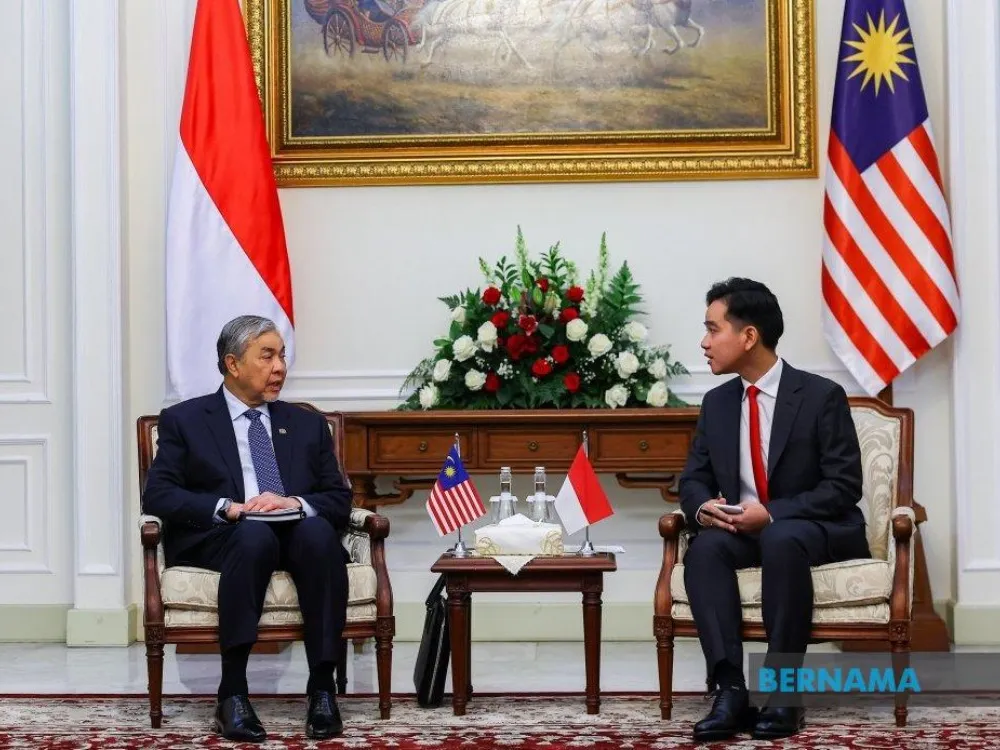
Kawaguchiko, Japan – Two Southeast Asian’s Muslim Powerhouses, Indonesia and Malaysia,recently convened in Jakarta for discussions that could reshape regional economics and diplomacy. Malaysian Deputy Prime Minister Ahmad Zahid Hamidi and Indonesian Vice President Gibran Rakabuming Raka engaged in substantive talks covering halal commerce, worker protections, and international relations during their 45-minute meeting, potentially setting the stage for transformative regional cooperation.
The high-profile Malaysian delegation included Agriculture and Food Security Minister Mohamad Sabu and Malaysia’s Ambassador to Indonesia Syed Mohamad Hasrin Tengku Hussin, underscoring the significance both nations place on strengthening bilateral ties amid evolving global challenges.
Expanding the Halal Economy Together
Central to the discussions was the enormous potential within the global halal marketplace, currently valued at approximately US$1.3 trillion with projections for substantial growth. As countries with significant Muslim populations and established halal infrastructure, Malaysia and Indonesia recognized their unique position to form powerful synergies in this sector.
A critical focal point emerged around harmonizing halal certification processes between Malaysia’s Department of Islamic Development (JAKIM) and Indonesia’s Indonesian Ulema Council (MUI). This strategic alignment aims to dismantle trade barriers, facilitating smoother exchanges of halal goods and services while building consumer confidence across food and beverage, pharmaceuticals, cosmetics, tourism, and Islamic finance sectors.
“We will coordinate and engage in detailed discussions not only regarding the production of halal products but also on marketing strategies,” Ahmad Zahid Hamidi stated during the post-meeting press conference, highlighting the comprehensive approach being adopted. This strategy acknowledges that success in the halal marketplace requires excellence throughout the entire value chain—from quality assurance to supply chain efficiency and market penetration.
The global halal sector’s robust growth trajectory is fueled by both expanding Muslim demographics and increasing interest from non-Muslim consumers attracted to the ethical standards and quality assurances halal certification represents. Recent analyses from organizations like the State of the Global Islamic Economy predict the halal food segment alone will reach multi-trillion dollar valuation in coming years. This presents substantial economic opportunities for both nations to leverage their existing strengths through collaborative research, standardization efforts, and innovative product development.
Protecting Workers and Fishermen
The bilateral talks extended beyond economic considerations to address important humanitarian concerns. The leaders reaffirmed their commitment to enhancing Indonesia’s worker placement in Malaysia through the One Channel System, designed to streamline recruitment while safeguarding migrant workers’ rights. Given the substantial Indonesian workforce contributing to Malaysia’s economy, establishing transparent and fair employment practices remains essential for maintaining positive relations.
The discussions also addressed the management of fishermen operating in shared waters, with both sides recommitting to principles outlined in a 2012 memorandum regarding safe return protocols for those inadvertently crossing maritime boundaries. This practical approach demonstrates commitment to humane treatment and conflict avoidance within fishing communities, acknowledging the often challenging conditions these workers face.
Navigating Global Trade Challenges
The leaders examined broader trade developments, including impacts of U.S. tariffs on global commerce and strategies for developing new markets for crude palm oil (CPO). As major palm oil producers, both countries share interests in maintaining stable demand and fair pricing for this critical export commodity. Their discussions likely explored collaborative approaches to market diversification and addressing sustainability concerns amid evolving international standards.
Indonesia and Malaysia recognize that strengthening intra-ASEAN cooperation while exploring opportunities in emerging markets represents a crucial strategy for building economic resilience amidst shifting global trade dynamics. Their combined influence within regional forums positions them to advocate effectively for policies supporting shared economic interests.
United Stand on Palestinian Humanitarian Crisis
Ahmad Zahid Hamidi and Gibran Rakabuming Raka expressed profound concern regarding the Palestinian situation, emphasizing the urgent need for sustainable solutions. Their discussions highlighted commitment to supporting Gaza’s reconstruction across critical sectors including education, healthcare, and infrastructure, while pursuing diplomatic channels to advocate for a permanent ceasefire.
This unified position reflects deep solidarity within Southeast Asia’s Muslim-majority nations toward the Palestinian cause and demonstrates their commitment to advocating for justice through international forums and diplomatic engagement.
Future Infrastructure and Youth Development
Looking toward enhanced connectivity, the Malaysian Deputy Prime Minister addressed the proposed Melaka-Dumai bridge project linking Malaysia and Indonesia’s Riau province. He emphasized the importance of comprehensive feasibility studies to evaluate return on investment and broader impacts on regional trade, tourism, and mobility along the strategic Straits of Melaka. Such infrastructure development could significantly boost cross-border economic activity if implemented strategically.
The leaders also explored opportunities for collaboration in the ASEAN franchise sector, particularly focusing on empowering young entrepreneurs. Recognizing their countries’ youthful demographics, they highlighted initiatives promoting entrepreneurship, innovation, and skills development, including potential student exchanges and platforms for youth collaboration.
A Strategic Partnership for Regional Growth
This high-level engagement between Malaysia and Indonesia signals strengthening ties across multiple domains. Their collaborative approach to halal trade development, worker protections, regional stability, and humanitarian advocacy demonstrates a commitment to mutual prosperity and shared values.
As these initiatives continue developing, we can anticipate increasingly integrated economic cooperation, coordinated diplomatic positions, and joint efforts addressing regional challenges. By aligning their substantial resources and influence, Malaysia and Indonesia are positioning themselves as pivotal partners shaping Southeast Asia’s future landscape, with the halal economy serving as a cornerstone of their evolving relationship.
Original Articles:
halaltimes.com. (n.d.). Malaysia and Indonesia Focus on Halal Trade, Regional Stability, Palestine. Retrieved April 22, 2025, from https://www.halaltimes.com/malaysia-indonesia-focus-on-halal-trade-regional-stability-palestine/