The Influence of the Iran-United States Geopolitical Conflict on the Development of the Global Halal Industry
JAKARTA (March 13, 2026)
A History of Tensions: From the 1979 Revolution to the Gaza Crisis
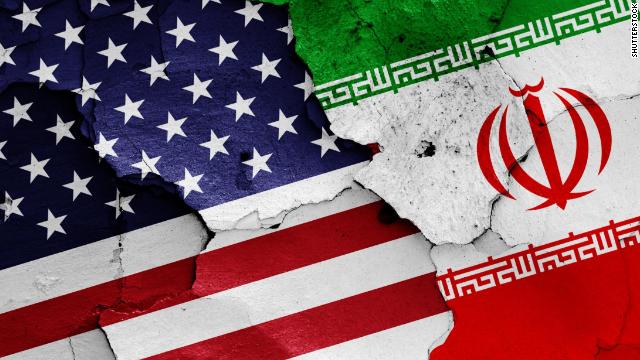
The relationship between Iran and the United States has long been marked by deep and layered tensions. It all began with the Iranian Islamic Revolution of 1979, when the US-backed Shah’s regime was overthrown and replaced by a theocratic government under Ayatollah Khomeini. Since that moment, the two nations have never truly reconciled. Hostage crises, relentless waves of economic sanctions, and accusations of nuclear weapons development have continued to cloud their relationship for decades. Peaks of tension have come and gone repeatedly — from the United States’ assassination of General Qasem Soleimani in 2020 to various indirect military confrontations across the Middle East (Rubin, 2019).
The situation grew even more volatile when Iran openly declared its support for Palestine amid the escalating Gaza conflict that erupted in late 2023. This stance further enraged the United States and deepened the chasm between two sides that have long stood in opposition. For Iran, backing Palestine is not merely an expression of solidarity — it is part of a broader geopolitical strategy aimed at expanding its regional influence. For the United States, however, this is perceived as a direct threat to regional stability and its allies. This chronic tension now poses a serious risk to international trade — including one of the world’s fastest-growing economic sectors: the global halal industry (Chatham House, 2024).
Fractures in the Supply Chain: Meat, Dairy, and the Ripple Effect on Arab Nations
One of the most immediate consequences of this conflict is the disruption of halal commodity supply chains across the Middle East. Arab nations are among the world’s largest consumers of lamb, almost all of which is imported from Australia and New Zealand. However, escalating conflict has compelled many exporters to suspend shipment plans to the region, while goods already in transit have been left in limbo (FoodNavigator Asia, 2026). Beyond meat, Iran — previously the fourth-largest skimmed milk powder exporter to the region — now faces serious obstacles in fulfilling those contracts. Major dairy companies, including Fonterra of New Zealand, have described the situation as deeply unpredictable (FoodNavigator Asia, 2026).
The Strait of Hormuz: A Chokepoint for Global Trade and the Halal Economy
The threat to the Strait of Hormuz further compounds the crisis. An estimated 20 million barrels of crude oil pass through this critical waterway daily. According to the U.S. Energy Information Administration, approximately 84% of crude oil and condensate transiting the Strait in 2024 was destined for Asian markets (MSCI, 2026). Should this route be disrupted, the consequences would extend far beyond the energy sector — affecting every industry reliant on logistics, including the halal industry. It is important to note that the halal industry is not limited to food alone. It encompasses pharmaceuticals, cosmetics, travel and tourism, and Islamic finance — all of which are vulnerable to oil price surges and rising shipping costs. Since October 2024, global freight rates have climbed by as much as 45–79%, straining trade routes, pushing up import prices, and eroding consumer confidence and purchasing power across Gulf economies (Supply Chain Magazine, 2026; ISM World, 2026).
The Rise of Ethical Consumerism: Boycotts, Brand Loyalty, and the Shift in Muslim Markets
At the consumer level, this conflict has also reshaped purchasing behavior among Muslim communities, particularly the younger generation. A notable shift toward ethical consumerism accelerated in late 2023, partly as a direct response to the Middle East crisis (Halal Practitioner, 2025). Boycotts of Western brands perceived as misaligned with Islamic values surged dramatically. An Edelman Trust Barometer survey of 15,000 consumers across 15 countries found that more than one in three respondents were actively boycotting brands over their perceived stance on the Gaza war, with Saudi Arabia, the United Arab Emirates, and Indonesia ranking among the most active boycotting nations (Middle East Eye, 2024). In Indonesia specifically, a Populix survey found that 65% of Muslim respondents adjusted their purchasing behavior following the issuance of MUI Fatwa No. 83 of 2023 (International Journal of Business and Society, 2025). This wave of consumer activism poses a significant threat to Western brands operating in Muslim-majority markets, while simultaneously creating substantial opportunity for halal-certified local alternatives. Research on young Indonesian consumers confirms that peer pressure and religiosity are key drivers of this boycott behavior, with the trend reflecting deeper moral and ideological commitments rather than purely political motivations (Games et al., 2024).
Asia in the Crossfire: Trade Disruptions and the Geopolitical Alignment Dilemma
These impacts are by no means confined to the Middle East. Asian nations — including Indonesia, Malaysia, and other Southeast Asian countries — are also feeling the effects. Disrupted trade routes directly affect the flow of halal commodity imports and exports. Beyond logistics, Asian governments now face a delicate geopolitical dilemma: which side should they align with? A country’s political positioning increasingly determines the quality of its economic partnerships. In this highly sensitive environment, miscalculating one’s stance could jeopardize years of carefully built bilateral relationships — a dynamic examined in depth by scholars studying Israel-Iran escalation and its economic ripple effects across South Asia and East Africa (Al-Tamimi & Said, 2025).
Southeast Asia’s Silver Lining: The Resilience and Promise of the Halal Industry
And yet, despite these headwinds, there is a dimension of this story that warrants genuine optimism. The halal industry’s growth trajectory in Asia — Southeast Asia in particular — remains remarkably promising. Indonesia, home to the world’s largest Muslim population, offers one of the most compelling illustrations of this resilience. Luqyan Tamanni, Head of the BSI Institute, has noted that the primary export markets for Indonesian halal products are now countries not traditionally associated with the halal market — a sign that the appeal of halal products has transcended the boundaries of Muslim communities and is reaching a far broader global audience. This is supported by academic research demonstrating that Malaysia’s and Indonesia’s economic growth positively and significantly influences halal market performance (Syadzwina & Pratama, 2023).
Looking Ahead: Adaptation, Diversification, and the Future of the Halal Industry
The global halal industry — projected to grow from approximately USD 2.99 trillion in 2025 to USD 6.49 trillion by 2034 at a compound annual growth rate of 9% — is undeniably resilient, but it is not immune to geopolitical shocks (Towards FnB, 2025). The Iran-US conflict has demonstrated that geopolitics and economics are two sides of the same coin. When political tensions peak, supply chains fracture, logistics costs spike, and consumer confidence wavers. Yet these same pressures also accelerate market diversification and push halal industry players to discover new trade routes, new partners, and opportunities previously unimagined. The question is no longer whether the halal industry will survive — but how swiftly it can adapt and capitalize on every available opening amid a geopolitical storm that shows no clear sign of abating.
Written by: Alhayya Maritza
REFERENCES
Al-Tamimi, N., & Said, A. (2025). Beyond the battlefield: Economic and geopolitical reverberations of the 2024 Israel-Iran escalation in the Middle East, South Asia, and East Africa. Middle Eastern Studies. https://doi.org/10.1080/25765949.2025.2553258
Chatham House. (2024, November). How supply chains fuel transnational conflict in the Middle East. https://www.chathamhouse.org/2024/11/how-supply-chains-fuel-transnational-conflict-middle-east
DinarStandard. (2024). State of the global Islamic economy report 2024/25. DinarStandard & Salaam Gateway.
FoodNavigator Asia. (2026, March 3). Iran conflict: What does this mean for the global food sector?https://www.foodnavigator-asia.com/Article/2026/03/03/iran-conflict-what-does-this-mean-for-global-food-sector/
Games, D., Syafrianda, D., & Pratiwi, D. (2024). Investigating young consumer’s boycott behavior in an emerging market. Cogent Business & Management, 11(1). https://doi.org/10.1080/23311975.2024.2362444
Halal Practitioner. (2025, August 15). Halal industry trends 2025: Key insights for businesses and investors. https://halalpractitioner.com/global-halal-industry/
International Journal of Business and Society. (2025). Consumer boycott behavior in Indonesia: Religious identity, peer influence, and ethical consumerism. International Journal of Business and Society, 26(1), 211–233. https://publisher.unimas.my/ojs/index.php/IJBS/article/download/9559/2404
ISM World. (2026, March). The impacts of the Iran attack on supply chains and global business. https://www.ismworld.org/supply-management-news-and-reports/news-publications/inside-supply-management-magazine/blog/2026/2026-03/
Logistics Viewpoints. (2026, March 4). Supply chain scenario analysis: Short vs. prolonged U.S.–Iran conflict. https://logisticsviewpoints.com/2026/03/04/supply-chain-scenario-analysis-global-manufacturing-impacts-of-a-short-vs-prolonged-u-s-iran-conflict/
Middle East Eye. (2024, June 14). One in three people are boycotting brands over Israel’s war on Gaza, poll finds. https://www.middleeasteye.net/news/one-three-people-are-boycotting-brands-over-israels-war-gaza-poll-finds
MSCI. (2026). Uncovering supply-chain risks in the Iran war. https://www.msci.com/research-and-insights/blog-post/uncovering-supply-chain-risks-in-the-iran-war
Rubin, M. (2019). Dancing with the devil: The perils of engaging rogue regimes. Encounter Books.