Halal Market Bigger Than Semiconductor Industry: Korea-Middle East-Asia Halal Business Cooperation Golden Time
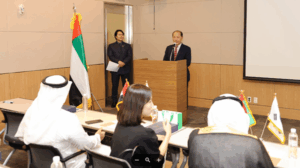
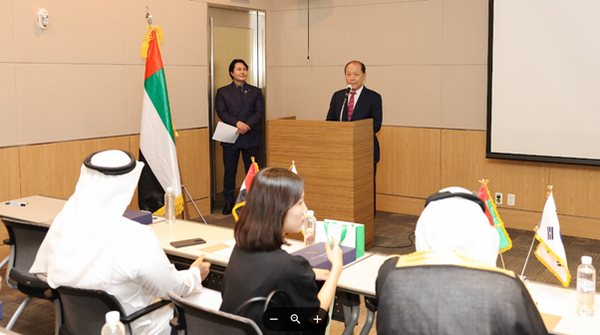
(Photo by: EP&C News)
Following successful official meetings with key UAE royal family members at the Korea Federation of Industries building, including a ‘Halal Seminar’ and formal discussions with the Korean government, Bruce Jeong, Chairman of Middle East Investment, visited the National Assembly to discuss halal industry expansion and cooperation strategies between the Middle East and Asia with the Vice Speaker of the National Assembly, marking the beginning of serious global halal market expansion efforts.
Preparing for Halal Global Expo 2026
Chairman Bruce Jeong is currently preparing for the ‘Halal Global Expo 2026’ scheduled to be held in Korea. His key initiatives include:
- Establishing a government-led dedicated halal certification department within Korea
- Building direct cooperation frameworks with Middle Eastern countries
- Expanding strategic partnerships with various Asian nations
A significant development is expected in mid-October or early November, when GCC (Gulf Cooperation Council) government officials responsible for halal-related affairs are anticipated to make an official visit to Korea. Prior to this, Korean government officials and domestic halal business representatives plan to visit the UAE and Saudi Arabia to discuss practical cooperation measures. This initiative is interpreted as a strategic move to establish direct government-to-government cooperation models beyond private certification organizations.
Regional Expansion and Direct Cooperation
Practical meetings involving Middle Eastern dignitaries and business and government representatives from various Asian countries are being organized in third countries, including Japan. Multiple Asian nations including China, Japan, Cambodia, Myanmar, Laos, and Vietnam are also accelerating the establishment of ‘direct-connection halal cooperation’ frameworks, bypassing intermediate stages.
Recent trends show major Asian countries strengthening their halal-related policies:
- The Philippine government is actively pursuing a national strategy to export premium halal products globally by 2028
- China and Japan are preparing to establish official government-led halal departments, moving beyond existing private-centered certification systems
Market Size and Economic Potential
Bruce Jeong emphasized that “viewing halal merely as a religious concept is anachronistic. The global halal market is estimated to be worth approximately 3,000 trillion won (roughly $2.3 trillion) in 2025, and is expected to exceed 4,000 trillion won by 2035.” He stressed that this represents a practical economic sector with greater potential than the semiconductor or AI industries, and Korea must not fall behind in this trend.
To put this in perspective, the global semiconductor market size is projected at $681.05 billion in 2023 and expected to reach $2,062.59 billion by 2032, while the global halal food market alone is forecasted to reach $9.45 trillion by 2034.
Challenges and Infrastructure Gaps
However, Korea faces significant obstacles due to its non-Muslim country status, including:
- Lack of public awareness about halal requirements
- Insufficient infrastructure development
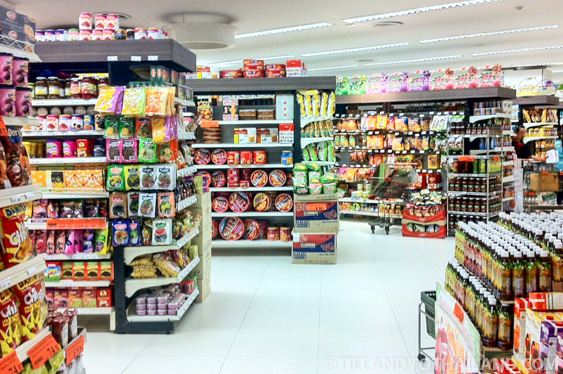
- Limited availability of halal restaurants and food products
Reports indicate that Middle Eastern royal family members who recently visited Korea experienced difficulties finding halal restaurants and related food products during their regional tours.
Strategic Vision for Global Cooperation
Chairman Jeong stated:
“If we perceive halal only as a religious issue, we will inevitably miss out on a core aspect of the global economy. True global halal cooperation systems can only be completed when not just Korea, but all Asian countries establish substantial connections with the Middle East.”
This initiative represents a strategic opportunity for Korea and other Asian nations to position themselves as key players in what is rapidly becoming one of the world’s largest and fastest-growing economic sectors, transcending traditional religious boundaries to embrace the massive commercial potential of halal-compliant products and services.
Original Article:
EP&C News. (2025, July 7). “할랄시장, 반도체 보다 큰 시장”…한국·중동·아시아 할랄 비즈니스 협력 골든타임. EP&C. https://www.epnc.co.kr/news/articleView.html?idxno=319000