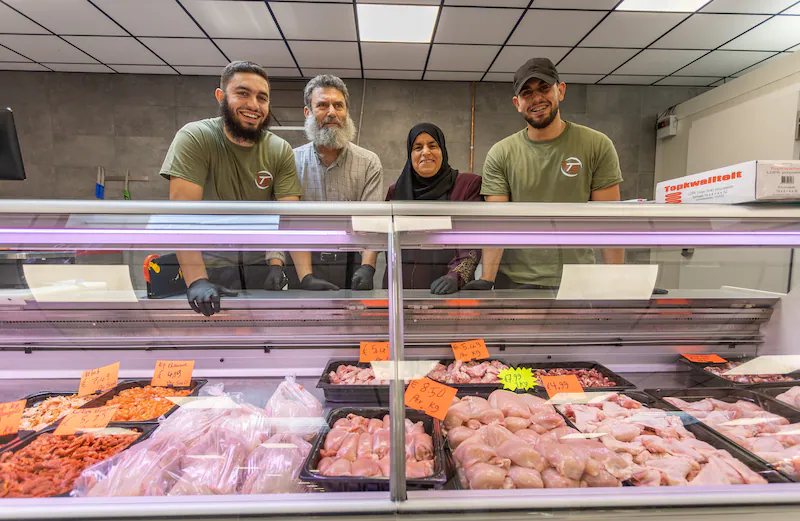
Palestinian Family Opens Supermarket in Hulst: “We Had to Travel to Belgium for Halal Meat”
(Photo by: PZC.nl)
The center of Hulst, a historic Dutch border town, has welcomed a significant addition to its commercial landscape. Brothers Hasan, Abed Al Rahman, and Yousuf Miari, together with their parents, have opened the doors of their international supermarket Taiba on Gentsestraat, bringing both a halal butcher shop and a comprehensive Middle Eastern grocery store to the local community.
Addressing a Critical Gap in the Market
The opening of Taiba represents more than just a new business venture—it addresses a fundamental need that has long existed in the region. For years, Muslim families in Hulst and the surrounding areas faced a significant challenge: accessing quality halal meat and Middle Eastern groceries required lengthy trips across the border to Belgium, where such products were more readily available.
“We had to travel to Belgium for halal meat,” explains one of the Miari brothers, highlighting the inconvenience that prompted their family’s entrepreneurial journey. This simple statement encapsulates the broader challenge faced by Muslim communities in smaller Dutch towns, where specialized food requirements often go unmet by mainstream retailers.
The Vision Behind Taiba
The name “Taiba” carries deep significance in Islamic culture, referring to the blessed city of Medina. This choice reflects the family’s intention to create not just a commercial enterprise, but a community hub that serves the spiritual and cultural needs of local Muslims while also introducing Dutch neighbors to the rich culinary traditions of the Middle East.
The supermarket represents a comprehensive solution to the halal food shortage in the region. By combining a full-service halal butcher shop with an international grocery store, the Miari family has created a one-stop destination for:
- Fresh, certified halal meats including beef, lamb, chicken, and goat
- Middle Eastern spices, herbs, and seasonings
- Traditional Palestinian and Arab pantry staples
- Fresh produce common in Middle Eastern cuisine
- Imported specialty items from various Middle Eastern countries
- Halal-certified processed foods and snacks
Economic Impact and Community Benefits
The establishment of Taiba brings several positive impacts to the local economy and community:
Economic Benefits:
- Job creation for local residents
- Increased foot traffic in the Gentsestraat commercial district
- Tax revenue for the municipality of Hulst
- Support for local and regional suppliers where possible
Community Benefits:
- Elimination of travel costs and time for Muslim families seeking halal products
- Introduction of diverse food options for adventurous Dutch consumers
- Cultural exchange and understanding between different communities
- Strengthening of Hulst’s reputation as an inclusive, diverse town
Challenges and Opportunities
Opening a specialized ethnic grocery store in a smaller Dutch town presents unique challenges that the Miari family has had to navigate:
Regulatory Considerations:
- Ensuring compliance with Dutch food safety standards
- Obtaining proper halal certification from recognized authorities
- Meeting municipal licensing requirements for both retail and butcher operations
Market Dynamics:
- Educating the broader Dutch community about halal requirements and Middle Eastern products
- Building trust with Muslim customers who may have established shopping patterns in Belgium
- Balancing inventory between specialized ethnic products and items with broader appeal
Cultural Integration:
- Serving as cultural ambassadors for the Palestinian and broader Middle Eastern communities
- Addressing potential misconceptions about halal food and Middle Eastern culture
- Creating a welcoming environment for customers from all backgrounds
The Broader Context: Muslim Businesses in the Netherlands
The opening of Taiba reflects a broader trend of Muslim entrepreneurship in the Netherlands. According to recent studies, Muslim-owned businesses contribute significantly to the Dutch economy, particularly in sectors such as food retail, hospitality, and services. These businesses often serve dual purposes: meeting the specific needs of Muslim communities while also contributing to the cultural diversity and economic vitality of their localities.
The halal food market in Europe has experienced substantial growth in recent years, driven by both the increasing Muslim population and growing interest among non-Muslim consumers in halal products, which are often perceived as cleaner and more ethically produced.
Future Prospects and Expansion Plans
The success of Taiba could potentially inspire similar ventures in other Dutch towns facing similar gaps in halal food provision. The Miari family’s model demonstrates that with careful planning, community support, and dedication to quality service, specialized ethnic grocery stores can thrive even in smaller markets.
Potential future developments might include:
- Expansion of the product range to include halal cosmetics and personal care items
- Introduction of prepared foods and catering services
- Online ordering and delivery services for customers in surrounding areas
- Cultural events and cooking classes to promote Middle Eastern cuisine
A Symbol of Integration and Entrepreneurship
The story of Taiba represents more than a simple business opening—it embodies the successful integration of immigrant families into Dutch society while maintaining their cultural identity and serving their community’s needs. The Miari family’s journey from customers who had to travel to Belgium for halal meat to successful business owners providing that same service to their neighbors illustrates the entrepreneurial spirit that drives many immigrant success stories.
As Hulst continues to evolve as a border town with increasing cultural diversity, businesses like Taiba play a crucial role in creating inclusive communities where all residents can access the products and services they need while fostering understanding and appreciation between different cultural groups.
The opening of Taiba marks not just the arrival of a new business, but the strengthening of Hulst’s identity as a welcoming, diverse community where entrepreneurship and cultural exchange can flourish side by side.
Original Article:
Bremmers, J. (2025, July 7). Palestijns gezin opent supermarkt voor halal vlees: ‘Moesten we naar België’. PZC. https://www.pzc.nl/hulst/palestijns-gezin-opent-supermarkt-voor-halal-vlees-moesten-we-naar-belgie~aae44335/