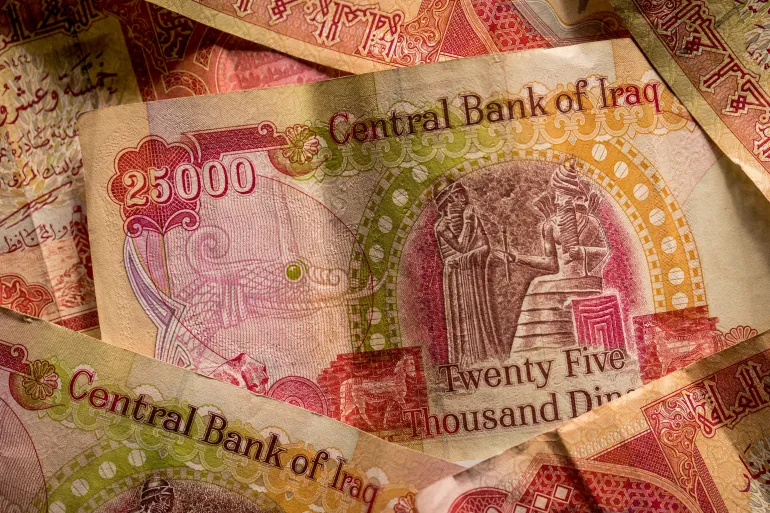
Iraqi Dinar Shows Strength Against US Dollar at Week’s Opening

Source: Aljazeera Net
JAKARTA – The Iraqi dinar demonstrated improved performance against the US dollar during Sunday’s trading session, marking a positive start to the week in parallel market transactions. While the parallel market saw gains, official exchange rates remained stable following the weekly opening of currency trading activities.
Parallel Market Performance
Baghdad Trading Results:
- Selling rate: 1,415 dinars per dollar
- Buying rate: 1,407.5 dinars per dollar
- Previous day comparison: Selling at 1,422.5 dinars, buying at 1,417.5 dinars
Erbil Market Activity: Currency exchange in the northern city showed similar patterns, with selling rates at 1,415 dinars and buying rates at 1,408 dinars. This represented an improvement from the previous evening’s rates of 1,422.5 dinars for selling and 1,417.5 dinars for buying.
Basra Exchange Rates: The southern port city recorded selling rates of 1,415 dinars and buying rates of 1,407 dinars, compared to the previous day’s rates of 1,422 dinars for selling and 1,417 dinars for buying.
Official Market Stability
The Central Bank of Iraq maintained fixed rates across different transaction types:
- International transfers and documentary credits: 1,310 dinars per dollar
- Standard selling rate: 1,305 dinars per dollar
- Banking transactions: 1,310 dinars per dollar
The central bank’s dollar sales operate exclusively through a designated platform, utilizing revenues from oil sales. Bank sales at these rates are mandatory as directed by the central bank and are restricted to travelers only. These official rates remain independent of parallel market fluctuations.
Key Factors Influencing Exchange Rates
Several critical elements impact the dinar’s value:
Currency Auction Dynamics: Daily sales volumes in currency auctions significantly affect exchange rate stability.
Central Bank Interventions: Policy measures regarding foreign transfers play a crucial role in maintaining rate stability.
Import Demand: Traders’ dollar requirements for importing goods from countries under Federal Reserve sanctions, which cannot receive direct dollar transfers through official channels, directly impact exchange rates.
Regional Currency Flows: Iranian-related transactions create additional demand pressure, as traders purchase dollars from Iraqi markets for Iranian commercial activities, given US sanctions limiting Iran’s direct access to American currency.
Currency Smuggling Activities: Some traders exploit the gap between official and parallel rates by smuggling dinars to other countries, affecting overall exchange dynamics.
Market Speculation: Traders sometimes act on leaked information or rumors about potential changes in dollar transaction mechanisms, leading to preemptive price adjustments.
Market Outlook
The dinar’s recent strengthening reflects ongoing efforts to stabilize Iraq’s currency system. However, the persistent gap between official and parallel market rates indicates continued challenges in achieving full market integration.
The Central Bank’s electronic monitoring platform, operational for approximately three years, aims to track dollar movements more effectively. Despite these technological improvements, significant disparities between official and black market rates persist, highlighting the complex dynamics affecting Iraq’s currency markets.
Exchange rates are subject to daily fluctuations based on market conditions and regulatory developments.
Original article:
aljazeera.net. (n.d.). الدينار العراقي يرتفع مقابل الدولار في مستهل تعاملات الأسبوع. Retrieved July 14, 2025, from https://www.aljazeera.net/ebusiness/2025/7/13/iraq-dinar-dollar-2