Controversy Erupts: Ministry Under Fire for Overlooking Halal Slaughter Violations
Regulatory Blindspot Sparks Animal Welfare Debate
South Korea’s Ministry of Agriculture, Food and Rural Affairs finds itself in hot water as animal rights advocates expose a significant oversight: two halal-certified slaughterhouses operating in apparent contradiction to national animal protection legislation.
The Disputed Facilities: Gangwon Province Operations
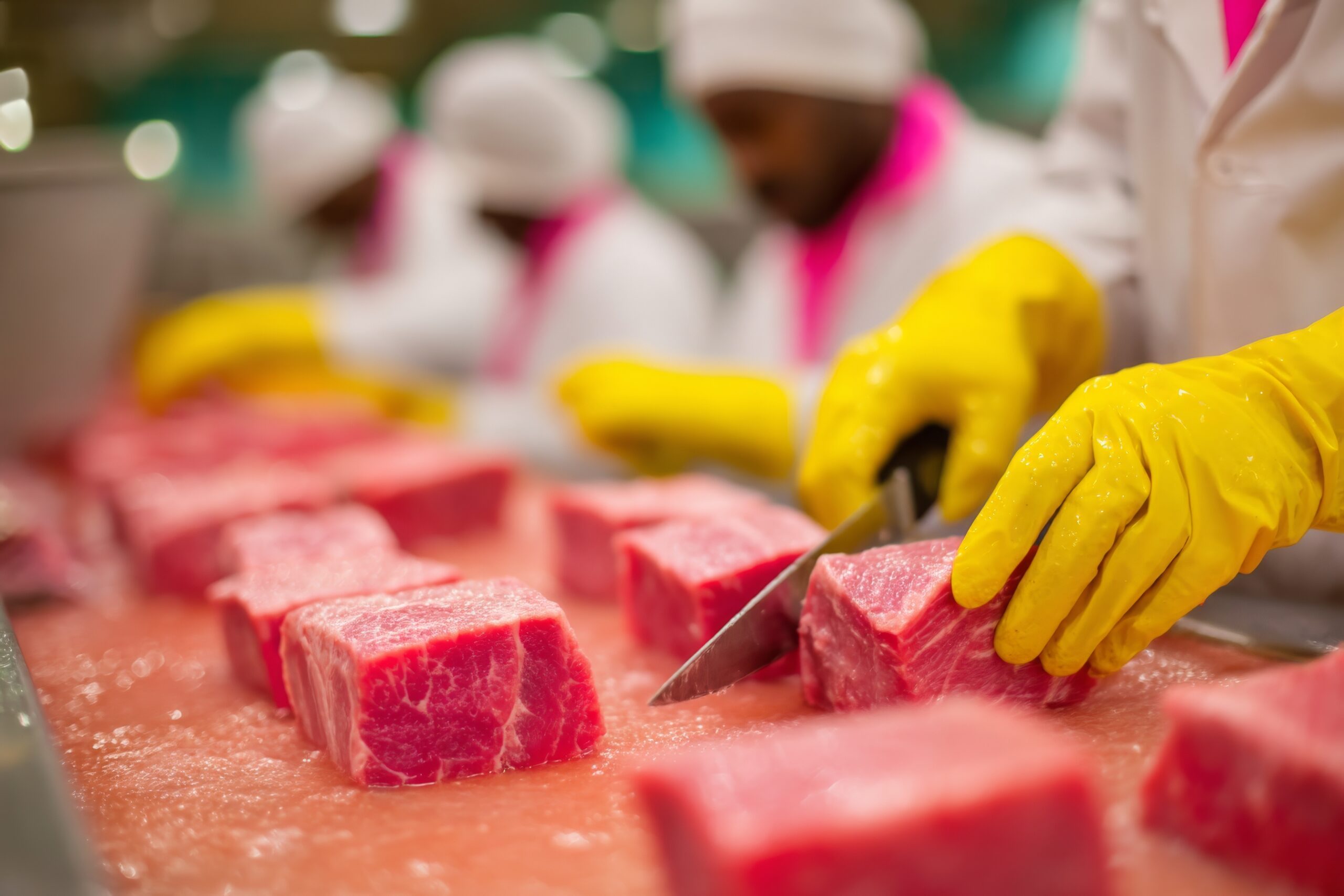
Two establishments in Gangwon Province secured halal certification through the Korea Muslim Federation Halal Committee (KMF) in early 2024. Handawoon FSL in Hongcheon County—producing thirteen varieties of beef cuts ranging from premium tenderloin to humble brisket—earned its credentials in February. Hoengseong KC in neighboring Hoengseong County, offering eleven beef varieties, followed suit in March. Both certifications carry one-year validity periods. Handawoon has already commenced Malaysian beef exports within the month, marking a commercial milestone.
Religious Practice Meets Legal Framework: The Core Conflict
Halal slaughter, rooted in Islamic tradition, mandates using razor-sharp blades to swiftly sever the throats of conscious, healthy livestock—cutting through jugular veins, carotid arteries, windpipes while ensuring complete blood drainage.
Such methodology directly contradicts Korea’s Animal Protection Act, which explicitly requires pre-slaughter unconsciousness. The legislation mandates minimizing animal suffering through ministry-approved stunning techniques—electrical charges or gas—stipulating that slaughter must occur only where the animals are unconscious.
International Validation, Domestic Violation
The KMF facilitated inspections by Malaysia’s Department of Veterinary Services, whose representatives personally evaluated the facilities’ operations. Upon successful assessment, the Department of Islamic Development Malaysia (JAKIM) granted halal certification.
“Malaysian authorities endorsed the slaughterhouses’ halal practices,” confirmed a KMF representative.
Ministry’s Defense: Jurisdictional Confusion
Agriculture ministry personnel acknowledge they haven’t examined butchery procedures at either location.
The agro-livestock sanitary quality team within the ministry’s marketing and consumer policy bureau clarified their mandate focuses solely on hygiene compliance under the Livestock Products Sanitary Control Act—not welfare protocols. Team members admitted never visiting either establishment.
“We lack legal provisions addressing halal slaughter specifically. Local governments (not central authorities) hold licensing power over slaughterhouses. Furthermore, the animal protection law postdates the Livestock Product Sanitary Control Act. We’ve followed sanitary control standards since the 1960s.” explained one official.
Another official from the animal welfare policy division referenced the unconsciousness requirement, stating: “The Ministry of Food and Drug Safety monitors any legal infractions.”
Activist Outcry: Demanding Immediate Intervention
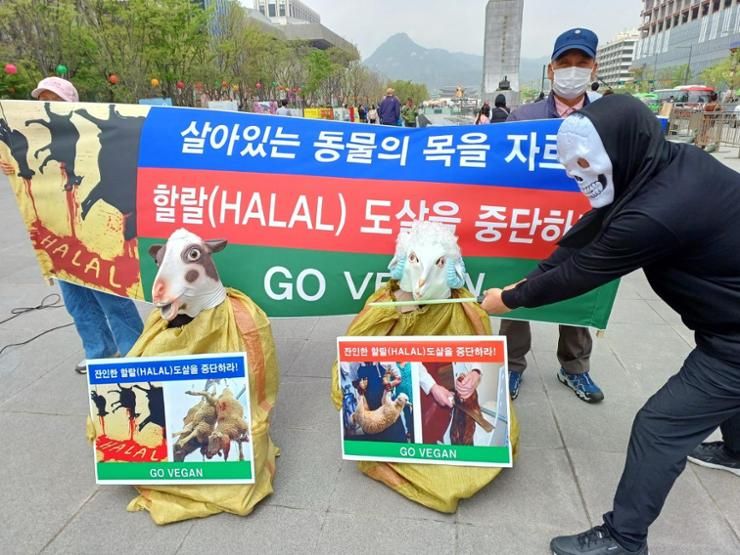
The Korea Association for Animal Protection (KAAP) thrust the controversy into public consciousness through April demonstrations at Seoul’s Gwanghwamun Square. Activists demand immediate operational suspension of both facilities.
“Video footage from People for the Ethical Treatment of Animals released April 11 depicted Australian cattle transported to Indonesia, enduring halal slaughter, suffering agonizingly after throat incisions,” stated KAAP President Lee Won-bok.
The organization maintains halal slaughter fundamentally violates the Animal Protection Act, calling for swift governmental action to reconcile religious accommodation with animal welfare mandates.
Original Article:
Ko, D.-h. (2025, October 7). Agriculture ministry hit for neglecting 2 halal slaughterhouses’ violations of animal protection law. The Korea Times. Retrieved from https://www.koreatimes.co.kr/business/20240621/agriculture-ministry-hit-for-neglecting-2-halal-slaughterhouses-violations-of-animal-protection-law