Three Critical Steps Toward Global Halal Standards Harmonization
Experts Outline Framework to Overcome Certification Fragmentation
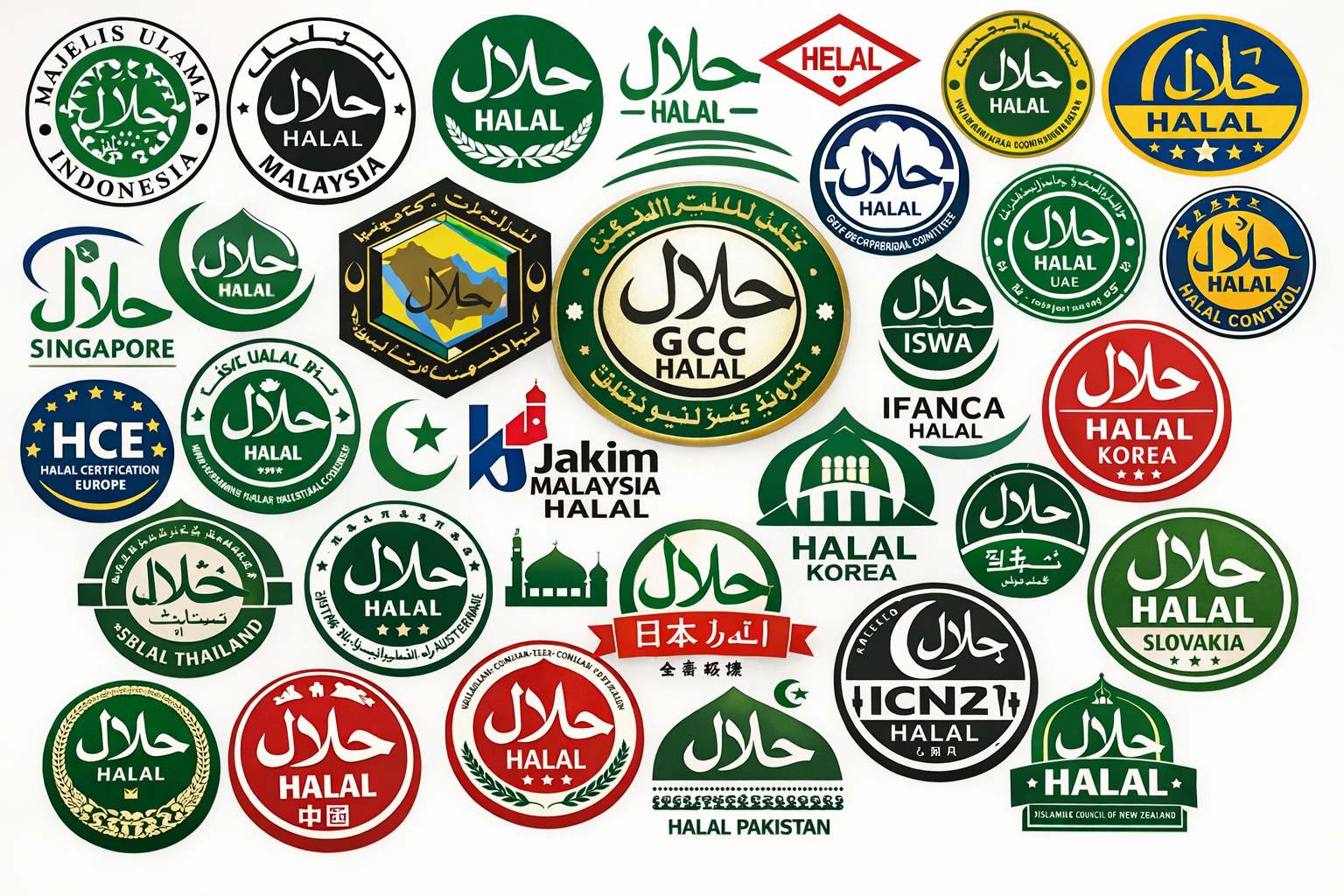
Halal regulations in different markets may appear similar on the surface, but in actuality the procedures with requirements for certification can differ greatly from authority to authority, especially when it comes to food.
Each country has their own authority in this area – e.g. Malaysia’s Department of Islamic Development Malaysia (JAKIM), Indonesia’s Halal Product Assurance Organising Body (BPJPH), the United Arab Emirates’ Emirates Authority for Standardization & Metrology (ESMA) all cover halal governance in their respective markets.
The differences in regulatory requirements by all these different authorities often lead to challenges for halal food firms looking to sell their products in more than one market, as getting halal certified in one country does not guarantee certification in others – each application also means another individual round of time with money spent.
As such, the halal food industry in general has long desired alignment, if not harmonisation, of halal industry standards with certifications across the various regions in order to improve the efficiency of trade.
Mutual Recognition Agreements Offer Partial Solution
“Currently the main route of international halal alignment is via Mutual Recognition Agreements (MRAs) between different markets, where the respective authorities agree to recognise each other’s competence with standards,” BPJPH Centre for Halal Registration, Certification Head Dr. Mamat Burhanuddin Salamat said.
“This is one way to solve the need for repetitive testing procedures each time a company wants to enter a new market, eliminates regulatory duplication to reduce time with costs to market.”
Unfortunately, it is unlikely for any one country to have MRAs in place with all of its trade partners, much less new export target markets, so halal standards harmonisation is still very desirable for the industry.
Experts have laid out three of the key most crucial steps needed to move the international halal system towards harmonisation.
1) Get the Basics Right
One of the most important aspects of halal certification which authorities often overlook is the applicant’s ability to understand, handle the process, said Indonesian halal assessment body LPPOM MUI’s Halal Partnership, Audit Services Director Dr Muslich said.
“It is important to provide efficient training to at least one responsible individual in the food companies, to really understand the regulations with the criteria they are committing to adhere to when applying for halal certification,” he said.
“A lot of times, issues arise when the companies apply because they want to be halal-certified but are unaware of what they are supposed to do, especially among micro, small businesses.”
The impacts are widespread especially in a market like Indonesia where micro, small, medium enterprises (MSMEs) number around 43 million, making up some 80% of the food, beverage industry.
“Getting these basics right in halal certification is an important basic first step, as we must ensure any local halal system is robust, efficient before looking to integrate across nations, regions,” he added.
2) Digital Transformation Acceleration
Digital transformation has been a buzzword in many sectors across various industries, but is especially important for a sector looking to achieve alignment across various markets as it is the only way to standardise data.
“There are many advantages to having a digitalised system, not just being able to submit data directly online but also negating the need to repeatedly resubmit data or documents after having done so once,” Indonesian Food, Beverages Industry Association (GAPMMI) Adhi Lukman added.
The value of digitalisation in halal certification is well-recognised across various markets – in Saudi Arabia, the Saudi Food, Drug Authority (SFDA) has implemented the use of blockchain to track products from point of origin.
“Simply scanning the barcode of a product will reveal its historical data starting from the farm or slaughterhouse the item came from, bring evaluators or consumers to access more information about the originating source as well as its halal certificate,” said the authority.
SFDA’s Saudi Halal Centre has also established a digital portal to facilitate direct halal certification requests, an upgrade from its email-to-apply model.
3) Regional, Global Alignment
However, the greatest challenge in the way of achieving true uniformity, alignment is the fact that every market has its own divergence in terms of culture with religious interpretations of halal principles, even if the basics are the same.
“For example, while most Muslim countries ban pork, alcohol, there often are significant differences in what additives or methods of slaughtering animals are acceptable, which makes reaching common standards nearly impossible,” Malaysian researcher, lecturer Hasbullah Othman stated.
“One of the biggest inefficiencies in the certification process is the absence of a standardised approach to certifying halal products across different parts of the world with adding the issue of the halal certification process in many places being cumbersome, facing bureaucratic bottlenecks, regulatory variations, high certification costs, it is clear that establishing a universal halal system needs carefully articulated solutions to move forward.”
ASEAN Initiatives Progress Toward Regional Harmony
Some initiatives such as the ASEAN Halal Technical Committee, the ASEAN Halal API Standard are already in progress, where participating authorities attempt to harmonise standards, audit processes as well as develop a common digital language for halal systems – but it is clear that there is still a long road ahead.
“There has been much support for the creation of a single, global halal certification body as well as clear, consistent global standards, which would allow businesses to easily comply with open, transparent requirements that are accepted internationally – this would cut down certification costs, ultimately make halal certification more accessible to businesses,” he added.
“There is a need for a Global Halal Certification Framework to keep current standards relative to halal certification, as well as set down common practices. International organisations, including the World Trade Organization (WTO), the World Halal Council (WHC) would be important in coordinating such national halal certification bodies.”
That said, the most important step towards this is for governments to truly open up to this option, there is not yet a solution to the conundrum of how to standardise each market’s interpretation of halal.
“If processes remain status quo with national standards, there is little hope for full global harmonization of halal processes, even fewer opportunities for the recognition of halal certifications across borders,” Hasbullah said.
“What we need is more cooperation, which could be in form of sharing best practices, aligning technical standards, establishing a common platform for certification bodies globally.”
Original Article:
Neo, P. (2025). 3 crucial steps to harmonise halal standards across regions. FoodNavigator-Asia. https://www.foodnavigator-asia.com/Article/2025/11/23/3-crucial-steps-to-harmonise-halal-standards-across-regions