Indonesia Deepens China Ties to Capture $4.5 Trillion Global Halal Market by 2030
Major festival demonstrates bilateral ambitions
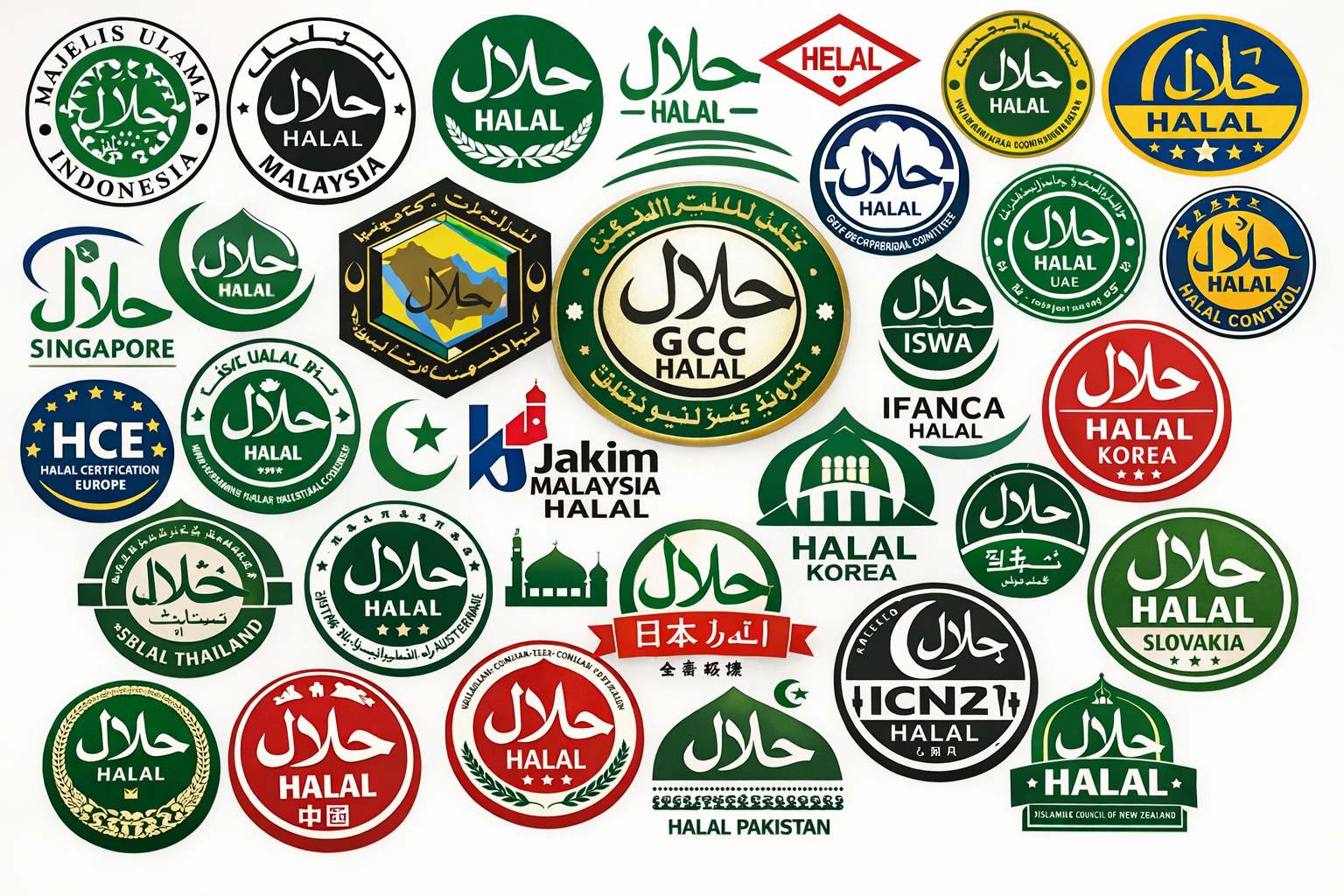
Indonesia is strengthening its position as a global center for halal business, a market currently worth $3 trillion and projected to reach $4.5 trillion by 2030. Halal refers to products and practices that comply with Islamic law, including food, pharmaceuticals, cosmetics, and financial services, ensuring they are permissible for Muslim consumers.
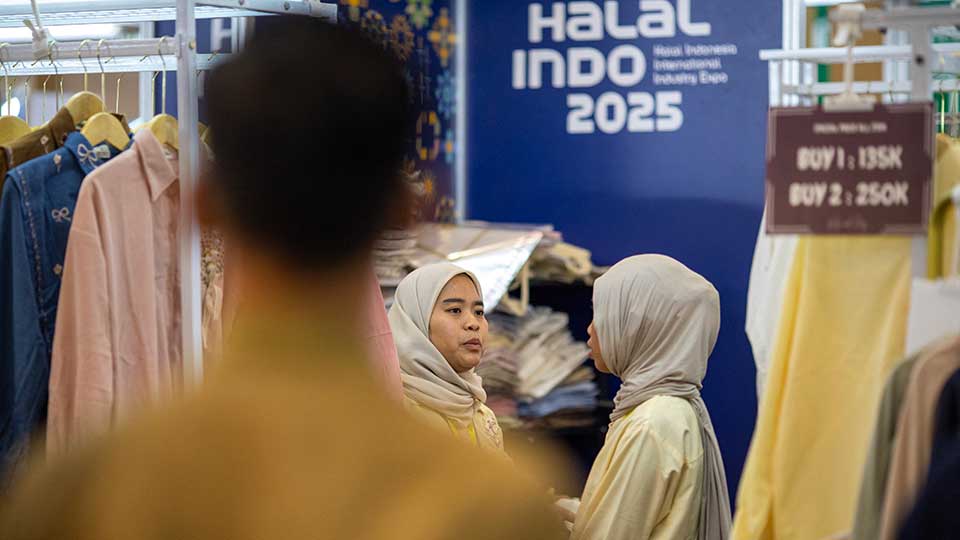
At a major halal festival held last month in Tangerang, near Jakarta, the Halal Indo 2025 x Industrial Festival drew 27,000 visitors and 346 exhibitors, with deals totaling $450 million.
For Indonesia, the world’s largest Muslim-majority country, the festival was a statement of ambition—a showcase of its drive to expand its leadership in the global halal industry.
Strategic partnership agreements signed
The festival also showed how important partnerships are. Among others, Indonesia signed an agreement with China’s Food and Drug Corporation Quality and Safety Promotion Association (FDSA). The two sides will work together on halal industry growth, research, training, and business support. The idea is to push more companies to build partnerships and grow together.
This builds on earlier steps. In November, President Prabowo Subianto went to Beijing. There, Indonesia and China agreed to strengthen food security and halal trade. Soon after, Jakarta hosted a food fair that brought together 175 companies from both countries.
Mutual recognition streamlines certification
The two have also agreed to mutual recognition of halal certificates. Indonesia’s halal authority (BPJPH) now accepts certificates from 37 agencies in 16 countries, including China. That makes trade smoother and avoids extra checks.
China itself has been moving fast in the halal industry. Indonesian auditors visiting places like Shanghai and Shandong saw efficient certification systems. Chinese exporters also get help from groups like the American Halal Foundation to reach buyers in Asia and the Middle East. For China, halal is both a business and regulatory matter.
For Indonesia, cooperation with China offers opportunities to share knowledge, streamline certification, and expand markets, even as companies from both countries remain active competitors in global trade. China brings not only technology and logistics but also a sizable domestic halal market, valued at over $77 billion in 2024 and projected to grow about 10.8 percent annually through 2034, according to China Briefing.
Pharmaceutical certification deadline looms
Pharmaceuticals are another area where Indonesia can learn from China’s experience. By October 2026, all over-the-counter drugs in Indonesia will be required to carry halal certification, creating an urgent need for robust regulatory and auditing systems.
During a visit to Shenzhen last year, Indonesian halal authorities examined China’s certification practices and regulatory frameworks, noting efficient processes that could inform Indonesia’s own implementation.
By collaborating on training, standards, and digital certification systems, Indonesia can accelerate its rollout of halal-certified medicines while ensuring consistency, quality, and consumer trust.
Cultural exchange strengthens community ties
In Surabaya, one of Indonesia’s largest cities, halal-certified Chinese restaurants have grown by 150 percent since 2018, according to the Surabaya City Department of Industry and Commerce. Events like the Republika Hijriah Food Fair, where halal dim sum and noodles are showcased, bring together both Muslim and Chinese communities.
Islamic finance presents collaboration opportunities
Finance could also be a strong area of cooperation. China’s Belt and Road Initiative includes Islamic finance projects in Central Asia and the Gulf. Ningxia, an autonomous region in northwest China, for example, is building Sharia-compliant financial hubs.
Indonesia, with a $1.5 trillion economy and extensive experience in Islamic finance, could collaborate with China on cross-border sukuk (Islamic bonds) and halal financing. Trade, infrastructure, and finance can all link under the halal umbrella.
SME certification gap remains challenge
Still, there are obstacles. Only about 30 percent of Indonesian small food businesses are halal-certified. Many face high costs, slow bureaucracy, and a shortage of trained auditors. Certification is more than a rule—it builds trust. Working with China through joint labs, digital systems, and training could help small businesses catch up.
Strategic complementarity drives partnership
Indonesia’s halal rise is both an economic and cultural story. By combining their population sizes, market legitimacy, and regulatory frameworks with China’s technology, logistics, and a substantial domestic halal market, the two countries can set global standards, open new markets, and strengthen regional ties. Halal is not only a trade opportunity—it is a platform for cooperation, innovation, and shared growth that could improve lives across Asia.
Geopolitical implications reshape halal leadership
The Indonesia-China halal partnership represents a significant geopolitical realignment within the global Islamic economy. Traditionally, Middle Eastern nations (Saudi Arabia, UAE, Kuwait) plus Malaysia dominated halal standard-setting through organizations like OIC/SMIIC and JAKIM. Indonesia’s pivot toward China—a non-Muslim nation with authoritarian governance of its own Muslim minorities—signals pragmatic prioritization of economic scale plus technological capacity over religious authority or shared Islamic governance principles.
China’s $77 billion domestic halal market, serving approximately 25 million Muslims (predominantly Hui plus Uyghurs), provides testing grounds for halal products before export. However, China’s treatment of Uyghur Muslims in Xinjiang—including mass detention, forced labor allegations, cultural suppression—creates ethical tensions. Indonesian cooperation with Chinese halal certification systems may indirectly legitimize or economically benefit entities connected to Xinjiang’s controversial governance, potentially drawing criticism from human rights advocates plus Muslim communities globally.
The mutual recognition of halal certificates between BPJPH and Chinese agencies raises questions about standard harmonization. Will Chinese certification authorities apply Islamic jurisprudence with the same rigor as Indonesian ulama? Do commercial interests drive Chinese halal certification more than religious compliance? Such concerns underscore broader debates about whether halal certification can maintain religious integrity when administered by secular or non-Muslim authorities prioritizing economic development over theological fidelity.
Indonesia’s October 2026 pharmaceutical halal certification deadline—requiring all OTC drugs carry halal certification—creates massive compliance burdens for an industry largely dependent on imports plus multinational pharmaceutical companies. Learning from China’s “efficient certification systems” may enable faster rollout, but raises questions about whether speed compromises thoroughness in verifying ingredients, manufacturing processes, supply chain integrity that genuine halal compliance demands.
The 150% growth in halal-certified Chinese restaurants in Surabaya reflects demographic realities—Indonesia’s ethnic Chinese minority (approximately 3% of population) increasingly recognizes commercial advantages in halal certification as they serve majority-Muslim customer bases. Such certification transcends religious identity, becoming a market access tool for non-Muslim businesses, further blurring lines between halal as religious observance versus commercial branding.
The Belt and Road Initiative’s Islamic finance components—including Ningxia’s Sharia-compliant financial hubs—demonstrate China’s strategic use of halal/Islamic finance to deepen economic ties with Muslim-majority nations while projecting soft power. For Indonesia, sukuk collaboration with China could provide infrastructure financing alternatives to Western-dominated institutions, though critics might question whether Chinese-backed Islamic finance genuinely adheres to Sharia principles or merely adopts superficial Islamic terminology to facilitate geopolitical objectives.
The article’s framing—emphasizing “cooperation, innovation, shared growth”—reflects diplomatic language masking underlying competitive dynamics. Indonesia plus China compete directly for halal export markets in the Middle East, Africa, Europe. While collaboration may occur in standard-setting or technology transfer, commercial rivalry persists as both nations seek dominant positions within the $4.5 trillion global halal economy projected by 2030.
Original Article:
China Global South. (2025, October 20). Indonesia, global halal economy, China partnership. Retrieved from https://chinaglobalsouth.com/analysis/indonesia-global-halal-economy-china-partnership/